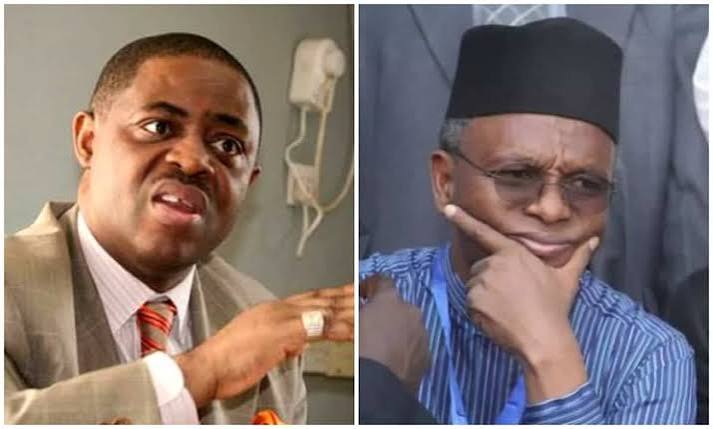

Former Minister of Aviation, Femi Fani-Kayode, has launched a blistering exposition on Nasir El-Rufai, laying bare the former Kaduna State Governor’s controversial legacy. Once a man who carried himself as an untouchable political godfather, El-Rufai’s current trajectory paints a picture of a politician grappling with isolation, rejection, and the consequences of his own actions.
Fani-Kayode’s recent interventions highlight a pattern of alleged vindictiveness and human rights abuses that defined El-Rufai’s tenure. From the midnight demolition of homes, allegedly including those of orphans and despite existing court orders, to his previous actions as Minister of the Federal Capital Territory where he reportedly attempted to destroy media houses like AIT, the portrait drawn is one of a leader who prioritized mundane power over compassion. The banning of state-sponsored pilgrimages, with Fani-Kayode noting the strict enforcement against Christians, further underscores the divisive nature of his leadership.
Femi Fani-Kayode. Source: Wikiquote
The Illusion of the Untouchable Godfather
For years, El-Rufai operated with an air of invincibility. He was a foundational figure in the All Progressives Congress (APC) and played a significant role in the elections of both Muhammadu Buhari and Bola Ahmed Tinubu. This proximity to power seemed to foster a belief that he was beyond reproach, free to govern with a heavy hand and dismiss critics with impunity.
However, the political landscape shifted dramatically following the 2023 elections. The very Senate of the party he helped build blocked his ministerial nomination, citing unspecified “security concerns”. This rejection was a public humiliation for a man accustomed to having his way and marked the beginning of his rapid political descent.
Nasir El-Rufai. Source: Wikipedia
Where is El-Rufai Now?
Today, the self-styled godfather finds himself largely marginalized. Following his rejection by the APC establishment, El-Rufai resigned from the party in March 2025. After a brief flirtation with the Social Democratic Party (SDP), he officially joined the African Democratic Congress (ADC) in late 2025, attempting to position himself within an opposition coalition ahead of the 2027 elections.
His post-gubernatorial life has been fraught with legal and political battles. He has faced periods of detention by agencies like the ICPC amid corruption allegations, situations his new party, the ADC, has framed as political persecution by the current administration. Furthermore, his chosen successor in Kaduna, Governor Uba Sani, has publicly distanced himself, accusing El-Rufai of leaving the state crippled by debt.
A Fractured Relationship with President Tinubu
The relationship between El-Rufai and President Bola Tinubu has completely deteriorated. Despite acknowledging his role in Tinubu’s emergence as the APC candidate, El-Rufai recently stated publicly that he and the President are “parallel lines that’ll never meet,” denying they ever had a personal relationship or were friends.
El-Rufai has transformed into a vocal critic of the Tinubu administration, boldly predicting that the President will lose the 2027 election and accusing the government of plunging millions into poverty. In return, the APC has dismissed him, with some observers noting that his aggressive rhetoric masks his diminishing influence within the corridors of power.
Politically Finished?
While it may be premature to declare Nasir El-Rufai entirely “finished” politically, he retains some influence and is actively attempting to rally northern opposition against Tinubu. However his current standing is a shadow of its former self. He is a man without the backing of a ruling party, facing probes, alienated from his successor, and thoroughly rebuked by figures like Fani-Kayode.
The “untouchable” aura has shattered. As he attempts to rebuild his political fortunes from the platform of the ADC, El-Rufai is learning a harsh lesson: in politics, the bridges you burn while in power are often the ones you need when crossing the wilderness of the opposition.


 By
By