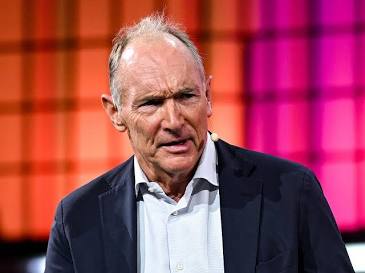

In March 1989, inside a subterranean corridor at CERN in Geneva, a 33-year-old British computer scientist named Tim Berners-Lee submitted a quiet proposal for a distributed information-sharing network. His supervisor, Mike Sendall, scribbled three now-legendary words across the cover page: “Vague, but exciting.”
Those three words launched the architecture of the modern digital age.
The Spark of Creation
Working tirelessly on a sleek, black NeXT workstation, Berners-Lee forged the foundational trio of the online world by Christmas 1990:
- HTML (HyperText Markup Language): The digital canvas to format pages.
- HTTP (HyperText Transfer Protocol): The standard for sending data.
- URL (Uniform Resource Locator): The universal web address system.
On August 6, 1991, Berners-Lee posted a simple message to an online newsgroup, making his web browser, server software, and the world’s very first website (info.cern.ch) accessible to anyone with an internet connection.
The Pivotal Crossroads
By early 1993, alternative information protocols like Gopher began introducing commercial licensing fees. Berners-Lee recognized the grave danger: monetizing the web would split human knowledge into paywalled silos.
He aggressively pressured CERN management to forego commercial exploitation. On April 30, 1993, CERN formally signed a document surrendering all intellectual property rights and releasing the World Wide Web software into the public domain—royalty-free, unconditionally, forever.
A Trillion-Dollar Altruism
Had Berners-Lee patented his invention or charged even a fraction of a cent per webpage, click, or server implementation, he would comfortably reign as the world’s first multi-trillionaire.
Instead, Sir Tim Berners-Lee chose humanity’s collective progress over unmatched personal riches. Every e-commerce order placed, every article read, every video streamed, and every digital connection forged today stands on the shoulders of one British scientist who believed that the sum of human knowledge should belong to everyone equally.


 By