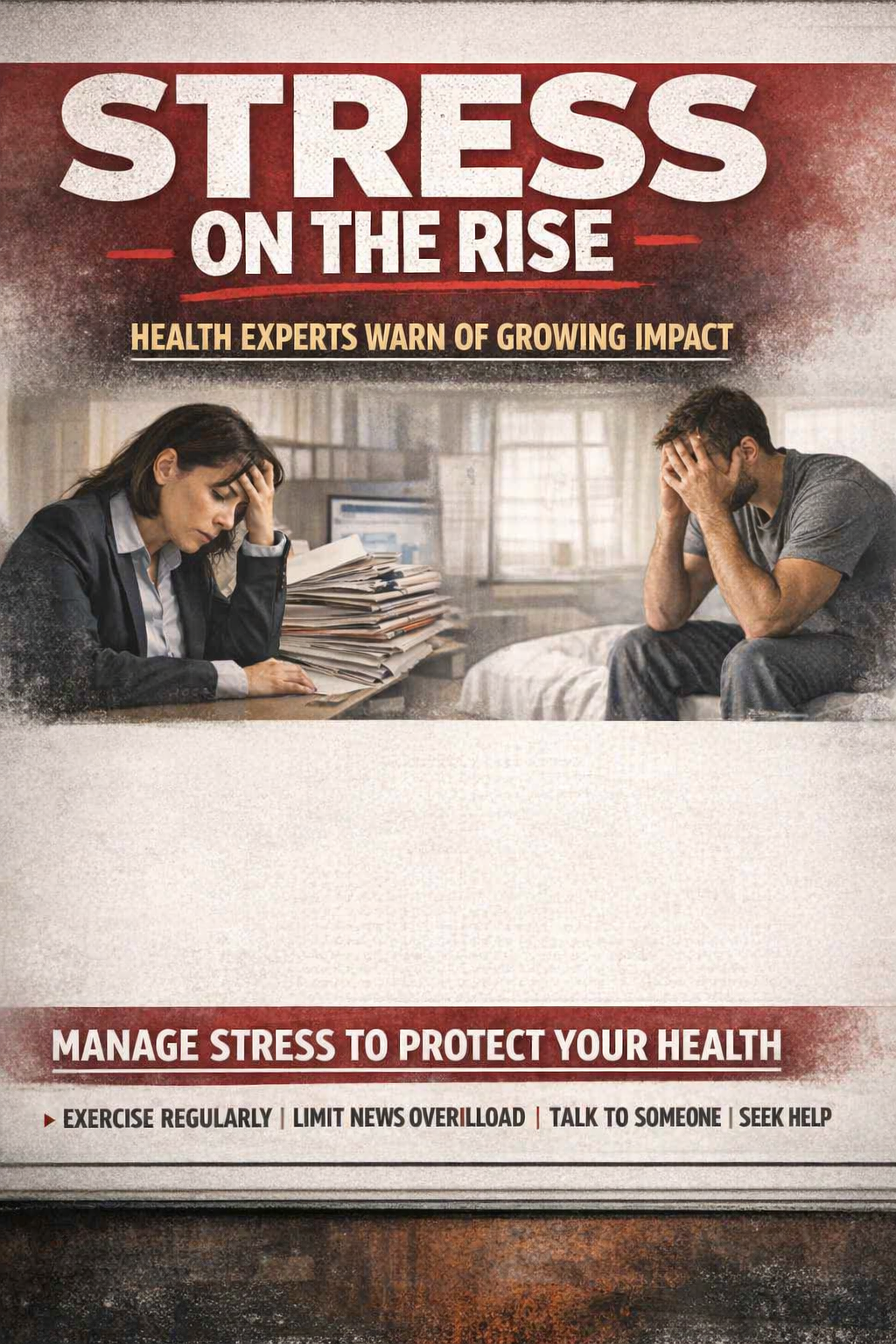

Stress is rising globally, and understanding its causes, health impact, and management strategies has become a public‑health priority.
Key Points
Stress levels are rising due to increasing pressures at work, financial strain, relationship challenges, health issues, major life changes, global uncertainty, and constant digital overload from news and social media.
Prolonged stress keeps the body’s fight‑or‑flight system activated, leading to high adrenaline and cortisol levels that raise blood pressure, weaken immunity, disrupt sleep, and contribute to anxiety, depression, irritability, and difficulty concentrating.
Chronic stress causes widespread physical and long‑term health problems, including headaches, stomach issues, muscle tension, heart disease, diabetes, ulcers, asthma, and increased reliance on unhealthy coping behaviours such as smoking, alcohol, and overeating.
Stress can be managed effectively through structured routines, evidence‑based self‑help techniques, reduced media exposure, regular exercise, good sleep and nutrition, early recognition of symptoms, and seeking timely support from trusted people or professionals.
What Causes Stress?
Stress is widely recognised as a state of mental tension triggered by difficult or threatening situations, according to the World Health Organisation. It is a natural human response, but the triggers vary widely across individuals. Common causes include work pressure, financial worries, relationship problems, major life changes, illness, and feeling unsupported. Stress often emerges when people feel they lack the resources to cope with the challenges they face. NHS
Experts note that external events, such as economic crises, disease outbreaks, natural disasters, and community conflict, can also fuel stress. In today’s digital age, psychologists warn that media overload—constant exposure to alarming headlines—has become a modern stressor, contributing to what some call “headline stress disorder.” American Psychological Association
How Stress Affects Health
Short‑term stress activates the body’s “fight or flight” response, releasing hormones like adrenaline and cortisol. These chemicals temporarily raise heart rate, blood pressure, blood sugar, and cholesterol, helping the body respond to immediate challenges. British Heart Foundation
However, when this response is triggered repeatedly, chronic stress develops, and the consequences can be severe. Research shows long‑term stress is linked to:
- Neurological disorders
- Heart disease and high blood pressure
- Diabetes
- Gastric ulcers
- Asthma
- Headaches and sleep problems
- Accelerated ageing and increased mortality
Up to 70% of people with serious illnesses are believed to be affected by chronic stress. pmc.ncbi.nlm.nih.gov
Mental health is also heavily impacted. Chronic stress can worsen anxiety, depression, irritability, and concentration difficulties. It may also lead to increased use of alcohol, tobacco, or other substances as coping mechanisms. WHO
How to Manage Stress
Health organisations emphasise that while stress is unavoidable, effective management can protect both mental and physical well-being.
Evidence‑based strategies include:
Daily routines: Maintaining a structured schedule helps restore a sense of control. WHO. Additionally, the World Health Organisation (WHO) recommends self-help techniques: activities such as daily exercises from its Doing What Matters in Times of Stress guide. Furthermore, limiting media exposure: Psychologists advise setting boundaries around news consumption to reduce “headline anxiety.” American Psychological Association.
Healthy lifestyle habits, such as regular exercise, a balanced diet, and adequate sleep, reduce the physiological load of stress. On another note, talking to others: Sharing concerns with trusted people or professionals can reduce emotional burden. Recognising symptoms early and addressing irritability, such as headaches, stomach issues, or sleep problems, prevents escalation.NHS
Experts emphasise that seeking help early is not a sign of weakness. When stress begins to interfere with daily functioning, professional support becomes essential.
Conclusion
Stress is a universal experience, but its impact depends on how individuals respond and the support systems around them. With chronic stress now linked to a wide range of serious health conditions, public‑health agencies urge people to adopt proactive stress‑management strategies and seek help when needed. As the pressures of modern life continue to evolve, understanding stress—and how to manage it—remains a critical part of maintaining national and global wellbeing.
References:
World Health Organisation (WHO) WHO
NHS Every Mind Matters NHS
British Heart Foundation (BHF) British Heart Foundation
American Psychological Association (APA)
International Journal of Health Sciences (PMC) pmc.ncbi.nlm.nih.gov


 By
By