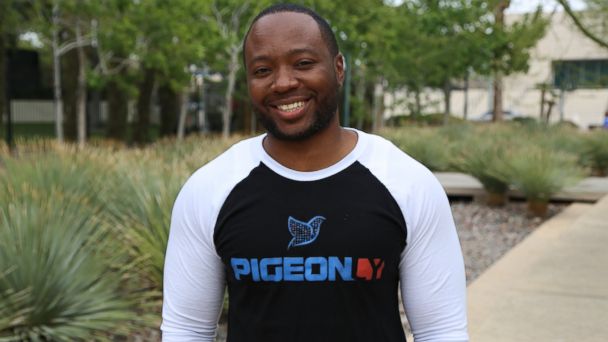

He shipped nearly two tons of marijuana through UPS and FedEx, pulling in roughly $500,000 a year tax-free. Then, the police showed up at his storefront with guns drawn.
He was just 23 years old.
That was Frederick Hutson long before he became a celebrated tech founder, before he raised millions in venture capital from prominent Silicon Valley investors, and before he built a multi-million dollar company serving millions of incarcerated people and their families.
Hutson’s journey is one of the most remarkable redemption and entrepreneurial arcs of the 21st century—proving that some of the greatest market solutions are born not in sleek coffee shops, but from profound lived experience.
From Brooklyn to the Air Force and a Cartel Pipeline
Growing up in Brooklyn with a single mother and three siblings, Hutson later moved with his family to St. Petersburg, Florida. Seeking discipline and direction, he enlisted in the U.S. Air Force, where he worked as an electrician on jet engines at Nellis Air Force Base. When the base downsized, he was honorably discharged.
Even while on active duty at age 19, Hutson’s entrepreneurial instincts were firing. That side hustle eventually snowballed into a large-scale marijuana distribution operation. He managed a storefront in Las Vegas, oversaw roughly 200 customers across Florida, and maintained a direct supply line connected to a cartel in Nogales, Mexico. Remarkably, Hutson never smoked marijuana. Not once, nor even a legal cigarette. He simply discovered a gap and he was smiling to the banks by fulfilling the need!
The high-stakes operation crashed to a halt when federal agents arrested him alongside roughly 10 co-defendants. Over the next 10 months, the government seized a $500,000 house, his cars, and his business. A federal judge handed him a 51-month prison sentence.
The Turning Point: Education Behind Bars
Instead of letting despair take over, Hutson used his time inside as an intensive, high-stakes masterclass in business.
Behind bars, he experienced firsthand the punishing financial toll the correctional system extracts from families. He paid around $70 a month just for 300 minutes of phone time, while sending photos to his girlfriend proved to be an exhausting, overpriced bureaucratic hurdle.
Surrounded by white-collar inmates, including corporate attorneys and CEOs, Hutson absorbed critical business concepts. Lacking access to computers or digital tools, he drew complex financial spreadsheets by hand on sheets of paper taped together. He devoured business classics like Jim Collins’ Good to Great, pored over the Wall Street Journal and Wired, and methodically drafted business plans by hand.
Launching Pigeonly: Turning Pain into Product
When Hutson was released to a halfway house in 2011, he walked out with a stack of handwritten business plans and a singular vision: Pigeonly, a technology platform designed to make connecting with incarcerated loved ones radically cheaper and easier.
- Pigeonly Photos: The initial product solved a simple pain point, allowing families to print and mail photos to inmates seamlessly for just 50 cents a photo. After testing iterations through freelancers on platforms like Freelancer.com, he partnered with commercial fulfillment networks.
- Haystack Database: Because no unified national inmate database existed, Hutson built Haystack, a proprietary tool scraped from public records to track inmate locations across all 50 states. Hutson famously noted that Haystack accounted for roughly 80 percent of their operational value. To market it, he mailed 10,000 custom greeting cards directly through prison channels, achieving a staggering 25 percent response rate,
- far eclipsing the standard 1-2% industry average for direct mail.
- Telecommunications Disruption: Pigeonly later introduced local forwarding numbers that bypassed exorbitant prison telecom monopolies, dropping federal prison call costs from roughly $70 for 300 minutes down to under $20.
Venture Capital Validation and Lasting Impact
Hutson bootstrapped early on with friends-and-family rounds ($500 to $1,000 at a time), alongside funds from co-founder Alfonzo Brooks. Soon, momentum caught the attention of elite accelerators and legendary tech titans. Pigeonly was accepted into Y Combinator, drawing high-profile advisors and investors like the late Tony Hsieh, Mitch Kapor, Tim Draper, Erik Moore, and Joe Montana.
Within a few years, Pigeonly was processing thousands of photos daily and millions of phone minutes every month.
Key Milestones:
- Total Venture Capital Raised: Over $7 million
- Core Mission: Bridging the digital divide for underserved, overlooked demographics
- Scale: Facilitated millions of communication minutes and pieces of mail for families nationwide
The Takeaway
Frederick Hutson’s story challenges conventional definitions of corporate pedigree. He didn’t hatch his billion-dollar tech concept during a casual brainstorming session at a trendy café; he engineered it while watching families get squeezed by a predatory system from inside a federal prison cell.
Rather than running from his past, Hutson leaned directly into it: “I know the population I’m building this business for, and that’s my advantage.”
As Hutson’s trajectory proves, the most enduring market innovations often come not from sterile market research, but from lived experience that nobody else wants to endure.
ABT News Business Insight: Frederick Hutson’s evolution underscores a growing shift in venture capital toward founders with lived expertise—proving that radical empathy and personal resilience can disrupt entrenched, legacy industries.



 By