
Running one multi-billion-dollar enterprise is a full-time challenge for most executives, and managing several simultaneously is widely considered impossible.
But according to billionaire venture capitalist Marc Andreessen, Elon Musk defies conventional corporate wisdom by bypassing middle management and eliminating a single critical bottleneck at each company every week. Therefore, while traditional corporations remain stuck in endless planning meetings, Musk’s companies compound 52 major operational breakthroughs every year across Tesla, SpaceX, X, and xAI.
Speaking on Chris Williamson’s Modern Wisdom podcast, Andreessen—co-founder of Andreessen Horowitz and a longtime collaborator with Musk—broke down the unconventional operating framework that allows the tech mogul to lead multiple industry-defining organizations at once.
The “52 Problems a Year” Bottleneck Strategy
Andreessen explained that Musk’s core leadership secret is rooted in ruthless prioritization rather than traditional corporate delegation. Instead of spreading his attention thin across routine operations, Musk treats every business like an assembly line with a single limiting constraint.
“Basically what Elon does is he shows up every week at each of his companies, he identifies the biggest problem that the company is having that week, and he fixes it,” Andreessen told Williamson. “By the end of the year, each company has solved the 52 biggest problems it faced. Meanwhile, most large companies are still in the planning meeting for the pre-planning meeting for the board meeting.”
Once that primary bottleneck is resolved, Musk delegates nearly everything else to his teams, trusting them to keep standard operations moving while he shifts focus to the next major obstacle.
Bypassing Middle Management for Frontline Engineers
A defining feature of Musk’s approach is a flat, direct line of communication with technical staff. Rather than relying on filtered status reports or layers of corporate executives, Musk goes straight to the engineers building the products.
- Direct technical engagement: Andreessen noted that Musk insists on speaking directly with the engineers who understand the technical reality of a problem rather than mid-level managers.
- Domain mastery: Drawing comparisons to historic industrialists such as Henry Ford and Andrew Carnegie, Andreessen emphasized that Musk immerses himself in the granular engineering details of rockets, electric vehicles, and artificial intelligence so he can accurately diagnose failures himself.
- Talent magnetism: By maintaining extraordinarily high performance standards and working directly alongside problem-solvers, Musk’s companies act as what Andreessen described as “black holes that suck in the best talent”—engineers who want their work to matter without bureaucratic red tape.
Why Traditional CEOs Struggle to Replicate the Model
Despite Musk’s track record, Andreessen argued that very few modern executives can copy his blueprint. Most Fortune 500 companies are led by executives with backgrounds in business administration, finance, or law rather than engineering.
Because non-technical leaders often lack deep familiarity with the mechanics of their products, they rely heavily on compliance processes, review committees, and layers of middle management to make decisions. As Andreessen observed, when leaders do not understand the technical details, they cannot easily distinguish between a minor distraction and the single bottleneck holding the entire organization back.
Great Products Need No Logo—and Zero Marketing
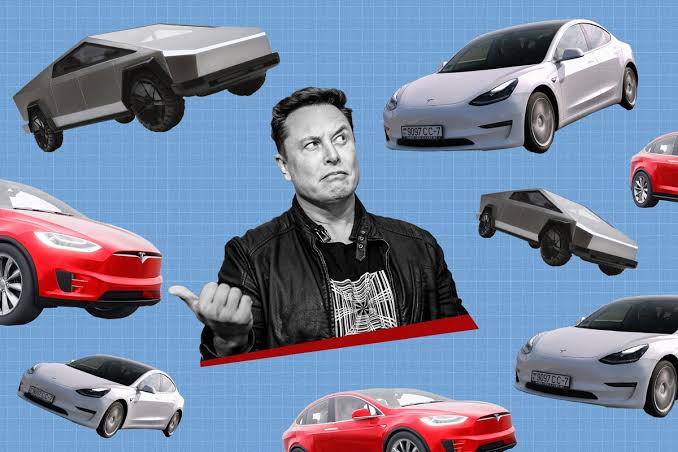
The conversation also highlighted Musk’s contrarian views on branding and advertising. Andreessen recalled a discussion in which Musk stated that the best product in the world should not even require a logo or a brand name on it—citing designs like the Tesla Cybertruck, which carries no traditional Tesla badge because its silhouette is immediately recognizable.
Instead of spending heavily on traditional advertising or investor relations, Musk prioritizes engineering breakthroughs and high-stakes public demonstrations—a strategy Andreessen characterized as putting on “the show of all time” so the product speaks for itself.
Applying the Blueprint Beyond the Private Sector
Williamson and Andreessen also explored how Musk’s efficiency-first mindset translates to government reform. Andreessen noted that public-sector institutions frequently suffer from entrenched bureaucracy and “path dependence,” where compliance matters more than measurable outcomes. Applying a problem-solving framework focused on stress-testing results and removing systemic bottlenecks, Andreessen suggested, offers a stark contrast to how large public institutions traditionally operate.


 By