

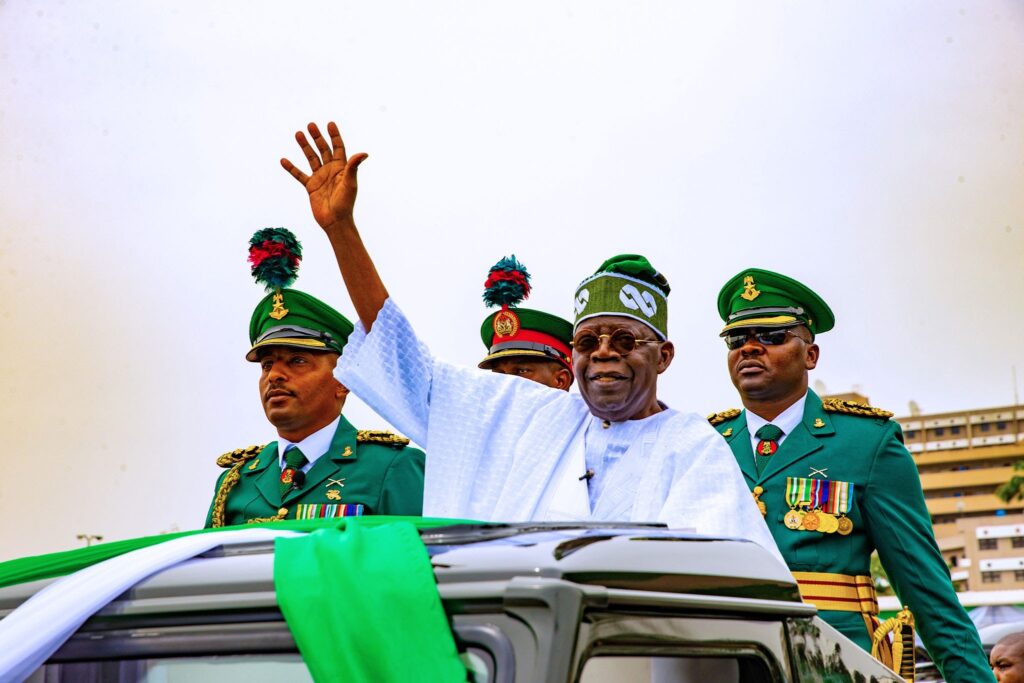
ABUJA, NIGERIA — Nigeria has reached a watershed moment in its security architecture. Following unanimous ratification by all 36 State Houses of Assembly, the National Assembly has formally transmitted the Constitution of the Federal Republic of Nigeria, 1999 (Sixth Alteration) Bill, 2026 to President Bola Tinubu for presidential assent.
The Clerk to the National Assembly, Kamoru Ogunlana, confirmed that every state legislature endorsed the resolution—achieving a 100% approval rating that far surpasses the two-thirds threshold (24 states) mandated under Section 9(2) of the 1999 Constitution. Chief of Staff Femi Gbajabiamila confirmed that President Tinubu has received the bill and will sign it at a formal ceremony following review with the Attorney-General of the Federation.
How Nigeria’s New Two-Tier Policing System Will Work
Since the return to democracy in 1999, Nigeria has operated a strictly centralized police command under federal control. The 2026 constitutional alteration restructures law enforcement into a two-tier model:
Voice of Nigeria
| Jurisdiction | Federal Police Service | State Police Services |
|---|---|---|
| Primary Mandate | Enforcing federal laws and protecting national institutions | Enforcing state laws, maintaining public order, and local crime prevention |
| Key Focus Areas | Terrorism, cybercrime, border security, and inter-state crimes | Community policing, local banditry, theft, and municipal infractions |
| Oversight Body | National Police Council & Federal Police Service Commission | Independent State Police Service Commissions |
| Operational Start | Already active (transitioning mandate) | Subject to certification against minimum national standards |
Built-In Safeguards Against Political Abuse
Critics have long warned that state governors could weaponize local police forces to intimidate political rivals, suppress dissent, or rig elections. To prevent governors from turning state officers into personal militias, the bill embeds strict constitutional guardrails:
- Ban on Unlawful Orders: Governors are explicitly barred from ordering officers to unlawfully arrest or detain citizens.
- Independent Commissions: State Police Service Commissions—appointed on the recommendation of the federal National Police Council—will control hiring, promotions, discipline, and accountability. placng.org
- Federal Intervention Clause: The Federal Police Service can assume temporary operational command in a state if there is a breakdown of public order, institutional incapacity, or evidence of partisan or human rights abuses—subject to presidential authorization and judicial review.
- Arms Control: State officers may only bear arms and ammunition authorized by an Act of the National Assembly.
What Does This Mean for Crime Control and Corruption Eradication?
For decades, a single centralized force has struggled to police a nation of over 200 million people, resulting in severe manpower deficits, slow emergency responses, and systemic graft. Decentralization introduces both major opportunities and steep operational tests:
1. Speed, Local Intelligence, and Crime Control
Under the centralized system, a Divisional Police Officer (DPO) in a rural community often has to wait for directives from Abuja before deploying tactical resources. State police officers recruited from local communities understand native languages, terrain, and social dynamics. Faster response times and grassroots intelligence networks can disrupt criminal cells before attacks escalate.
2. Tackling Police Corruption
Rights groups have consistently noted that underpaid, poorly equipped officers are vulnerable to extortion and bribery. While creating state forces does not automatically eliminate corruption, it creates localized accountability:
- Clearer Responsibility: Governors can no longer blame Abuja when policing fails in their states, nor can police commissioners hide behind distant federal bureaucracy.
- Funding Competition: States that properly fund, equip, and pay their officers competitive wages will attract higher-caliber personnel and enforce stricter disciplinary standards through their State Police Service Commissions. Conversely, cash-strapped states risk recreating the same underfunded, graft-prone conditions unless minimum national standards are strictly enforced. placng.org+ 1
Will State Police Fix Insecurity and Mass Kidnapping?
State police is a critical tool, not a silver bullet, for ending Nigeria’s kidnapping and banditry epidemic.
- Where It Will Help: Bandits and kidnappers rely heavily on vast, unpoliced forests and rural borderlands. State-run forces—working alongside local vigilante networks like Amotekun in the Southwest or community guards in the North—can establish a permanent security presence in vulnerable villages and along highway corridors where federal troops are stretched thin.
- Where Challenges Remain: Criminal syndicates frequently cross state lines. If neighboring states fail to share intelligence or coordinate operations, kidnappers will simply flee across state borders. Furthermore, economic drivers of insecurity—poverty, youth unemployment, and illegal arms proliferation—require socio-economic and military solutions beyond routine policing.
What Happens Next?
Presidential assent is only the beginning of the transition. According to Chief of Staff Femi Gbajabiamila, the Presidential Working Group on State Police has submitted a draft National Policing Bill to the Federal Ministry of Justice for validation. Once transmitted to the National Assembly and passed into law, this companion legislation will define operational procedures, funding grants, and the certification standards each state must meet before putting uniformed state officers on the streets.



 By