
ABT NEWS DESK | www.abtnews.net
Imagine standing outside your bank on a freezing Saturday morning, staring at a locked door, with not a single cent in your pocket. In the mid-1960s, if you missed the bank’s Friday closing bell, you were effectively broke until Monday morning.
That exact nightmare sparked one of the greatest financial revolutions in human history—an invention conceived in a soapy bathtub that changed how humanity handles cash forever: The Automated Teller Machine (ATM).
The Eureka Moment in a Warm Bath
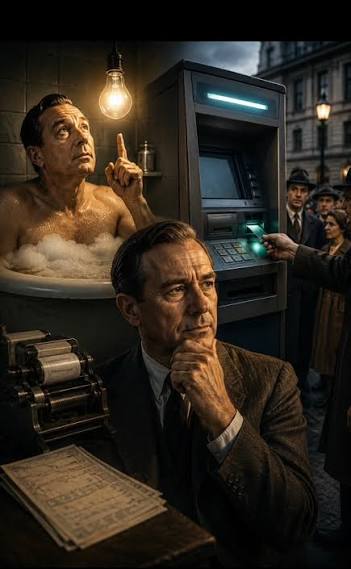
It was 1965 when Scottish inventor John Shepherd-Barron arrived at his local bank branch just one minute late. Furious, stranded without cash for the weekend, and needing a way to unwind, he went home and sank into a hot bath.
As he soaked, a wild idea struck him: If a chocolate vending machine can dispense a bar of Cadbury’s instantly, why can’t a machine dispense cold, hard cash?
Shepherd-Barron immediately pitched his concept to the managing director of Barclays Bank over a glass of pink gin. The bank executive signed off on the spot.
June 27, 1967: The Day Cash Went Automated
Two years later, history was made in Enfield Town, North London. On June 27, 1967, Barclays Bank unveiled the world’s first automated cash dispenser—the Barclaycash machine.
To generate maximum publicity, British television star Reg Varney (from the hit sitcom On the Buses) became the first person in human history to pull money from a wall.
+-----------------------------------------------------------------------+
|                       FUN FACT: RADIOACTIVE MONEY                     |
| Long before plastic cards with magnetic stripes existed, early ATMs    |
| used special cheques impregnated with Carbon-14—a mildly radioactive   |
| substance! The machine detected the radioactive ink, matched it to    |
| the user's secret code, and paid out a maximum of £10 at a time.     |
+-----------------------------------------------------------------------+
Why Your PIN is 4 Digits (Blame the Inventor’s Wife!)
Have you ever wondered why debit cards and modern banking apps default to a 4-digit PIN instead of 5 or 6?
Shepherd-Barron originally designed a 6-digit PIN system based on his six-digit military service number. But when he tested the idea on his wife, Caroline, she delivered a game-changing verdict over dinner:
“John, I can only remember four numbers. If it’s six, I’ll forget it.”
To keep his wife happy—and save millions of future banking customers from forgotten passwords—Shepherd-Barron shortened the global standard to 4 digits on the spot.
Prostitutes, Gamblers, and the Failed 1939 Prototype
While Shepherd-Barron created the first commercially successful ATM, he wasn’t the first to try. In 1939, an eccentric inventor named Luther George Simjian built the “Bankmatic” for the City Bank of New York.
It was a total disaster. Banks pulled the machine after just six months. Simjian later admitted with a laugh:
“The only people using the machines were a small group of prostitutes and gamblers who didn’t want to deal with tellers face-to-face!”
It took nearly three decades, a British bathtub epiphany, and a dash of harmless radioactivity for the world to finally embrace automated banking.
The Legacy Lives On
From a single machine in North London dispensing £10 notes to over 3 million ATMs operating globally today, the automated teller machine laid the groundwork for modern digital finance, cashless transactions, and mobile banking.
The next time you tap your phone or punch in your 4-digit PIN at a corner ATM, remember: you have a missed bank deadline and a wife’s memory to thank for it!
Stay tuned to ABT News (www.abtnews.net) for more exclusive deep-dives into the wild, dramatic histories shaping our modern world!



 By
By