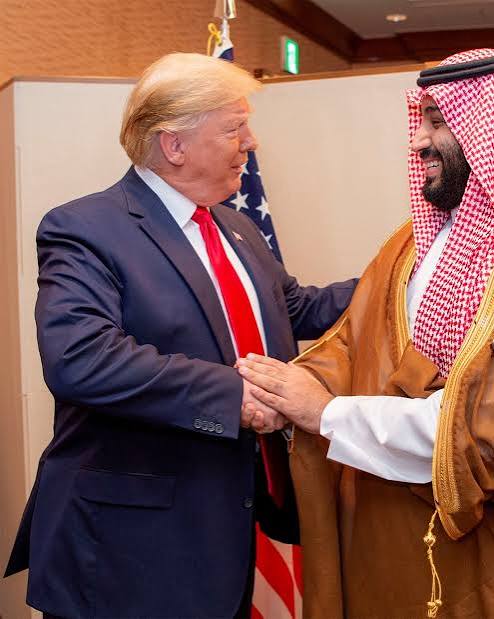

WASHINGTON — In a landmark shift in Middle Eastern geopolitics, the Trump administration has officially approved a historic civilian nuclear cooperation agreement with Saudi Arabia. The sweeping 30-year pact will allow U.S. corporations to develop the Kingdom’s nuclear infrastructure and creates a legal pathway for Saudi Arabia to eventually enrich uranium on its own soil.
The agreement, known as a “123 Agreement” under the U.S. Atomic Energy Act, represents a massive victory for the U.S. nuclear energy sector, positioning companies like Westinghouse to secure multibillion-dollar contracts while shutting out Russian and Chinese competitors.
However, the deal is already sending shockwaves through the global non-proliferation community.
The Missing “Gold Standard”
Unlike recent U.S. nuclear agreements—such as the one signed with the United Arab Emirates in 2009—this pact reportedly drops the strict non-proliferation “Gold Standard”. The Gold Standard legally bars a nation from domestic uranium enrichment and the reprocessing of spent nuclear fuel, which are the two primary pathways to developing a nuclear weapon.
Furthermore, the new agreement does not mandate that Riyadh adopt the International Atomic Energy Agency’s (IAEA) “Additional Protocol,” which allows for unannounced snap inspections of undeclared nuclear sites. Instead, safeguards and monitoring protocols will be determined bilaterally between Washington and Riyadh.
A joint U.S.-Saudi feasibility study will be conducted before any domestic enrichment facility is built on Saudi soil, which will be strictly operated by contracted corporations.
A Shift in Strategic Foreign Policy
The finalization of this deal marks a significant departure from previous diplomatic tracks. Under the Biden administration, a nuclear pact was heavily tied to a broader regional security package that required Saudi Arabia to formally normalize relations with Israel. The Trump administration decoupled the two issues, allowing the civilian nuclear program to advance independently of Israeli normalization.
The timing of the announcement is deeply intertwined with the current regional security climate. The U.S. is currently engaged in a military conflict with Iran, driven in part by Washington’s goal of destroying Tehran’s domestic enrichment capabilities. Allowing Saudi Arabia to enrich uranium introduces a politically sensitive double standard, as Crown Prince Mohammed bin Salman has previously warned that Riyadh would seek its own nuclear deterrent if Iran successfully developed a nuclear weapon.
Despite these proliferation concerns, the administration views the deal as a vital way to cement its alliance with Riyadh amid ongoing Iranian hostilities, while ensuring U.S. rather than Chinese oversight of the Saudi nuclear program.
Powering the Future: AI and Desalination
For Saudi Arabia, the nuclear program is a critical component of its aggressive economic diversification strategy to transition away from a strictly oil-based economy.
Energy demands in the Kingdom are surging, largely driven by the massive power requirements for advanced Artificial Intelligence (AI) data centers, widespread desalination plants, and domestic air conditioning. Currently, a significant portion of Saudi electricity is generated by burning crude oil. By shifting to nuclear power, Riyadh can meet its immense energy needs while freeing up millions of barrels of crude oil for lucrative foreign export.
What’s Next?
President Trump is expected to formally submit the agreement to the U.S. Congress in the coming days. Because the deal lacks traditional non-proliferation guardrails, it is expected to face fierce bipartisan scrutiny from lawmakers on Capitol Hill. Congress will have a set review period to assess the agreement before it can officially enter into force.
Stay tuned to ABT NEWS (www.abtnews.net) as this developing story unfolds.



 By
By