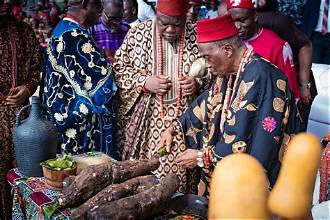

ANCHOR LEAD: Across Igboland, the months of August and September are marked by the rhythmic beating of the Ikoro drum, the display of vibrant masquerades, and the gathering of communities to celebrate the highly revered New Yam Festival (Iri Ji or Iwa Ji). But beneath the pomp, pageantry, and chieftaincy titles lies a glaring, uncomfortable truth that ABT News is bringing to the forefront today: Over 95% of the yams we celebrate with and consume are not grown in Igboland!
They are imported from Benue, Kogi, Kwara, and other states. We are throwing massive cultural parties to celebrate the agricultural sweat of other regions. So, we must ask ourselves: Who is fooling who?
The Mockery of Our Culture
In traditional Igbo society, Yam (Ji) was undisputed as the “King of Crops”. The New Yam Festival was never just a social gathering; it was a thanksgiving for a successful agricultural year. A man’s wealth, industry, and capacity to feed his family were measured by the size of his yam barn (Ọba-Ji). To take the prestigious Eze Ji (King of Yam) title, you had to actually cultivate the yams.
Today, traditional rulers and wealthy elites buy truckloads of yams cultivated in Zaki Biam (Benue State) or Lokoja (Kogi State), transport them to the East, dress in heavy regalia, and cut the yam with ceremonial fanfare. We have turned a profound agricultural milestone into an empty theatrical display. We are celebrating the harvest of lands we do not own. Chai! Who did this to us!?
What Went Wrong? Are We Lazy, or is the Land Barren?
The painful reality is that the soil of southeastern Nigeria remains incredibly fertile. The rains still fall. What died was not the soil, but our agricultural drive.
- The Urban Migration Trap: We traded our hoes for city hustle. The youth migrated to cities in search of quick wealth, leaving the villages populated only by the elderly who lack the physical strength for commercial farming.
- The Menace of Insecurity: We cannot ignore the very real threat of farmer-herder clashes and general insecurity in the forests, which have chased many legitimate farmers away from their ancestral lands.
- Lack of Mechanization: While the rest of the world moved to mechanized agriculture, our farming practices remained stagnant. You cannot feed a modern population or build wealth using the same crude implements our forefathers used three centuries ago.
The Economic Bleeding: Outsiders Smiling to the Bank
This cultural hypocrisy has devastating economic consequences. Every New Yam season, billions of Naira are shipped out of the Southeast economy to enrich farmers and middlemen in the Middle Belt and the North.
By outsourcing the cultivation of our most culturally significant crop, we are outsourcing our wealth creation and job sustainability. We are funding the agricultural expansion of other states while rural poverty and youth unemployment skyrocket in our own backyards. We are consuming, not producing.
The Extinction of Our Indigenous Staples
And it doesn’t stop at yams. What happened to Cocoyam (Ede)? According to Igbo mythology, if yam is the king, cocoyam is his daughter. Yet, cocoyam has practically gone extinct in our markets, replaced by processed wheat and foreign substitutes. Ji Abana (Water yam) and indigenous cassava varieties are suffering the same fate. We are losing our food sovereignty, and with it, our cultural identity.
THE WAY FORWARD: Reversing the Ugly Trend
If we are to save our economy and restore dignity to the Iri Ji festival, drastic and immediate actions must be taken.
1. The Role of Town Unions & Traditional Institutions
- Tie the Culture to the Soil: Town Unions must pass bylaws stating that nobody can take the Eze Ji title without verifiable proof of a local commercial farm.
- Ban Imported Yams for Rituals: Communities should mandate that the yams used for the central Iwa Ji ceremonies MUST be cultivated within the community.
- Community Farming Competitions: Town unions should revive annual farming competitions, using community funds to award substantial cash prizes to the youth with the largest local harvest.
2. The Role of State Governments
- Secure the Farmlands: Governors must prioritize the security of rural farmers. A farmer who fears for his life will not plant.
- Subsidize Mechanization: State governments must provide tractors, modern agritech training, and high-yield, disease-resistant seedlings (especially to revive the extinct cocoyam varieties).
- Accessible Credit: Establish agricultural banks that give zero-interest loans specifically to young farmers operating within the state, bypassing bureaucratic bottlenecks.
3. Empowering Our Farmers
- Cooperative Farming: Individual farmers must form cooperatives to access bulk fertilizer, pool resources for tractors, and negotiate better market prices.
- Adopt Modern Agronomy: We must transition from subsistence farming to commercial agribusiness, utilizing modern irrigation, greenhouse concepts, and soil engineering.
CONCLUSION:
A culture that does not produce what it celebrates is a culture on life support. It is time to stop the mockery. Let us return to the soil, reclaim our agricultural heritage, and ensure that by the next Iri Ji, the wealth, the yams, and the pride are all 100% locally sourced.
This is ABT News, speaking truth to culture.



 By
By