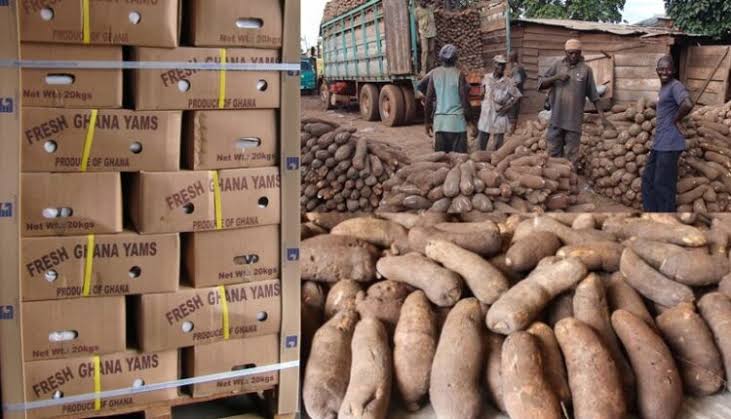

ABUJA, NIGERIA – In what is being hailed as a “strategic financial recalibration,” the United States Government has officially reinstated a key export credit programme aimed at bolstering agricultural trade with Nigeria. This development marks a significant shift in the bilateral relationship between the two nations, moving away from traditional aid toward a commercially driven partnership rooted in structured credit.
With bilateral trade between Nigeria and the U.S. hitting a staggering $15 billion in 2025, much of which is driven by agricultural expansion, this move is viewed by experts as a “calculated credit confidence signal.”
Expert Analysis: A Vote of Confidence in Nigeria’s Financial Maturity
Reacting to the development, a certified Chartered Credit Administration and Management expert and Fellow of the Nigerian Institute of Credit Administration (FICA), described the move as a litmus test for Nigeria’s institutional maturity.
“Export credit frameworks are extended only where there is a measurable level of repayment assurance, regulatory structure, and systemic credibility,” the expert noted. “This move indicates a renewed, albeit cautious, trust in Nigeria’s financial and agricultural value chains. It is the language of dignity, responsibility, and economic sovereignty. Nations do not rise on handouts; they rise on structured credit and disciplined repayment culture.”
What This Means for the Nigerian Agricultural Sector
The reinstatement of this programme allows Nigerian banks to re-enter U.S.-backed financing channels. This is not just a policy shift; it is a liquidity injection into the heart of the Nigerian economy.
For Nigerian Agricultural Professionals, Cooperatives, and Businesses, the benefits are tangible:
- Lower Cost of Equipment Acquisition: The credit facility will ease access to high-end mechanized equipment, tractors, and agro-processing technologies from the U.S. at competitive rates.
- Access to Premium Inputs: Farmers and cooperatives can now more easily secure improved seeds and fertilizers, which are critical for increasing yield per hectare.
- Reduced Liquidity Pressure: By utilizing U.S.-backed financing, local Nigerian banks face less strain on their foreign exchange reserves, allowing for more structured and sustainable trade finance.
- Global Integration: This programme positions Nigerian agro-businesses to meet international standards, facilitating the export of Nigerian processed goods back into global markets.
The Call for Accountability: “Credit is Not Success”
While the news has been met with optimism, stakeholders are warning against the “culture of diversion” that has plagued previous interventions. The Tinubu administration has been commended for its “remarkable efforts” in securing this window of opportunity, but the focus now shifts to implementation.
“Access to credit is not success; disciplined utilization and transparent repayment are,” warns the FICA Fellow. “Nigeria must strengthen credit risk management frameworks. Regulatory bodies must ensure these funds reach real sector players—the actual farmers and processors—not political intermediaries.”
Strategic Roadmap for Stakeholders
To maximize this opportunity, ABT News outlines the following steps for Nigerian participants:
- For Cooperatives: Ensure your financial records and credit ratings are up to date. U.S.-backed credit requires high levels of transparency and accountability.
- For Agro-Businesses: Explore partnerships with U.S. equipment manufacturers. With the credit line restored, Nigerian banks are now more likely to approve Letters of Credit (LCs) for these transactions.
- For Financial Institutions: Uphold global best practices in credit appraisal and monitoring to ensure that Nigeria remains a “low-risk” destination for international credit.
The Bottom Line
The world is watching. The U.S. has extended the credit, and the Nigerian government has opened the door. It is now up to the professionals and businesses within the agricultural ecosystem to prove that Nigeria is ready for global trade.
If managed with integrity, this development will reposition agriculture not just as a means of survival, but as the primary driver of Nigeria’s economic sovereignty.
For more updates on agricultural trade and credit opportunities, visit www.abtnews.net


 By
By