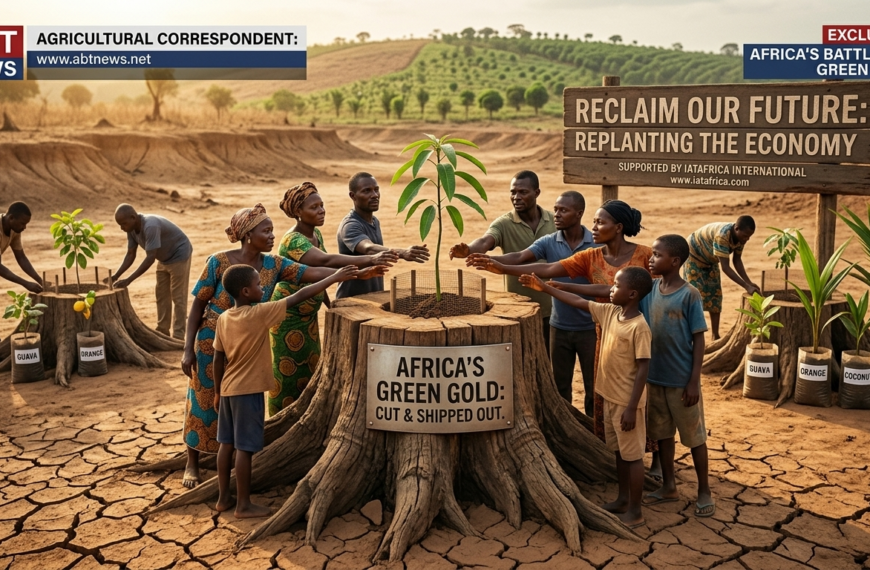

For decades, developing nations have looked to the East for the ultimate economic playbook. The “Asian Tiger” model—built on utilizing abundant, low-cost labor to drive export-led manufacturing—pulled hundreds of millions out of poverty in countries like South Korea, Taiwan, and later, China.
But as Africa’s population booms, a pressing question is echoing through economic forums and policy halls: Can the continent replicate Asia’s manufacturing miracle to secure its own economic future?
According to a recent analysis by The Economist titled “Can Africa take the Asian path to growth?“, the short answer is complicated. The long answer suggests that while the goals of prosperity and industrialization remain the same, the path to get there has fundamentally changed.
The Closing Window of Traditional Manufacturing
The traditional Asian path relied heavily on a predictable formula: move workers from low-yield farming into urban factories, mass-produce textiles and electronics, and export them to wealthy Western consumers.
However, the global landscape of 2026 presents unprecedented hurdles for Africa to simply copy and paste this model:
- The Rise of Automation and AI: The cheap labor advantage is shrinking. Robots and artificial intelligence now perform many of the repetitive assembly-line tasks that once provided entry-level industrial jobs.
- Supply Chain Reshoring: Following the global disruptions of the early 2020s, Western nations are increasingly bringing manufacturing closer to home or “friend-shoring” it to established allies, making it harder for emerging African markets to break in.
- The Green Transition: Developing massive industrial hubs powered by cheap coal—as Asia once did—is no longer viable in a world rapidly prioritizing carbon neutrality and climate targets.
Forging an “African Path” to Growth
If the factory floor isn’t the guaranteed elevator to wealth it once was, what is Africa’s alternative? Economic experts suggest that instead of lamenting the end of the Asian model, Africa is well-positioned to pioneer a new, modern blueprint for growth.
1. The Service and Tech Boom Africa is skipping the analog phase and jumping straight into the digital economy. From Nairobi’s “Silicon Savannah” to Lagos’s booming fintech sector, the continent is exporting services, software, and digital solutions rather than just physical goods. A young, digitally native population is driving this localized tech revolution.
2. Powering the Green Economy While the Asian tigers built their wealth on processing imported raw materials, Africa holds the ultimate trump card for the 21st century: critical minerals. The continent boasts vast reserves of lithium, cobalt, and copper—essential components for electric vehicle batteries and renewable energy grids. By processing these minerals locally rather than exporting them raw, African nations can capture billions in added value.
3. The Power of the AfCFTA For years, it was often cheaper for an African nation to trade with Europe or China than with its immediate neighbor. The African Continental Free Trade Area (AfCFTA) is actively dismantling these barriers. By creating a single, massive internal market of over 1.4 billion people, African businesses can scale up and trade with each other, reducing reliance on Western export markets.
The Verdict
The Economist‘s deep dive highlights a crucial reality: the world has moved on, and the economic ladder Asia climbed has been pulled up. However, a new ladder is being built.
Africa’s immense demographic dividend—it will account for the majority of global working-age population growth in the coming decades—cannot be ignored. The continent may not become the next “factory of the world,” but by leveraging green energy, digital innovation, and barrier-free internal trade, it doesn’t need to be.
Africa doesn’t have to take the Asian path. It is uniquely equipped to pave its own.
For more breaking economic analysis and regional updates, stay tuned to ABT NEWS.


 By
By