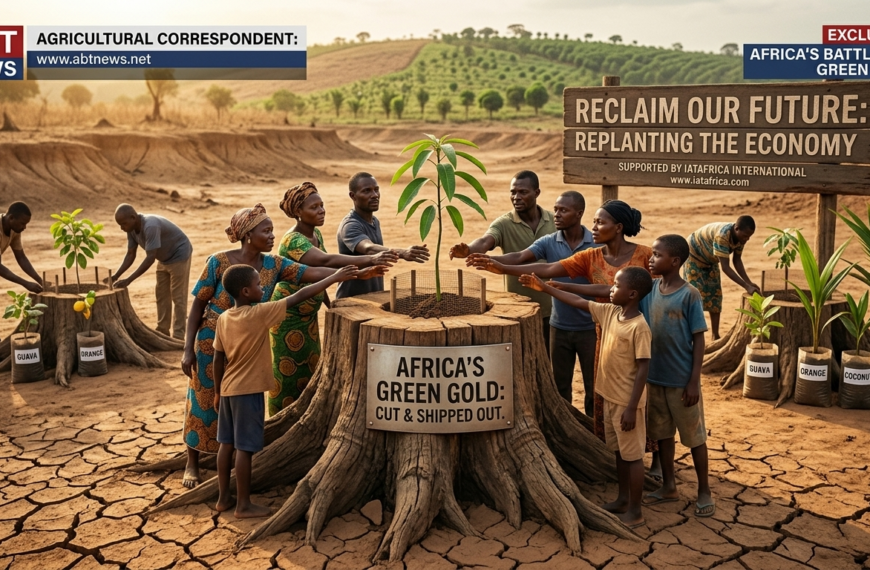
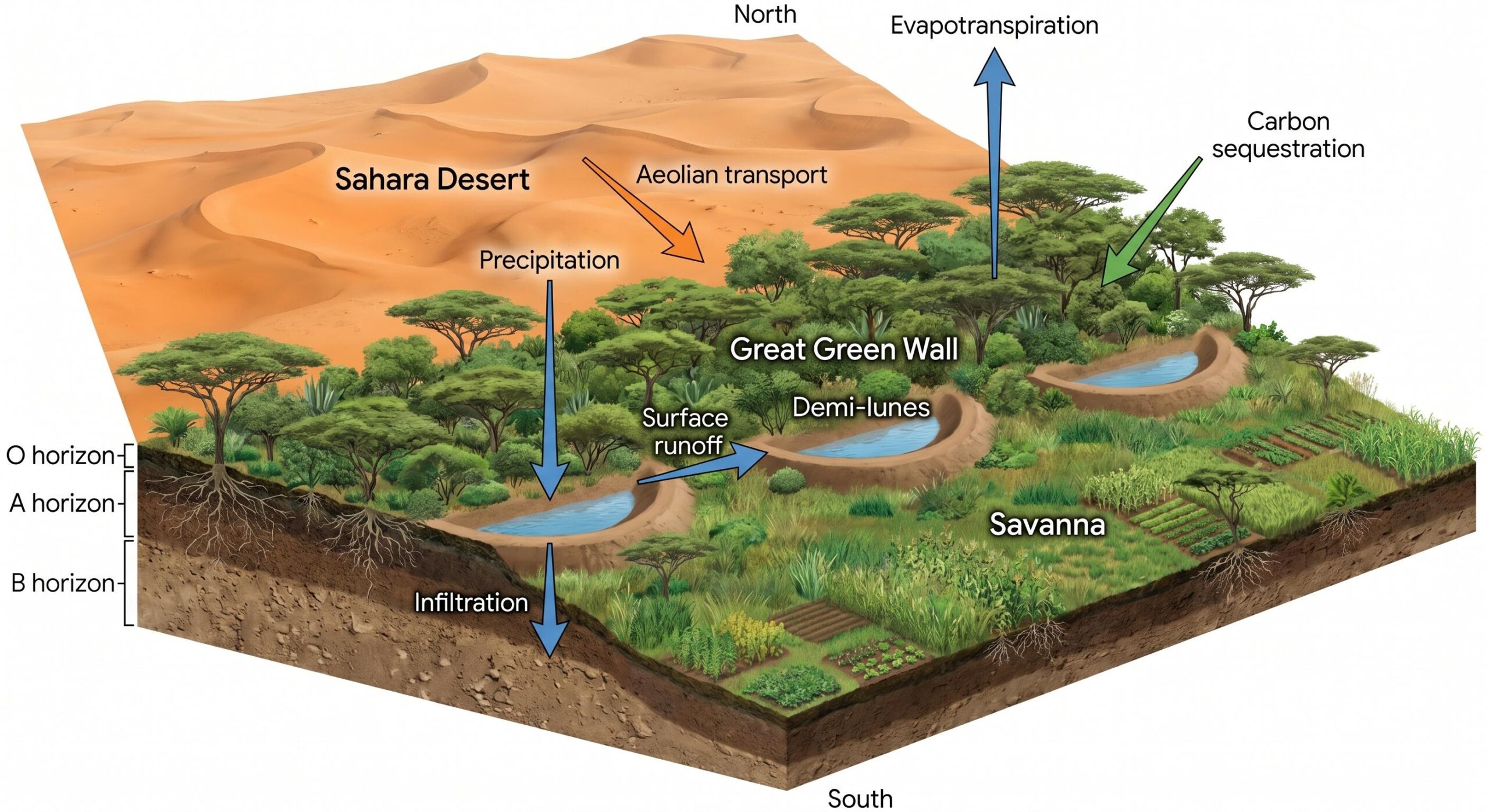

Somewhere between the Atlantic coast of Senegal and the shores of Djibouti on the Red Sea, Africa is attempting an environmental feat never before seen in human history. It is called the Great Green Wall—an ambitious 8,000-kilometer (4,970 miles) restoration belt cutting directly across the Sahel, the vast, semi-arid ribbon of land bordering the southern edge of the Sahara Desert.
While the name evokes the imagery of a massive, rigid structure like the Great Wall of China, the reality on the ground is far more dynamic, organic, and complex. It is not just about putting trees in the ground; it is a collaborative survival strategy designed to combat desertification (the process of fertile land turning into desert), reverse climate degradation, and secure a future for millions of people.
The Evolution: Why a Single Line of Trees Failed
When the African Union originally launched the initiative in 2007, the plan was literal: plant a continuous, 15-kilometer-wide wall of trees spanning the entire width of the continent.
However, nature quickly pushed back. Conservationists and scientists realized that a single, rigid line of trees planted across highly diverse, arid climates simply would not survive the region’s harsh, unpredictable droughts.
Instead, the project evolved into a flexible mosaic of localized ecosystem management. Today, rather than forcing a one-size-fits-all forest, the initiative focuses on:
- Natural Regeneration: Assisting farmers in protecting and nurturing native root systems that already exist underground.
- Water Management: Constructing semicircular water catchments (often called half-moons) to harvest rare rainfall and improve groundwater absorption.
- Agricultural Integration: Blending sustainable farming practices with forestry to improve soil health and grow food simultaneously.
The Massive Scale: Targets for 2030
The footprint of the Great Green Wall is staggering. Backed by more than 20 African nations, alongside major international development banks and environmental groups, the initiative has set clear, quantifiable benchmarks to hit by the end of the decade.
| Key Metric | 2030 Target | Global Equivalent / Impact |
| Land Restoration | 100 million hectares | An area roughly the size of Egypt |
| Carbon Sequestration | 250 million tonnes of $\text{CO}_2$ | Removing millions of cars’ worth of emissions from the atmosphere |
| Economic Development | 10 million green jobs | Creating viable local livelihoods in forestry, agriculture, and land tech |
| Human Impact | Food security for millions | Stabilizing local crop yields and reducing forced climate migration |
Progress and the Long Road Ahead
Though the 2030 deadline is approaching fast, tangible progress has taken root. Roughly 30 million hectares of degraded land have already been rehabilitated across the continent.
In Senegal, millions of drought-resistant native trees have been successfully established. Meanwhile, Ethiopia has restored vast tracts of its highlands through massive community-led rehabilitation programs. Nations like Nigeria and Niger have seen localized turnarounds, with once-barren landscapes transforming back into productive farmlands and grazing pastures.
However, complex hurdles remain. Reaching the final targets will require navigating localized conflicts in the Sahel, securing consistent international funding streams, and coordinating across dozens of distinct regional governments.
What makes the Great Green Wall uniquely resilient, despite these challenges, is its ownership model. It is not a project imposed from the outside; it is being carried out by the local farmers and communities who have the absolute most at stake. It stands as a powerful reminder that fighting global climate change often starts with local communities reclaiming the soil right beneath their feet.


 By
By