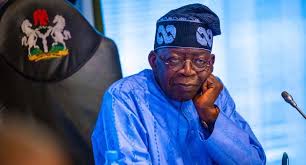

ABUJA, NIGERIA — In what is shaping up to be one of the most audacious government impersonation schemes in recent history, Nigerian President Bola Ahmed Tinubu has ordered an urgent anti-corruption investigation into a fictitious federal agency that was established inside his own presidential office complex.
The “ghost” department, calling itself the Presidential Foreign Intervention Promotion Council (PFIPC), didn’t just exist on paper. Before being exposed, the fake agency had successfully acquired physical office space in Abuja’s heavily secured Federal Secretariat, opened bank accounts with the Central Bank of Nigeria and 33 commercial banks, and secured a staggering 1.3 billion naira ($950,000 / £700,000) allocation in the country’s official 2026 national budget.
The Con Behind the Council
According to presidential spokespeople, the entire operation was built on a series of highly sophisticated forgeries. Investigators believe the primary mastermind behind the scheme is Adeniyi Adeyemi Matthew, who appointed himself as the “director-general” of the PFIPC.
The presidency alleges that Matthew forged a formal letter from Femi Gbajabiamila, the president’s chief of staff, using falsified signatures, official seals, and reference numbers to bypass standard security and administrative protocols. Matthew reportedly used these forged documents to:
- Infiltrate the Federal Secretariat, the sprawling complex housing Nigeria’s core ministries.
- Open unauthorized accounts across dozens of commercial banks.
- Engage with foreign diplomats and seek international support under a false presidential mandate.
“The government must be protected against impersonation, forgery, abuse of official identity, and the exploitation of weaknesses in the public service,” President Tinubu’s office said in an official statement.
A Hunt for the “Director-General”
As the police launched an eight-count criminal charge including forgery and impersonation, Matthew went into hiding, sparking a nationwide police manhunt.
However, before vanishing, Matthew spoke to local media, strongly asserting his innocence. He claimed the PFIPC was legally established in 2024 to attract international trade and investment. Matthew hit back with explosive counter-accusations, claiming that senior administration officials attempted to hijack the agency’s funding and demanded massive bribes during his appointment process, allegations the presidency has flatly denied.
Growing Political Pressure
While the Accountant-General’s Office has confirmed that the 1.3 billion naira allocation had not yet been disbursed to the PFIPC, the political fallout has been swift.
With a highly anticipated general election scheduled for January, opposition leaders have pounced on the scandal. Former Vice President Atiku Abubakar, who is challenging Tinubu’s re-election bid, called the incident a symptom of “systemic rot” and demanded a fully independent judicial inquiry rather than an internal government probe.
“Nigerians deserve the whole truth, not carefully scripted press statements,” an opposition spokesperson stated. “We need a truly independent investigation that follows the evidence wherever it leads. No sacred cows.”
Timeline of the Scandal
How did a completely fictitious agency manage to insert itself into Nigeria’s highest levels of government and secure a million-dollar budget? Here is how the situation unfolded:
2024 PFIPC Established
The fictitious “Presidential Foreign Intervention Promotion Council” begins operations using allegedly forged presidential appointment documents.
October 2025 First Forgery Flagged
Chief of Staff Femi Gbajabiamila detects suspicious documents and alerts federal police that his signature was forged by suspect Adeniyi Adeyemi Matthew.
January 2026 Budget Sneak-Through
Despite the active police investigation, the fake agency successfully secures a 1.3 billion naira ($950,000) line item in Nigeria’s official 2026 Appropriation Act.
July 1, 2026 Public Accusations Mount
The presidency publicizes the scale of the fraud, accusing Matthew of misleading the Accountant-General to open bank accounts and meeting foreign ambassadors without authorization.
July 7, 2026 Tinubu Demands 30-Day Probe
President Bola Ahmed Tinubu directs the Independent Corrupt Practices and Other Related Offences Commission (ICPC) to launch a full investigation.
July 27, 2026 Scheduled Court Date
Matthew and two alleged co-conspirators are scheduled to face criminal charges in a Federal High Court in Abuja, though Matthew remains at large.
Security Weaknesses Exposed
President Tinubu has instructed the anti-corruption commission not only to trace any movement of funds but to identify the “institutional and procedural weaknesses” that allowed a non-existent council to gain such high-level official legitimacy. As investigators dig into how the budget loophole was exploited, the administration faces mounting pressure to deliver transparent answers before the nation heads to the polls.

 By
By