
By ABT News Desk |
In March 1974, a world accustomed to the dawn of the digital age and post-war stability was stunned by a surreal headline: a Japanese Imperial Army intelligence officer had just emerged from the dense jungles of the Philippines, fully armed and wearing a patched uniform, believing that World War II was still raging.
Lieutenant Hiroo Onoda had spent nearly 29 years waging an isolated guerrilla war, long after the rest of the globe had moved on. His extraordinary journey remains one of the most astonishing tales of unwavering discipline, psychological endurance, and historical perseverance ever recorded.
Orders That Lasted Three Decades
In December 1944, a 22-year-old Onoda was deployed to Lubang Island in the Philippines. His mission was clear yet absolute: sabotage enemy infrastructure, disrupt Allied plans, and above all never surrender or take his own life.
His commanding officer, Major Yoshimi Taniguchi, gave him a parting directive that would echo across decades:
“It may take three years, it may take five, but whatever happens, we’ll come back for you.”
When American forces captured the island in early 1945, Onoda and three other soldiers retreated deep into the mountainous jungle. Soon after, Japan officially surrendered. But on Lubang Island, the news never truly penetrated.
Rejecting Peace as “Enemy Propaganda”
Over the years, allied forces and Japanese authorities made extensive efforts to inform the remaining holdouts that the war had ended. Leaflets dropped from airplanes, family photographs, letters from home, and official surrender orders from high-ranking generals were showered across the island.
Trained extensively in counter-intelligence and psychological warfare, Onoda and his men analyzed the documents and concluded they were elaborate forgeries. Declared legally dead by the Japanese government in 1959, Onoda continued his guerrilla campaign—surviving on stolen rice, bananas, coconuts, and cattle while occasionally clashing with local police and villagers.
Gradually, his companions fell away: one surrendered in 1950, another was killed in 1954, and the final companion was shot in 1972 during a skirmish. From that moment on, Onoda fought the Second World War entirely alone.
The Bizarre Rescue Mission
The impasse finally broke in February 1974, thanks to an eccentric young Japanese college dropout and adventurer named Norio Suzuki. Suzuki famously declared that his life goals were to find “Lieutenant Onoda, a panda, and the Abominable Snowman, in that order”.
Miraculously, Suzuki tracked Onoda down in the jungle within just four days. Though initial meetings were tense—Onoda nearly shot Suzuki upon noticing his modern woolen socks—the two men struck up an unlikely friendship.
However, Onoda remained steadfast: he refused to stand down unless he received direct orders from his original commanding officer.
The Final Order and Return Home
Determined to end the saga, the Japanese government finally managed to track down Major Yoshimi Taniguchi who by then was an aging bookseller. Taniguchi was flown to Lubang Island, and tracked down Onoda in his military uniform, and then formally rescinded the combat orders he had issued 29 years prior.
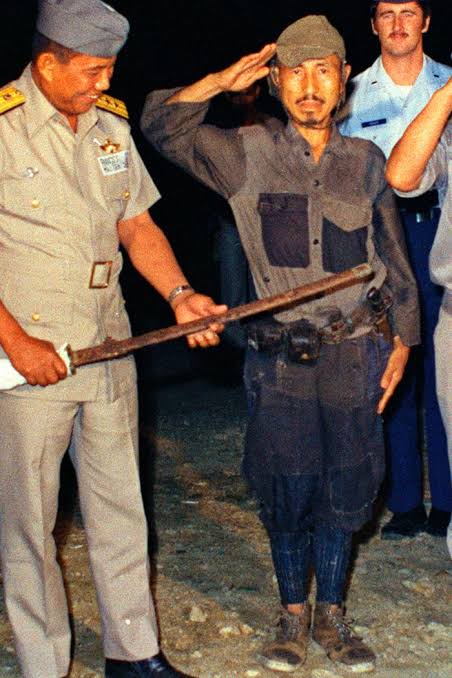
On March 10, 1974, a weeping Onoda snapped a crisp salute, handed over his functioning rifle, 500 rounds of ammunition, and a family-inherited dagger, bringing his private war to a close. What a touching gesture!
Pardoned by Philippine President Ferdinand Marcos for his wartime actions, Onoda returned to Japan to a massive hero’s welcome. He later moved to Brazil to run a cattle ranch before returning to Japan to establish wilderness survival schools for youth. He passed away quietly in 2014 at the ripe age of 91, leaving behind a legacy that continues to this very day to captivate historians, filmmakers, and novelists worldwide.



 By







 By