
The clock is mercilessly ticking toward June 30. Across South Africa, a chilling chant echoes through the streets, growing louder with each passing day: “Mabahambe”—They must go.
For hundreds of thousands of undocumented migrants, the countdown is not political theater; it is a matter of life and death. Armed gangs are already going door-to-door. Machetes are being drawn. And as an ominously quiet winter descends on the country, an explosive question hangs in the air: What happens when the deadline strikes?
“They Came With Machetes”
Esnat Joseph’s nightmare began in the dead of night. Huddled in her home in a Durban informal settlement, the 36-year-old Malawian mother of one-year-old triplets was confronted by a mob of ten men. They did not come to talk; they came armed with machetes and whips.
“They told me: ‘You must leave. We don’t want you people to stay here any longer,'” Joseph recounted, her voice trembling. “They cut my husband on his head and his neck. They were holding his neck like they wanted to kill him. He survived only by the grace of God.”
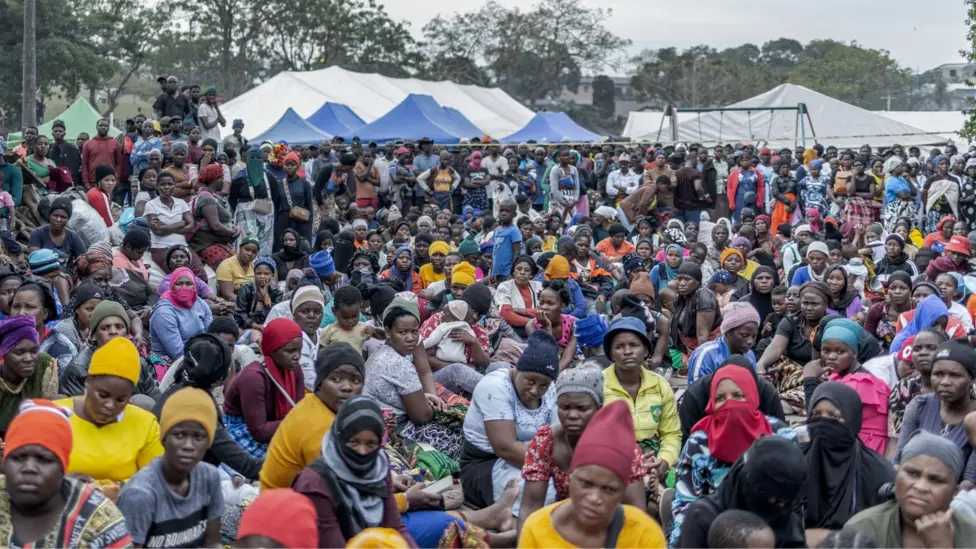
Today, Joseph is one of nearly 7,000 terrified foreigners huddled in an open field in Durban, sleeping under the bitter cold sky. They are waiting for buses, waiting for planes, waiting for any escape route back to Malawi, Nigeria, Ghana, or Zimbabwe. They are fleeing a country that has rapidly transformed from the continent’s most developed sanctuary into a hostile hunting ground.
The June 30 Ultimatum
The panic has been triggered by a coalition of anti-migrant groups, including “March and March” and the ActionSA party, who have unilaterally declared June 30 as the final day for all undocumented migrants to leave the country.
While organizers claim their protests are peaceful and legally motivated, the reality on the ground is terrifying. Viral social media videos show prominent protest leaders confronting foreigners on the streets. In one chilling encounter, Nkosikhona Ndabandaba—a protest leader with 1.4 million followers—calmly tells a Congolese man: “30 June is the deadline, but it’s not that you have to leave on 30 June. Leave now.”
When asked what will happen when the deadline expires, Ndabandaba’s response offered a dark warning: “On 30 June I can’t control the people of South Africa.”
Memories of the brutal xenophobic riots of 2008—which left 62 people dead—are fresh in the minds of those packing their bags. With local elections looming in November, unscrupulous politicians are fanning the flames, blaming the country’s staggering 32.7% unemployment rate and failing public services entirely on the estimated three million-plus foreigners living within its borders.
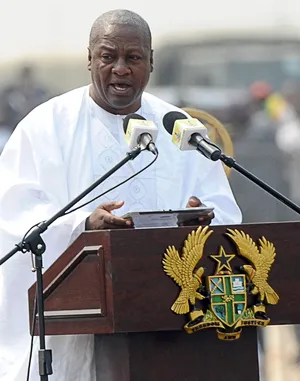
President Cyril Ramaphosa has scrambled to defuse the ticking time bomb. In a national address, he condemned the “scapegoating of vulnerable people” and deployed “Operation New Broom,” which has seen government excavators flattening migrant-run informal shops in Johannesburg. The government hopes that by showing it is cracking down on illegal immigration—arresting 40,000 undocumented individuals this year—it can appease the mobs.
But for the migrants trapped in their homes, terrified to even take an Uber or walk their children to school, the government’s intervention feels too little, too late.
The Day After: A South Africa Without Migrants
As the mass exodus accelerates, a profound and unsettling question remains completely unanswered by the protest leaders: What will South Africa look like on July 1st?
If the mobs get their wish and the borders are sealed behind the fleeing buses, the immediate aftermath will likely be an economic shockwave that hits ordinary South Africans the hardest.
1. The Collapse of the Informal Economy In downtown Johannesburg and townships nationwide, the sudden vanishing of spaza shops, hair salons, and street vendors will leave massive voids. These micro-economies, heavily driven by Ethiopian, Somali, and Malawian migrants, provide ultra-cheap goods to South Africa’s poorest citizens. With these businesses bulldozed or abandoned, the cost of basic survival in the townships will instantly spike.
2. A Crisis in the Labor Market Protesters chant that migrants are stealing jobs. But as analyst Prof. Shepherd Mpofu notes, migrants are overwhelmingly employed in grueling, low-paying jobs that locals historically refuse to do, or accept wages well below the legal minimum. From security guards working night shifts to domestic servants and farm laborers, the departure of this desperate workforce will leave employers scrambling. Middle-class South Africans will face skyrocketing costs for domestic help, while agriculture and private security sectors could face sudden operational paralysis.
3. The Unfulfilled Promise of Prosperity The most dangerous fallout of the mass exodus will be the bitter realization of the South African youth. When the foreigners are gone, the staggering 32.7% unemployment rate will not magically vanish. The structural decay, corruption, and systemic economic inequality that actually plague the nation will remain entirely intact. When the scapegoats are removed and the hospitals are still full, and the schools are still underfunded, who will the angry mobs turn on next?
For now, there is no time to think about July 1st. There is only the frantic rush to the borders.
At the sprawling encampment in Durban, the first buses organized by the Malawian consulate have finally arrived. As the terrified families pushed their way aboard, leaving their lives and belongings behind, a new chant rose from the crowd.
They weren’t chanting the protesters’ demand of “Mabahambe” (They must go). They were chanting “Siyahamba.” (We are leaving)
Stay tuned to www.abtnews.net for live updates as the June 30 deadline approaches. Send all your advertising enquiries to advertise@abtnews.net or +447918790290


 By
By