
Special Follow-Up Analysis | www.abtnews.net
By ABT NEWS Editorial Desk, with contributions from Mr Boniokoye Imegwu (Member, Chartered Institute of Logistics & Transport, Reading, England)
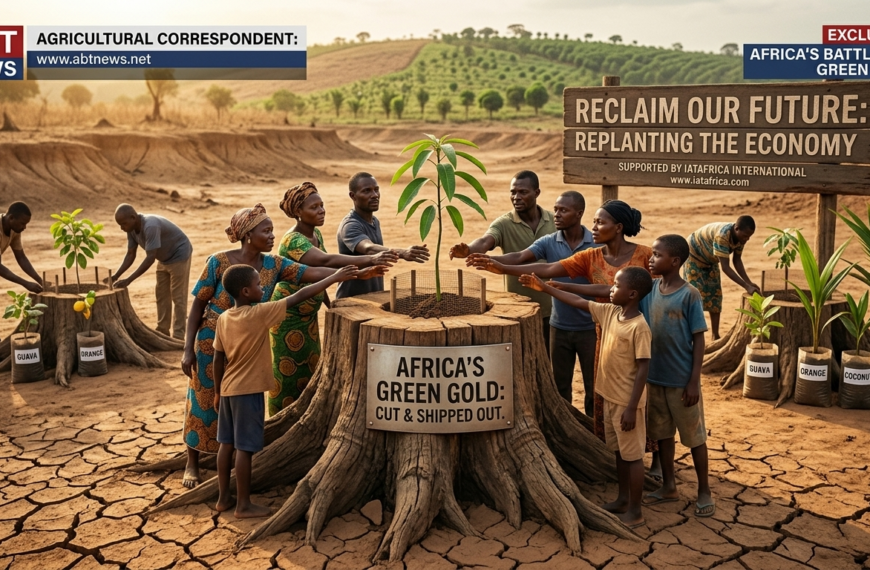
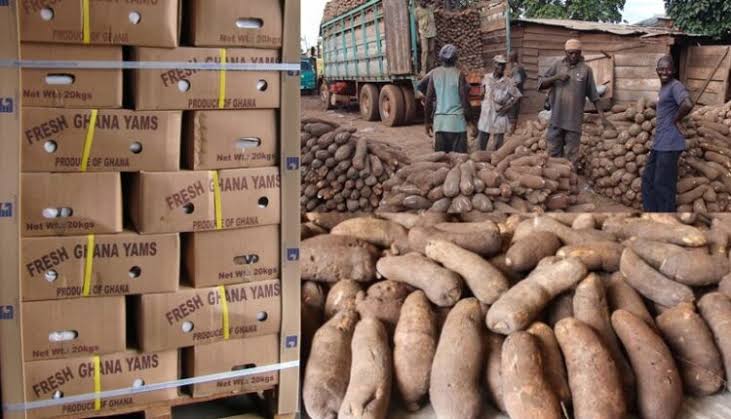
Following ABT NEWS’ explosive report on West Africa’s agricultural export trade, industry leaders and global readers have weighed in on the contentious dynamic between Nigeria and Ghana. While our initial piece exposed how Nigerian-grown tubers frequently enter European markets under Ghanaian branding, prominent logistics expert Boniokoye Imegwu offers a stark counter-narrative: Ghana isn’t the villain, rather Nigeria is its own worst enemy!
Production Titans, Export Ghosts
The stark contrast between agricultural output and commercial export revenue reveals a massive structural failure within Nigeria’s trade machinery:
- Nigeria’s Output: Produces over 65 million tonnes annually (approx. 70% of the world’s total crop).
- Ghana’s Output: Produces 11 million tonnes annually.
- The Export Reality: Ghana exports tens of thousands of tonnes of certified yam annually to London, Amsterdam, and New York. Nigeria remains virtually invisible on foreign supermarket shelves.
Nigeria possesses an overwhelming comparative advantage in raw produce, but Ghana developed the competitive advantage required for international commerce. Ghana did not hijack the market; it simply built what Nigeria neglected: phytosanitary certification systems, modern packaging, storage infrastructure, cold-chain logistics, and port efficiency.
A Symptom of the “Nigerian Malaise”
This failure is not isolated to agriculture. Indeed, it reflects a chronic national pattern of doing the heaviest lifting for the lowest return:
- Cocoa vs. Chocolate: Exporting raw beans while importing premium processed goods.
- Crude Oil vs. Refined Fuel: Shipping unrefined crude while relying on foreign refineries.
- Raw Tubers vs. Value Addition: Selling raw yams at farm-gate prices while foreign entities capture the high-margin retail value.
The Roadmap to Reclaiming the Market
Rather than directing national indignation toward Ghana, Nigeria must focus on building the farm-to-supermarket pipeline. Key strategic priorities include:
- Export Clusters: Establishing dedicated aggregation, grading, and conditioning centers across major yam-producing belts.
- Traceability & Standards: Streamlining phytosanitary checks and port procedures with the Nigerian Export Promotion Council (NEPC).
- Industrial Processing: Moving beyond raw exports into high-value derivatives like yam flour, flakes, and frozen packaged products for the global market.
Nigeria has the land, the farmers, and the crop. It is time to build the infrastructure. The true scandal is not what Ghana is doing to West African trade. Rather it is what Nigeria continues to leave lying by the roadside!


 By
By