

By ABT NEWS Desk
Every entrepreneur knows the golden rule: listen to your customers. But in practice, gathering and acting on the Voice of the Customer (VoC) is often treated as a nice-to-have customer service metric rather than a fundamental business objective.
If you need proof of what happens when you truly listen to user behavior, look no further than one of Africa’s most successful financial technology innovations.
The M-PESA Accident: When Customers Show You the Real Product
Around 2003, Vodafone’s Nick Hughes was exploring a specific hypothesis: could mobile phones help people in Kenya repay microfinance loans? By 2005, a pilot was launched with roughly 500 customers and 15 agents.
But then the users had a different idea!
Instead of just repaying loans, customers began using the service to send money to one another. The product team realized they had inadvertently stumbled upon a much larger, more painful problem: sending cash from Nairobi to family members in rural areas was incredibly difficult for the unbanked population.
Instead of forcing users back into the original microfinance box, the team listened, adapted, and changed direction. When M-PESA officially launched in 2007, they conservatively targeted 300,000 customers in their first year. Because they built what the market actually asked for, they reached 2 million. WOW!
The lesson for modern founders is absolute: sometimes your customers will show you the real product. What started as an experiment transformed into Africa’s premier mobile money infrastructure simply because the founders paid attention when users utilized the technology in unexpected ways.
The Hard ROI of Listening
Treating the Voice of the Customer as a core operational strategy isn’t just about building better products; it is a massive driver of revenue and retention.
When customer feedback is aggressively captured, analyzed, and acted upon, the financial results are undeniable. Recent market data highlights exactly why VoC must be a boardroom priority:
- Massive Retention Gains: According to research by the Aberdeen Group, highly customer-centric firms that utilize VoC programs enjoy a 5.1x greater year-over-year increase in customer retention compared to those that don’t.
- Revenue Acceleration: Forrester research indicates that “customer-obsessed” brands that actively act on feedback experience 41% higher revenue growth.
- Loyalty through Responsiveness: Customers are 2.4x more likely to stick with a brand that demonstrates it can listen and solve problems quickly.
When you fail to act on VoC data, you aren’t just missing out on feature ideas, you are leaving at-risk revenue on the table.
Building a VoC Engine in Your Business
To move from passive listening to active growth, entrepreneurs need to formalize how they capture feedback across the entire customer lifecycle.
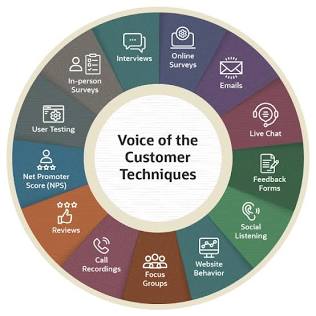
1. Expand Your Listening Channels
Don’t rely solely on annual surveys. Monitor critical “moments of truth”: onboarding, customer support interactions, and social media mentions. If users are bypassing your intended features to solve a different problem, your analytics and support logs will tell you.
2. Tie Feedback to Financial Data
A rising Net Promoter Score (NPS) means nothing if revenue is flatlining. Connect your customer experience metrics directly to your retention rates, upsells, and churn cost. When VoC is measured in hard-currency ROI, it secures executive attention and resources.
3. Close the Loop
Collecting data is only step one. The true value chain of VoC requires cross-functional collaboration. If a customer reports a friction point, product teams must adjust the roadmap, marketing must clarify messaging, and sales must adapt their pitch.
Your original business plan is just a hypothesis; your customers hold the actual answers. By making the Voice of the Customer a fundamental, non-negotiable objective, you position your company to catch the next massive pivot before your competitors even realize the market has shifted.



 By
By