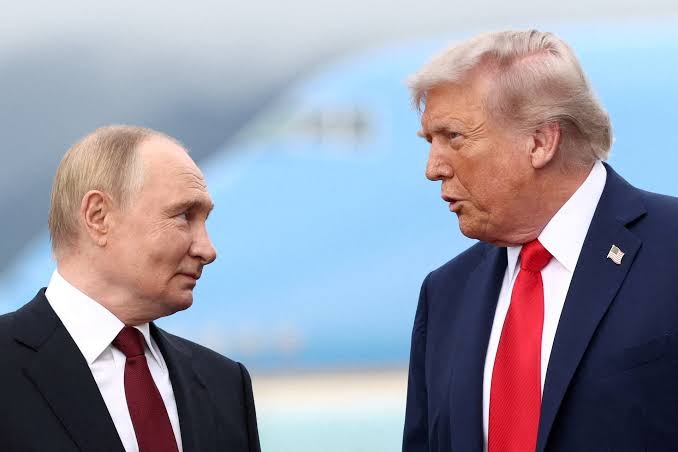

WASHINGTON / LONDON / KYIV — In a stunning reversal of years of strict Western isolation and economic warfare, US President Donald Trump has announced a high-stakes energy agreement with Russian President Vladimir Putin to rush hundreds of thousands of tons of Russian diesel to American and global markets.
The announcement, rolled out via social media following what the White House termed a “highly successful” leaders’ discussion, has instantly detonated a political firestorm. Bypassing a sweeping Russia sanctions package he signed just weeks prior, Trump’s pivot to Moscow has left European allies scrambling, sent shockwaves through the UK government, and drawn a blistering condemnation from Ukrainian President Volodymyr Zelenskyy.
1. The Anatomy of the Deal: What Did Trump and Putin Agree To?
Under the newly brokered arrangement, the US Treasury Department’s Office of Foreign Assets Control (OFAC) has immediately issued a temporary general licence permitting transactions involving Russian diesel.
The delivery schedule is aggressive:
- Immediate Delivery: Over 300,000 metric tons of diesel (roughly 2.25 million barrels).
- Next Wave: An additional 500,000 tons scheduled for November.
- Scale-Up: A subsequent tranche of 1 million tons “immediately thereafter,” with millions more contingent on the operational status of Russian refineries.
For a White House desperate to inject liquidity into a bleeding energy market, the move is designed to force a fast, massive downward correction on skyrocketing pump prices.
2. Crude vs. Refined: Why Turn to Russia When Venezuela and the Middle East Are Options?
A central question dominating economic circles is simple: Given that the United States maintains access to crude oil supplies from the Middle East and Venezuela, why make a deal with Moscow?
The answer lies in the crucial technical difference between crude oil and refined petroleum products.
- The Refining Bottleneck: While crude oil is abundant, the global economy is currently suffering from a severe refining and finished-product deficit, heavily aggravated by the ongoing war with Iran, which has disrupted critical transit lanes like the Strait of Hormuz and choked off fuel logistics.
- Ready-to-Use Fuel: Crude oil from Venezuela or the Middle East requires weeks or months of processing through specialized refineries before it transforms into usable fuel. Russia, conversely, possesses massive surpluses of already-refined diesel ready for immediate maritime export. By tapping straight into Russian diesel inventories, Washington bypasses domestic refining bottlenecks entirely, addressing an acute product shortage rather than a raw material deficit.
3. What Made Trump Do It? The Domestic Pressure Cooker
Political survival and economic pragmatism are driving forces behind Trump’s bold gamble.
With the high-stakes November 3 midterm elections looming just weeks away, the White House is facing a devastating voter backlash over soaring inflation. Average diesel prices in the United States have hovered near historic highs—surpassing $6.25 to $6.28 per gallon—gutting the profit margins of American farmers, ranchers, and independent truckers.
Furthermore, reports indicate that Trump pursued the agreement after Zelenskyy repeatedly rebuffed American entreaties to halt drone and missile strikes on Russian fuel refineries. Trump publicly noted that those Ukrainian strikes were triggering a devastating global diesel crunch, prompting the US president to take matters into his own hands to stabilize energy costs at home.
4. “A Weak Decision”: Zelenskyy’s Furious Response
In Kyiv, the reaction was swift and unforgiving. Ukrainian President Volodymyr Zelenskyy lashed out at the White House, denouncing the agreement as a “weak decision on the part of strong partners”.
“Gifts to Putin will not bring peace or any benefit to the civilised world,” Zelenskyy posted on social media, warning that the influx of cash from the diesel deal directly translates into an investment in Russia’s war machine, enabling Moscow to “kill more and wage war for longer”.
Ukraine maintains that easing sanctions on Russian energy products completely undercuts the collective security architecture built since 2022, rewarding an adversary at the expense of frontline democracies.
5. Shockwaves in London and Brussels: A Fracture in Western Unity
The transatlantic alliance is facing its most severe fracture in years:
- The United Kingdom: Downing Street quickly moved to contain the fallout, issuing a firm pledge that the UK government will “maintain pressure on Russia”. However, the move triggered intense domestic blowback, with political opposition leaders and former ministers labeling the US policy shift an “appalling betrayal of Ukraine” and highlighting deep uncomfortable divergences in Anglo-American strategy.
- The European Union: Brussels officials reiterated that existing EU sanctions—including the total ban on seaborne Russian crude and refined petroleum products—remain legally unchanged. While lower global fuel prices could theoretically ease macroeconomic inflation pressures across the Eurozone over time, European capitals have expressed deep private alarm over Washington’s unilateral dismantling of G7 sanctions discipline.
6. Who Benefits Most?
As markets digest the historic reversal, analysts agree on the primary beneficiaries and casualties of the pact:
- The Winners: Vladimir Putin’s government secures a much-needed multi-billion-dollar revenue lifeline, vital breathing room for its economy, and a propaganda victory that cracks Western economic isolation. Domestically, President Trump and the Republican ticket hope to claim a political win by driving down painful fuel costs for working-class Americans right before voters head to the ballot boxes.
- The Losers: Ukraine’s defense strategy suffers a major blow, both financially and strategically, as Western resolve on petroleum sanctions visibly fractures.
As the temporary US treasury license runs its course toward early 2027, the Trump-Putin diesel deal has permanently altered the geopolitical landscape, proving that when domestic political survival meets economic crisis, long-standing geopolitical doctrines can change overnight.
Stay tuned to ABT NEWS (www.abtnews.net) for ongoing updates on this developing global story.



 By
By