


ABT NEWS EXCLUSIVE REPORT www.abtnews.net
In October 2025, when popular Kenyan digital creator and entrepreneur That Girl Boina permanently shut the doors of Waxaholic Studio, her boutique hydrafacial and waxing salon in Nairobi’s Central Business District, it was not for a lack of market demand, crushing taxes, or power outages. It was because the very people she hired and trusted to manage her dream were quietly running a parallel business out of her front desk, diverting payments to personal accounts, and leaving her to carry all the liabilities.
Her story, which subsequently went viral and garnered nearly a million views across social media, opened the floodgates to a terrifying, open secret across the continent: African businesses are not just dying from harsh macroeconomic climates, they are being systematically dismantled from within by trusted hands that are entrusted with driving the business to profitability.
From micro-enterprises operating in street markets to multi-million-dollar retail conglomerates, employee theft and staff sabotage have escalated into an existential epidemic across Africa, with Nigeria sitting at the turbulent epicenter of this systemic decay.
The Nigerian Context And The Scope Of The Crisis
While cases like Waxaholic Studio or Ghana’s sports journalist Muftawu Nabila, whose electronics shop was almost destroyed by a single dishonest attendant vividly illustrate the vulnerability of small businesses, the problem takes on a staggering magnitude in Nigeria.
In Nigeria, internal enterprise sabotage operates almost like an organized industry. Small and Medium Enterprises (SME) owners in commercial hubs such as Lagos, Aba, Kano, and Port Harcourt frequently report sophisticated schemes:
- Point-of-Sale (POS) & Direct Transfer Fraud: Front-line staff present customers with personal bank accounts or unregistered POS terminals while claiming company machines are “out of network service.”
- Procurement & Supplier Inflation: Procurement officers, as seen in the case of Kenyan fashion brand IKOJN, collude with suppliers to inflate raw material costs and split the padded margins.
- Ghost Inventory & Stock Diversion: Warehouse staff and sales associates record broken, expired, or unsellable stock while illegally liquidating prime inventory on the open market.
According to data from PricewaterhouseCoopers (PwC), 63% of organizations in East Africa reported experiencing economic crime, compared to a global average of 46%.
In West Africa, particularly Nigeria, informal sector losses to internal fraud are estimated to devour up to 15–20% of annual gross revenues for small businesses—a margin that frequently makes the difference between survival and sudden bankruptcy.
Who Ultimately Loses Out When the Business Goes Bankrupt?
When a business collapses due to internal theft, the staff members committing the crime often operate under the immediate illusion of “free money.” However, the cascading failure leaves devastation across the entire socio-economic food chain:
                            ┌────────────────────────────────────────┐
                            │     Employee Theft & Sabotage Occurs   │
                            └───────────────────┬────────────────────┘
                                                │
                                                ▼
                            ┌────────────────────────────────────────┐
                            │    Business Cash Flow & Liquidity Fail │
                            └───────────────────┬────────────────────┘
                                                │
                                                ▼
                            ┌────────────────────────────────────────┐
                            │    Forced Insolvency / Liquidation     │
                            └───────────────────┬────────────────────┘
                                                │
          ┌─────────────────────────────────────┼─────────────────────────────────────┐
          ▼                                     ▼                                     ▼
┌───────────────────┐                 ┌───────────────────┐                 ┌───────────────────┐
│     FOUNDERS      │                 │ HONEST EMPLOYEES  │                 │    CREDITORS &    │
│   & INVESTORS     │                 │   & DEPENDENTS    │                 │   SUPPLIERS       │
├───────────────────┤                 ├───────────────────┤                 ├───────────────────┤
│ Life savings lost │                 │ Sudden job loss   │                 │ Bad debts written │
│ Crushing debt     │                 │ Loss of income    │                 │ off; supply chain │
│ Personal ruin     │                 │ Family hardship   │                 │ disruption        │
└───────────────────┘                 └───────────────────┘                 └───────────────────┘
- Founders and Financial Backers: Entrepreneurs lose their initial capital, personal savings, collateralized property, and creditworthiness. As Boina poignantly stated: “I am yet to recoup the money I invested in setting up and running the studio.”
- Honest Co-Workers and Their Families: A single bad actor or fraud ring within a store can cost 10, 20, or hundreds of honest, hardworking employees their livelihoods overnight.
- Suppliers and Local Creditors: When retail giants or small shops default, suppliers—who often deliver goods on credit terms—are dragged into financial distress themselves, triggering a domino effect of bad debts across local trade networks.
- The End Consumer: Consumers face higher prices as surviving businesses are forced to mark up goods to cushion expected inventory “shrinkage” and loss reserves.
How Employee Theft Depresses National Economies
The broader economic footprint of this crisis across Sub-Saharan Africa is catastrophic:
- Erosion of Entrepreneurial Spirit and Foreign Direct Investment (FDI): When local and international investors realize that operational risk is dominated by unmanageable internal theft rather than market competition, capital flight accelerates. Potential founders choose to keep funds in low-yield paper assets or relocate capital abroad.
- Severe Tax Revenue Deficits: Business closures erode the corporate tax base, value-added tax (VAT) collections, and Pay-As-You-Earn (PAYE) income taxes, directly limiting government capacity to fund critical infrastructure and public services.
- Job Loss and Social Instability: In Africa, where the informal economy accounts for over 80% of total employment, the premature death of SMEs pushes thousands into unemployment, fueling poverty, urban crime, and informal survivalist activities.
How Are Corporate Giants Like Dangote Group Still Surviving?
If small businesses are collapsing under the weight of a few stolen dollars or diverted invoices, how do industrial conglomerates like Nigeria’s Dangote Group, BUA Group, or major telecommunication networks manage to operate across the same high-risk environment?
| Factor | Small & Medium Enterprises (SMEs) | Conglomerates (e.g., Dangote Group) |
| Enterprise Governance | Informal control, reliance on personal trust, single-point authorization. | Institutional governance, board oversight, strict separation of duties. |
| Technology & Tracking | Cash/manual payments, basic spreadsheets, loose inventory audits. | Integrated Enterprise Resource Planning (ERP – SAP/Oracle), real-time GPS tracking on logistics fleets. |
| Loss Prevention | Reactive detection; hiring external audit after severe losses occur. | Dedicated internal audit, forensic accounting, active loss-prevention teams (e.g., Hipora-style operations). |
| Financial Cushion | Zero liquidity buffer; tight margins mean loss directly equals closure. | Substantial capital reserves to absorb operational leakage while legal/forensic actions proceed. |
Big corporations do not survive because their staff are inherently more honest; they survive because they eliminate reliance on human trust.
Dangote Group, for instance, deploys end-to-end digitised supply chain systems, strict multi-level authorization workflows, continuous inventory reconciliation, and active corporate intelligence units. For a large conglomerate, theft is treated as a calculated operational shrinkage percentage that can be isolated, investigated, and legally prosecuted without threatening the solvency of the core balance sheet.
Can the AfCFTA Stem the Tide of Internal Sabotage?
The African Continental Free Trade Area (AfCFTA) is designed to boost intra-African trade by removing tariffs and harmonizing trade rules. While AfCFTA is not a direct police force, it can play a vital structural role in curbing staff theft through several systemic mechanisms:
- Digital Payment Infrastructure Integration: By pushing for cross-border digital payment interoperability (such as the Pan-African Payment and Settlement System – PAPSS), AfCFTA accelerates cash-light business environments. Cashless operations directly eliminate physical cash skimming at point-of-sale.
- Unified Business Registries & Cross-Border Credit Scoring: Harmonizing business and identity registration across state lines makes it harder for fraudulent employees or corrupt procurement agents to commit grand larceny in one country and flee to open businesses or seek employment in another.
- Standardization of Supply-Chain Tracking: AfCFTA-backed logistics standards require digital manifests, customs track-and-trace systems, and electronic invoicing, making transit theft and supplier-collusion schemes dramatically easier to detect.
Are African Enforcement Agencies Equipped for This Problem?
The short answer: No, currently they are grossly under-equipped.
across Africa—including Nigeria’s Police Force and specialized anti-fraud units—the institutional capacity to investigate and prosecute employee theft in commercial settings remains severely deficient for three reasons:
- Resource Constraints and Lack of Forensic Capabilities: Most police divisions lack basic digital forensics units, trained financial auditors, or the software required to trace complex accounting manipulations, POS frauds, or internal cyber-theft.
- Prohibitive Cost and Length of Litigation: For a small business owner, pressing criminal charges often costs more in legal fees, logistics, and “investigation facilitation costs” than the money stolen. Furthermore, court dockets in cities like Lagos or Nairobi can take years to process simple corporate fraud cases.
- The “Civil Matter” Fallacy: Law enforcement officers frequently label internal procurement fraud or payment diversion as a “civil contract dispute,” advising victimized business owners to seek civil remedies rather than pursuing criminal enforcement.
As legal advocate Judith Guserwa pointed out in response to Kenya’s retail crisis, employers are often left in a legal trap: they must independently gather bulletproof evidence, execute strict disciplinary procedures, and press charges—otherwise, fired dishonest employees can turn around and sue the business for “unfair termination.”
The Path Forward for African Enterprise
The collapse of giants like Nakumatt and Tuskys, which lost tens of millions of dollars to coordinated internal cartels and the closure of small ventures like Waxaholic Studio deliver a singular lesson for African entrepreneurs:
Integrity cannot be assumed; it must be engineered through systems.
To survive, African enterprises must shift immediately from trust-based management to system-based governance:
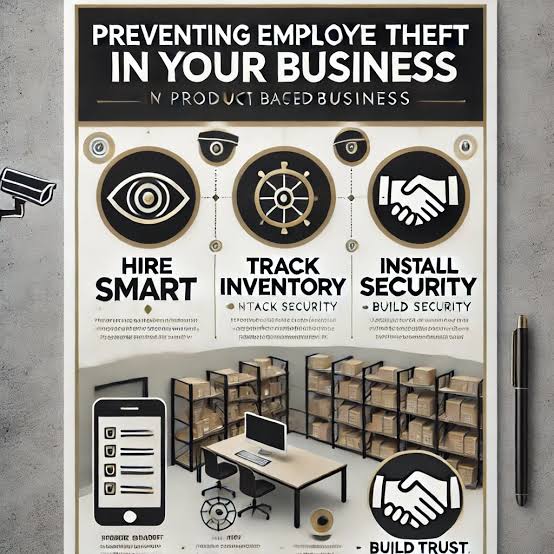
- Automate Real-Time Auditing: Implement central cloud-based point-of-sale systems that lock out manual payment options.
- Segregate Financial Duties: Never allow the person who receives inventory to be the same person who signs off on supplier payments or reconciles sales receipts.
- Implement Strict Pre-Employment Background Vetting: Establish verified reference networks and industry blacklist registers for confirmed fraudsters.
- Rapid Legal Action: Shift from passive dismissals to formal prosecution where evidence exists, creating an effective deterrent against workplace syndicates.
Until African business ecosystems prioritize internal controls with the same passion they apply to customer acquisition, the internal enemy will continue to threaten enterprise success and national economic growth across the continent.



 By