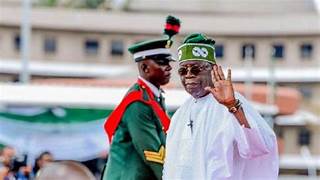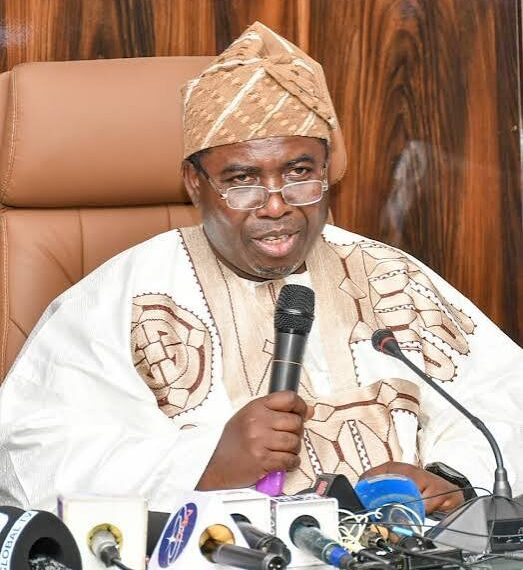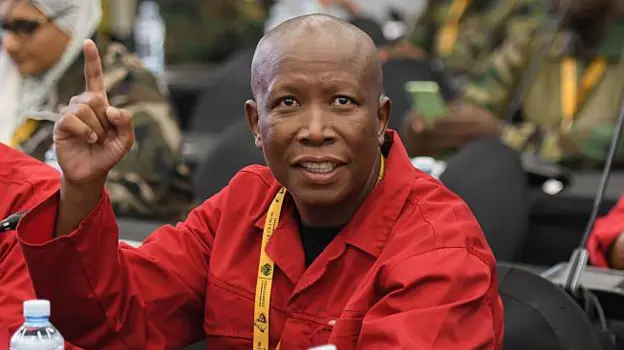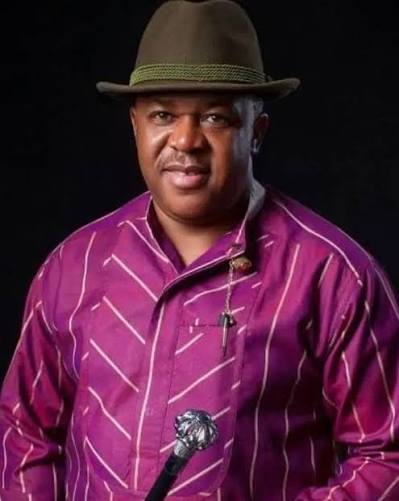
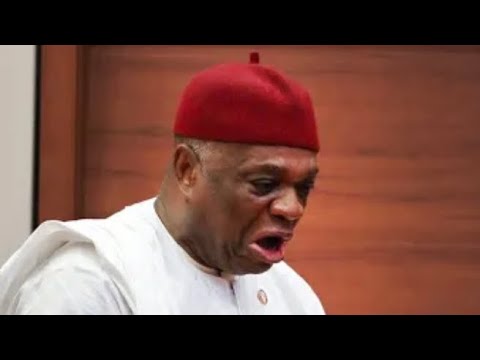

Senator Orji Uzor Kalu recently stirred the Nigerian political landscape by declaring that President Bola Ahmed Tinubu has no viable competitors for the 2027 general elections. Sporting a “Tinubu For President 2027” shirt at the National Assembly, the Senator representing Abia North explicitly stated that prominent opposition figures—including Atiku Abubakar, Peter Obi, and Goodluck Jonathan—cannot defeat the incumbent. He further urged Nigerians not to “waste their votes” on a fragmented opposition, arguing that the current administration’s painful economic reforms are necessary to transition the nation from an era of “easy money” to legitimate wealth creation.
As the political maneuvering for 2027 begins well ahead of schedule, Kalu’s statements require careful parsing to separate political strategy from electoral reality.
What is the Strategic Intent Behind the Statement?
Senator Kalu is executing a calculated political strategy rather than simply making a neutral observation. By advising Nigerians not to “waste their votes,” he is attempting to achieve three specific goals:
- Psychological Demoralization: The “wasted vote” narrative is a classic political tool used to discourage opposition turnout. By framing a Tinubu victory as an inevitable conclusion, Kalu aims to demoralize the bases of the Peoples Democratic Party (PDP) and the Labour Party (LP), planting seeds of futility long before the first ballot is cast.
- Preempting Mega-Coalitions: Rumors of opposition mergers have been circulating in political corridors. Kalu’s confident dismissal of top opposition figures is an attempt to pour cold water on these early alliance-building efforts, projecting an image of an impenetrable ruling party.
- Solidifying Loyalty Capital: In the complex power dynamics of the ruling All Progressives Congress (APC), early and vocal loyalty is a valuable currency. By stepping out as one of the first major figures to publicly wear a 2027 campaign shirt and vigorously defend the President’s challenging economic policies, Kalu is positioning himself favorably within the President’s inner circle.
Are There Truly No Viable Alternatives to Tinubu?
Kalu’s assertion that there are no alternatives is political rhetoric, not an empirical fact. The Nigerian political environment is highly dynamic, and viable alternatives exist, even if they currently face internal structural challenges.
- The Established Opposition: Figures like Atiku Abubakar and Peter Obi retain massive, dedicated followings. In the 2023 elections, they collectively secured millions of votes. If the PDP and LP, alongside figures like Rabiu Kwankwaso, were to successfully form a unified coalition, they would present a formidable mathematical and geographic challenge to the incumbent.
- The Economic Factor: The ultimate viability of any alternative will be dictated by macroeconomic trends and domestic market realities leading up to 2027. Kalu correctly noted that the current administration is undertaking massive economic restructuring. However, if these policies do not translate into tangible wealth creation, stabilized inflation, and improved corporate and retail environments, the electorate’s appetite for an alternative will naturally surge. An opposition candidate who can convincingly present a superior roadmap for emerging market growth and financial preservation will automatically become a highly viable rival.
Why Did He Say This Now?
The timing of Kalu’s declaration—years ahead of the actual election—is deeply tied to the current national mood.
Nigeria is navigating severe economic headwinds due to structural adjustments like the removal of the fuel subsidy and the floating of the Naira. Public frustration is high. Kalu’s statement serves as a dual-purpose shield: it defends the administration’s economic trajectory while simultaneously telling the public that looking for salvation in the opposition is a dead end.
Furthermore, Kalu is securing his own political flank. By tightly aligning himself with the federal center and framing Tinubu’s reforms as the bitter pill required for long-term national wealth, he separates himself from regional opposition forces and secures his relevance in the national power calculus.
Ultimately, Senator Kalu is firing the starting gun for the 2027 narrative war. Whether his prediction holds true will depend less on early declarations and entirely on whether the current administration’s economic strategies yield the prosperity required to win a second term organically.


 By
By