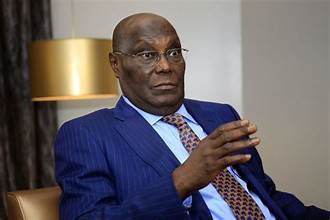

ABUJA — Former Vice President and 2027 African Democratic Congress (ADC) presidential candidate, Atiku Abubakar, has challenged the Federal Government to account for an estimated ₦7.98 trillion oil revenue windfall. Through a statement issued on Sunday by his Senior Special Assistant on Public Communication, Phrank Shaibu, Atiku questioned why President Bola Tinubu’s administration is aggressively expanding its domestic borrowing while global crude oil prices remain far above Nigeria’s 2026 budget benchmark.
According to the former Vice President, the Federal Government has already raised roughly ₦5 trillion from the domestic bond market in the first half of 2026 alone. This borrowing pace represents nearly 80% of the total amount borrowed during the corresponding period in 2025.
“First, why is a government enjoying such an extraordinary oil windfall borrowing at almost twice last year’s pace as though the nation were in financial distress?” Atiku asked in the statement. “Second, where is the money?”.
The ₦7.98 Trillion Windfall Breakdown
Atiku backed his claims with financial calculations indicating that Nigeria is generating significant unbudgeted revenue:
- The Benchmark Gap: The 2026 Appropriation Act pegged crude oil at $64.84 per barrel, but Brent crude—the benchmark for Nigerian oil—averaged around $92 per barrel between March 1 and July 14, 2026.
- Revenue Surplus: This creates a price difference of $27.15 on every barrel of crude sold.
- Daily Earnings: At an average daily production of 1.5 million barrels, the excess translates to an estimated $42.7 million in additional revenue each day.
- Cumulative Total: Over the 135-day window, this amounts to $5.76 billion, which converts to approximately ₦7.98 trillion.
Demand for Transparency and Policy Critique
Atiku strongly criticized the Tinubu administration’s economic management, describing it as “contradictory, opaque and bereft of fiscal discipline”. He noted that while previous administrations maintained mechanisms like the Sovereign Wealth Fund to warehouse and report excess crude sales, the current system lacks transparent disclosure.
The ADC flagbearer argued that a government failing to explain how it has managed an extra ₦7.98 trillion in oil receipts has no “moral authority” to plunge the country deeper into debt. He further observed that the expected benefits from the fuel subsidy removal and higher oil earnings have not translated into better living conditions, citing UN data suggesting a vast majority of Nigerians still struggle to afford a decent daily meal.
The Tinubu administration has consistently defended its ongoing borrowing program in the past, asserting that it is necessary to finance budget deficits, fund critical infrastructure projects, and support ongoing macroeconomic reforms.
Setting out his economic agenda ahead of the 2027 elections, Atiku pledged that an ADC-led government would adopt a rules-based fiscal framework. Under this system, he promised that any revenue exceeding the budget benchmark would be publicly accounted for and channeled toward reducing the national debt burden and funding critical sectors like infrastructure, healthcare, education, and agriculture rather than recurrent expenditure.

 By
By