
ABT NEWS EXCLUSIVE | www.abtnews.net
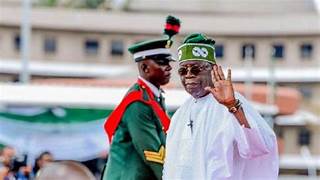
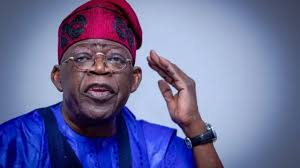
LAGOS — In a stunning and emotionally charged revelation, President Bola Ahmed Tinubu has laid bare the bruising, behind-the-scenes warfare he survived to secure the presidency, declaring that he literally “took the bullet” and weathered “a very hard punch in the chin” to lead the nation.
Speaking with unprecedented candor during a high-profile Sallah homage visit by the Nigeria Governors’ Forum—led by Vice President Kashim Shettima at his Lagos residence—the President peeled back the curtain on the vicious political battles, brutal litigation, and fierce internal sabotage he faced on the road to Aso Rock.
“Instead of dodging the bullet, I took it. I took a punch in the chin, a very hard one,” Tinubu told the spellbound audience of state executives, painting a vivid picture of a campaign trail marred by intense pressure and cutthroat competition.
Rather than coasting to victory, the President revealed that the struggle tested the very limits of his political allies and supporters. He praised the unwavering loyalty of those who stood by him through the darkest days of uncertainty, acknowledging that his camp faced monumental challenges but remained doggedly committed.
Looking forward, a defiant Tinubu used the gathering to sound a victorious note on his administration’s trajectory, boldly declaring that the painful economic “surgery” and structural reforms his government unleashed are finally yielding undeniable dividends across agriculture, infrastructure, and economic stability.
Dispassionate Analysis: Nigeria Before Tinubu vs. Nigeria Now (2023 vs. 2026)
To understand the President’s claims of economic stability, we must look at the hard data comparing the end of the Muhammadu Buhari administration (May 2023) to the current realities of the Tinubu administration in mid-2026.
The Economy & Cost of Living
- May 2023 (Before Tinubu): Tinubu inherited an economy heavily strained by a multi-trillion-naira fuel subsidy regime and a complex, artificially pegged foreign exchange system. In May 2023, the headline inflation rate was 22.41%, and food inflation stood at roughly 24.8%. The official exchange rate was pegged at approximately ₦462 to $1 USD.
- May 2026 (Now): Tinubu’s immediate removal of the fuel subsidy and floating of the Naira triggered the worst cost-of-living crisis in a generation. The currency severely devalued, trading at approximately ₦1,371 to $1 USD in May 2026. While the administration points to a drastically narrowed fiscal deficit (dropping from 5.4% in 2023 to around 3.0% by 2024) and rising foreign reserves, the human toll has been massive. Headline inflation surged past 34% in 2024 before recently moderating down to around 15.69% in April 2026 (largely aided by base effects and aggressive monetary tightening).
Infrastructure & Energy
- May 2023: Nigeria’s power sector was heavily subsidized but chronically underperforming, plagued by legacy debts to generating companies (GENCOs).
- May 2026: The administration has aggressively cut electricity subsidies, moving toward cost-reflective tariffs. In his recent May 2026 speech, Tinubu noted that power generation occasionally peaked at 6,000MW (up from inherited averages) and highlighted the rollout of 2.5 million meters.
Security
- May 2023: Insurgency in the Northeast, rampant banditry in the Northwest, and secessionist tensions in the Southeast plagued the nation.
- May 2026: The government claims substantial improvements, noting that highways are safer and farmers in the Northwest are returning to their lands. However, systemic insecurity, local kidnappings, and regional instability remain persistent realities for many Nigerians.
Appraisal of Re-election Chances (2027)
President Tinubu recently accepted the APC’s nomination to be its flagbearer for the 2027 elections. From a purely political standpoint, his chances of reelection are strong, but not guaranteed.
Why he is favored:
- The Power of Incumbency: In Nigerian politics, control over federal resources, the security apparatus, and institutional machinery provides a massive advantage.
- A Fractured Opposition: If the opposition remains split—with the PDP (Atiku Abubakar) and the Labour Party (Peter Obi) failing to form a cohesive mega-coalition—Tinubu’s formidable APC structure will likely overpower them by sweeping key pluralities.
- Macroeconomic Correction: If the current downward trend in inflation continues and foreign investments materialize by 2027, he will be able to campaign on the narrative that the “short-term pain” produced “long-term gain.”
The Greatest Obstacles Against Him
Despite the structural advantages, the path to 2027 is heavily mined:
- The “Cost of Living” Backlash: The single greatest threat to Tinubu is the lived reality of the Nigerian voter. The astronomical rise in the cost of basic food items, fuel, and transportation since May 2023 has generated deep-seated resentment. If ordinary citizens do not feel tangible economic relief by early 2027, voter apathy or anti-incumbency anger could surge.
- The Potential for an Opposition Merger: Prominent figures like Atiku Abubakar have actively warned about Nigeria slipping into a one-party state and have floated the idea of opposition alliances. If the Labour Party and PDP manage to field a consensus candidate, the arithmetic that handed Tinubu the presidency in 2023 will be severely threatened.
- The “Peter Obi Effect” and the Youth Vote: The 2023 election proved that a non-traditional candidate can hijack urban strongholds (such as Tinubu losing his own base in Lagos). The youth demographic remains largely disillusioned with the APC. Mobilizing this demographic against the establishment remains a critical threat to the ruling party.
- Internal Party Sabotage: As Tinubu noted in his own speech, his first run was plagued by “internal opposition.” Keeping the APC’s diverse, and often competing, regional power brokers united behind his second-term bid will require constant, delicate political appeasement.
5. The Insecurity quagmire: Insecurity is the single most destructive force facing President Tinubu because it systematically neutralizes his administration’s macroeconomic reforms. While policies like floating the Naira or adjusting fuel subsidies can be managed from Abuja, insecurity is a pervasive, physical reality that dictates whether citizens can eat, travel, or conduct business safely.
Stay glued to ABT NEWS www.abtnews for all the Breaking news and Trending news happening all over the word. All advertising enquiries should be sent to advertise@abtnews.net or +447918790290

 By
By