


By ABT NEWS Network — www.abtnews.net
LAGOS, NAIROBI, JOHANNESBURG — For decades, the global narrative around African agriculture has been entirely backwards. We have been told a story of extraction: cocoa beans shipped off to Europe, premium coffee beans exported to the U.S., and fresh flowers flown to the Middle East. Meanwhile, African economies have imported billions of dollars of finished food products back.
But a silent economic explosion is happening right under our noses. A new breed of savvy African entrepreneurs has stopped looking across the ocean for wealth. Instead, they are looking inside their own borders, tapping into a domestic food market that the African Development Bank (AfDB) and the World Bank project will skyrocket past $1 Trillion by 2030.
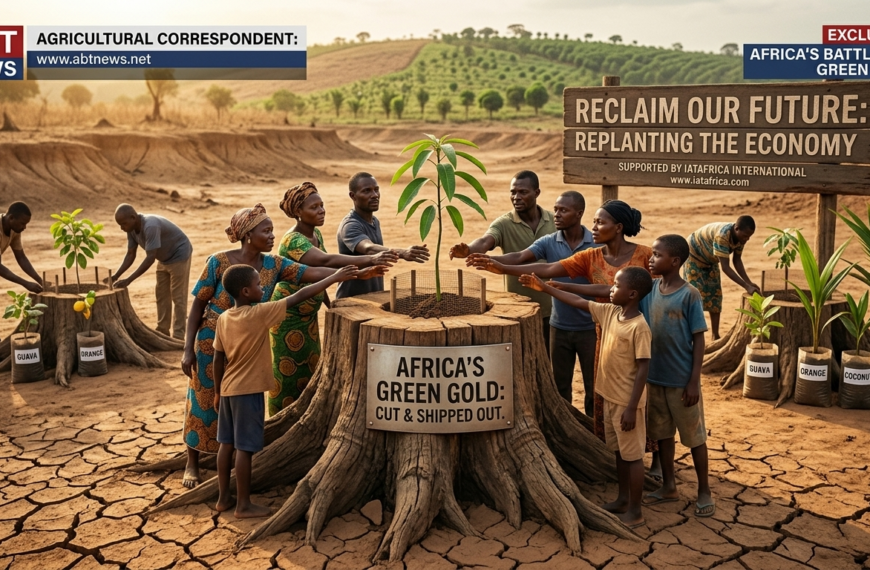
Forget crypto, oil, or traditional tech apps—the biggest fortunes of the next decade are being made by the people feeding Africa’s hyper-growing cities. Money is growing where seeds are planted, and local supply chains are quietly creating the continent’s newest multi-millionaires.
The Data Don’t Lie: A Demographic Goldmine
“Population is destiny,” AfDB President Dr. Akinwumi Adesina recently noted, and the data backing Africa’s food boom is staggering. By 2050, Africa’s population will double to 2.5 billion people. One out of every four people on earth will be African.
Mega-cities like Lagos, Nairobi, Johannesburg, Accra, and Kinshasa are expanding at breakneck speed. Every single day, millions of middle-class urbanites step into supermarkets and open-air markets demanding rice, poultry, fresh vegetables, dairy, and processed foods. They aren’t looking for export-grade cocoa; they want dinner, and they want it consistently.
This has triggered a massive supply chain crisis at a continental scale. Because traditional infrastructure is fragmented, the real wealth is no longer just in owning the dirt—it is in solving the logistics, processing, and distribution bottleneck.
Where the Millions are Being Made: The High-Growth Sectors
According to latest data from the Brookings Institution and agricultural sectors, specific domestic industries are turning into absolute goldmines for local investors:
- The B2B Agritech Revolution: In recent years, African agritech startups raised over $1.2 billion in funding, facilitating nearly $3 billion in digital transactions. Platforms connecting rural smallholder farmers directly to urban retailers are cutting out greedy middlemen, boosting yields by 32%, and making their founders incredibly wealthy.
- Cold Chain Logistics & Infrastructure: Africa loses between 15% to 20% of its cereals and even more of its perishable fruits and vegetables due to poor storage. Entrepreneurs building solar-powered cold hubs and temperature-controlled trucking fleets are saving billions of dollars in food waste—and pocketing the margins.
- Import Substitution & Local Staples Processing: Africa currently imports roughly 40% of its rice and 60% of its wheat. Aggressive local processors are stepping in to achieve self-sufficiency. The global market for cassava processing alone has shot past $5 billion, and local processing of maize, plantain flour, and packaged local grains is creating localized retail empires.
- Aquaculture & Livestock Boom: Africa’s domestic livestock and dairy sector reached a staggering $43 billion, while aquaculture (farming tilapia and catfish) is growing at a blistering 7% annually. Entrepreneurs investing in commercial hatcheries, feed mills, and frozen fish distribution networks are seeing unprecedented returns.
The Blueprint: How Africans and African Nations Can Harness This Opportunity
This $1 Trillion secret is a massive wake-up call for African youth, investors, and policymakers. Agriculture is no longer a charity case or a sign of poverty; it is highly lucrative, smart economics. Here is how the continent can fully exploit this frontier to build multi-generational wealth and eradicate unemployment:
- Capture the Youth Dividend: With 12 million young Africans entering the workforce every single year, agriculture shouldn’t be a sector they flee, but a sector they run toward. By pivoting from manual hoes to digital tools, drone-tech farming, and automated agro-processing, the youth can treat food production as a high-tech corporate venture.
- Stop Exporting Raw Materials, Start Branding: The real margin lies further up the value chain. Instead of exporting raw cashews to Asia only to buy them back in a shiny tin, African businesses must invest in local factories, state-of-the-art packaging, and strong regional brands that dominate domestic supermarket shelves.
- Leverage the AfCFTA: The African Continental Free Trade Area (AfCFTA) creates the largest free trade zone in the world. A poultry producer in Uganda can now seamlessly feed consumers in the Democratic Republic of Congo. Regional trade is the ultimate catalyst to scale a local food business into a pan-African powerhouse.
- Redirect Government Subsidies: African governments spend roughly $17 billion annually on poorly targeted agricultural subsidies. For true wealth creation, nations must redirect these funds into smart infrastructure—rural roads, reliable electricity, digital farm registries, and blended finance platforms (like the World Bank’s AgriConnect initiative) to de-risk private sector investments.
The Verdict: The Next Bill Gates Will Be an African Agro-Tycoon
The era of viewing agriculture through the lens of development aid is officially dead. Food is a global and continental necessity, and control over food systems is rapidly becoming the ultimate source of geopolitical and economic power.
As capital flows reshape the continent’s future, the smartest money in 2026 and beyond is flowing into the local food supply ecosystem. The next generation of African billionaires won’t come from Silicon Valley clones or real estate bubbles. They will be the agri-preneurs who built the infrastructure to feed the most vibrant, youthful continent on earth.
The goldmine is right under our feet. The question is: Are you going to keep watching from the sidelines, or are you going to claim your piece of the $1 Trillion pie?
For more exclusive business insights, breaking wealth-creation strategies, and pan-African news, stay tuned to ABT NEWS at www.abtnews.net. For Advertising enquiries send a mail to advertise@abtnews.net or call us on +447918790290


 By
By









Thanks for this great report. Africa is poised to rise to greatness!!