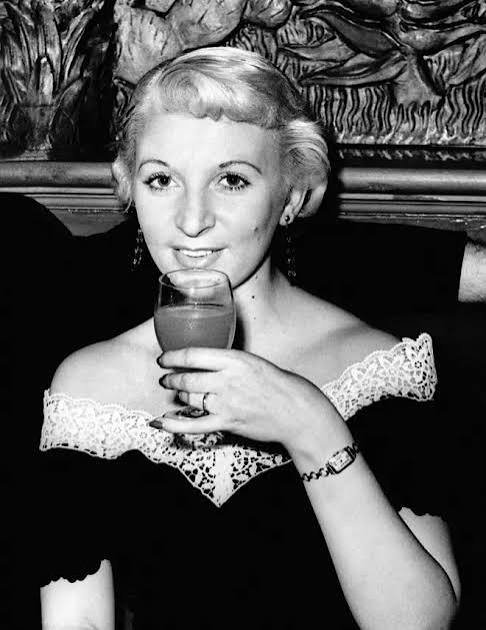

LONDON — In a landmark decision that rights a 70-year-old legal wrong, Justice Secretary David Lammy has officially granted a conditional posthumous pardon to Ruth Ellis, the last woman to be executed in the United Kingdom.
The decision follows decades of fierce campaigning by her family and legal advocates, who argued that her 1955 trial completely ignored a horrific history of domestic abuse, coercive control, and severe trauma.
A 1955 Trial Shadowed by Bias
Ruth Ellis was just 28 years old and a single mother of two when she was executed at London’s Holloway Prison on July 13, 1955. She had been convicted of murder after shooting her partner, racing-car driver David Blakely, outside the Magdala pub in Hampstead, North London.
At the time, the mainstream press painted Ellis as a “cold-blooded killer.” However, the reality behind closed doors was vastly different. Evidence has since revealed that Blakely was severely abusive, both physically and emotionally. Just 10 days before the shooting, Ellis suffered a miscarriage after Blakely punched her in the stomach.
During the trial, the judge explicitly instructed the jury to disregard the fact that she had been “badly treated by her lover,” blocking her defense from exploring her compromised emotional state. The jury took just 20 minutes to find her guilty, and she was sentenced to death.
The Long Road to a Pardon
While a conditional pardon does not entirely erase the original conviction, it serves as an official acknowledgment by the British state that the punishment did not fit the crime and that a modern understanding of domestic violence would have resulted in a manslaughter conviction at most.
The timeline below tracks the key milestones of this 70-year fight for justice:
July 1955 The Shooting and Execution
Ruth Ellis is executed by hanging at London’s Holloway Prison, 22 days after being convicted for the murder of her abusive partner, David Blakely.
1969 Abolition of the Death Penalty
Following years of public outcry sparked in part by Ellis’s execution, the UK permanently abolishes capital punishment for murder.
2003 Court of Appeal Rejection
The Court of Appeal upholds the murder conviction, ruling that the case had to be judged strictly by the laws active at the time of the offense in 1955.
October 2025 The Grandchildren’s Application
Represented by law firm Mishcon de Reya, Ellis’s grandchildren submit a comprehensive formal application to Justice Secretary David Lammy.
2026 Pardon Officially Granted
Justice Secretary David Lammy officially grants the conditional posthumous pardon, closing one of the most controversial chapters in British legal history.
“The Punishment Did Not Fit the Crime”
The successful push for the pardon was spearheaded by Ellis’s grandchildren, including Laura Enston and Stephen Beard, working alongside the law firm Mishcon de Reya. Notably, the firm’s founder, the late Lord Victor Mishcon, had tried to intervene to stop Ellis’s execution shortly before she went to the gallows in 1955.
“Ruth’s execution has had a devastating, multi-generational impact on our family,” said granddaughter Laura Enston in a statement. “We are determined to right this historic injustice and honor not only Ruth but all victims of domestic abuse who have been let down by the criminal justice system.”
Legal experts emphasize that this decision reflects a profound shift in how the justice system evaluates trauma. Under modern UK laws, defense strategies like “diminished responsibility” or “loss of control”—introduced shortly after Ellis’s death in 1957—would have completely spared her from the gallows.
With Lammy’s declaration, the UK takes a vital step in acknowledging how deeply social bias and a lack of protection for victims of domestic abuse corrupted the scales of justice in postwar Britain.



 By
By