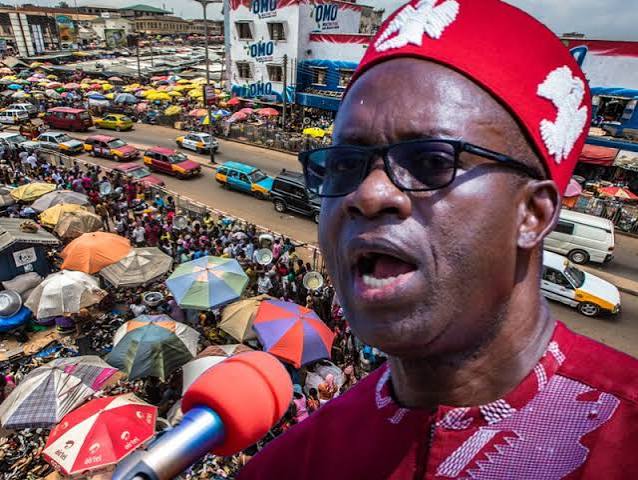

Governor Chukwuma Charles Soludo recently stood before the Anambra State Traditional Rulers’ Council to declare a “state of emergency” on the environment and to announce a grand vision of making communities the “fourth tier of government.” Wrapped in his trademark high-sounding grammar and academic posturing, the declarations sound visionary on paper. But for the average Anambrarian navigating the harsh realities of today, one must ask: Is this really what Anambra State needs to focus on right now?
When subjected to critical scrutiny, Governor Soludo’s latest address is less a blueprint for a “New Anambra” and more a masterclass in deflection, political maneuvering, and preemptive excuse-making.
Here is a damning appraisal of why the Governor’s recent declarations miss the mark.
The Environmental Cop-Out: Blaming the Victims
There is no denying that gully erosion and flooding are historical and existential threats to Anambra State. However, Soludo’s framing of the crisis is deeply problematic.
By aggressively pivoting the blame toward citizens who “channel residential run-off” and “dump waste in drainages,” the Governor is attempting to absolve his administration of its own systemic failures. Why are citizens dumping waste in drains? Because the state’s waste management infrastructure is disjointed, inefficient, and largely invisible in the suburbs. Asking traditional rulers to mobilize citizens to clear gutters is an abdication of governmental responsibility, cleverly disguised as “community mobilization.”
Worse still is the Governor’s preemptive declaration of defeat. Stating that “if we devote the entire state budget for the next ten years, we will not be able to significantly scratch the surface of this threat” is a shocking admission of administrative surrender. If the state cannot fix the problem, what is the purpose of the “state of emergency”? A state of emergency implies the immediate, massive deployment of state resources and machinery—not telling villagers to pick up shovels to desilt gutters while the government throws its hands up regarding the budget.
The “Fourth Tier” Mirage: A Political Trojan Horse?
Perhaps the most concerning aspect of the Governor’s address is his sudden desire to formalize communities as a “fourth tier of government” to replace town unions.
This is a glaring distraction, if not a deliberate political Trojan horse. Anambra State, like the rest of Nigeria, is currently grappling with the reality of Local Government (Third Tier) autonomy following the recent Supreme Court judgment. For years, state governors have castrated the local government system, turning them into glorified administrative appendages.
Instead of focusing on conducting free, fair, and credible local government elections to empower the actual third tier of government, Soludo is conjuring a non-constitutional “fourth tier.” Why? Formalizing community leadership into the state’s administrative hierarchy risks turning traditional rulers and community presidents into state-sponsored political operatives, completely dependent on the governor’s office. It threatens to politicize community administration, creating a new avenue for gubernatorial control just as the local governments are fighting for financial independence.
What Anambra Actually Needs Right Now
While the Governor is fixated on community administrative restructuring and gutter desilting, the true existential threats to the everyday Anambrarian are glaringly ignored in this agenda. If the administration wants to declare a state of emergency, here is where it should be focused:
- Security of Lives and Property: The lingering threat of kidnappings, the activities of “unknown gunmen,” and the general insecurity that stifles night-time economy and discourages diaspora investment. What good is a cleared drainage system if citizens are too terrified to travel home?
- Economic Strangulation and Multiple Taxation: Traders and transport workers in Anambra are currently suffocating under the weight of aggressive, convoluted revenue-collection tactics. The “New Anambra” feels like a heavily taxed Anambra with little corresponding infrastructure to show for it.
- Local Government Revitalization: Stop dodging the third tier. Conduct credible LG elections and allow local councils the autonomy to handle grassroots development, including the very waste management and drain-clearing the Governor is currently crying about.
- Urban Planning and Infrastructure: Banning sand mining is a reactive step. The state needs proactive, heavy-duty infrastructural investments, modernized urban planning enforcement (not just reactive demolitions), and functional state-wide waste disposal systems.
The Verdict
Governor Soludo claims that “New Anambra is on the rise,” yet his rhetoric points to a government busy fighting the symptoms while ignoring the disease.
Anambra does not need a fourth tier of government; it needs the existing three tiers to function properly. It does not need a governor who declares a problem unsolvable in the same breath he declares an emergency on it. The state requires actionable governance, security, and economic relief—not academic lectures, bureaucratic expansion, and the shifting of blame onto the governed.
If this is the peak of the administration’s strategic focus for its remaining tenure, then the “New Anambra” is simply the old Anambra, but with a much robust and larger vocabulary!
It pays to advertise your business, products and services on ABT NEWS Platform. www.abtnews.net. Please send your enquiries to advertise@abtnews.net or +447918790290


 By
By