
There is a recurring question whispered in the corridors of the African diaspora: Is it time to go back home? For many, the desire to return and build the continent is heavily weighed down by fears of systemic hurdles, unpredictable policies, and glaring infrastructural deficits.
But if you are looking for a sign that the leap is not only possible but historically lucrative, look no further than Monica Musonda.
Musonda’s trajectory is not your typical founder’s origin story. Armed with a master’s degree from the University of London, she built a formidable legal career across international boardrooms, working with the International Finance Corporation in Washington D.C. and the Dangote Group in Lagos. Yet, a singular, piercing question from billionaire Aliko Dangote during a factory visit in her native Zambia changed her life: Why were there hardly any Zambian-owned banks, insurance companies, or raw material suppliers in her own country?
Within a year, Musonda left the comfort of her corporate career to launch Java Foods. Today, her flagship product, eeZee Noodles, is a staple in households across Southern Africa, selling over four million packs a month.
Her journey from a diaspora professional to an FMCG (Fast-Moving Consumer Goods) pioneer offers a powerful, reproducible blueprint for Africans abroad looking to return home and build.
Winning In Spite of Infrastructural Deficits
The most common hesitation for the diaspora is infrastructure—power cuts, logistical bottlenecks, and a lack of technical expertise. Musonda did not step into a perfect ecosystem; she built one by treating obstacles as strategic variables rather than dealbreakers. Here is how she achieved it:
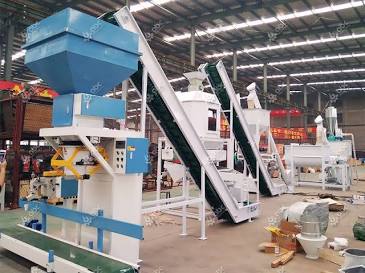
1. Start Lean, Then Localize: Musonda didn’t wait until she could afford a massive factory in Lusaka to launch her brand. She initially contracted a Chinese manufacturer to produce her noodles. This allowed her to test the market, build brand equity, and figure out distribution without tying up all her capital in heavy machinery. Once the demand was proven, she brought the manufacturing home.
2. Turn Global Networks into Local Infrastructure: When it was time to build a local manufacturing plant for a fortified instant cereal, Musonda lacked in-house food science expertise. Instead of letting this technical deficit stop her, she leveraged global networks, partnering with Partners in Food Solutions—a pro-bono consortium including corporate giants like General Mills, Cargill, and DSM. They provided top-tier engineers and food scientists to work with Java Foods for a year. For the diaspora, your global rolodex is your greatest asset. Knowledge transfer can bridge the physical infrastructure gap.
3. Build Resilient Supply Chains: In Zambia, dependence on hydropower means severe load-shedding during poor rainfall years. This directly threatens production and spikes costs due to generator reliance. Musonda combated this by hyper-localizing her supply chain. By sourcing 100% of her raw materials (wheat, soya, maize) from local Zambian farmers, she eliminated the logistical nightmares and forex fluctuations of importing raw materials. Factoring backup power into the operational model became a baseline reality, offset by the savings and speed of a localized supply chain.
The AfCFTA Advantage: Why the Timing is Perfect
Musonda successfully expanded her exports into Zimbabwe and Malawi, but for the incoming wave of diaspora entrepreneurs, the game has fundamentally changed thanks to the African Continental Free Trade Area (AfCFTA).
If there was ever a time to invest in African manufacturing, it is now. AfCFTA is collapsing borders, creating a single market of over 1.4 billion people with a combined GDP projected to reach $6.7 trillion by 2030. For a returning entrepreneur, AfCFTA serves as an “industrialization passport” with massive built-in advantages:
- Economies of Scale Offset Infrastructure Costs: AfCFTA’s progressive elimination of tariffs on 90% of goods means that products manufactured in Africa can circulate duty-free across the continent. Even if a business has to spend more on backup generators or private water supplies, the ability to sell to a massive, tariff-free continental market easily absorbs those overheads.
- The Shift to Value-Add: Historically, Africa has exported raw materials and imported finished goods at a premium. AfCFTA heavily incentivizes local agro-processing and FMCG manufacturing. Like Musonda processing Zambian wheat into branded noodles, entrepreneurs can now source raw materials cheaply across borders, process them locally, and dominate regional supermarket shelves that were previously monopolized by Western or Asian imports.
- Harmonized Trade: Through unified rules of origin, digital trade protocols, and streamlined customs cooperation, the historical nightmare of moving goods from one African nation to another is steadily being dismantled.
The Call to Action
Monica Musonda’s success proves that Africa’s gaps are actually its greatest opportunities. The continent does not need its brightest minds simply remitting money from London, Washington, or Beijing; it needs them returning with their capital, their global standards, and their operational discipline to build homegrown empires.
The infrastructure isn’t perfect, but waiting for perfection is a spectator’s game. As Musonda demonstrated, true innovation in Africa isn’t just about the product you sell—it’s about how resiliently you can build the pipeline to deliver it.
With AfCFTA laying the groundwork for a unified continental market, the boardroom has never looked less appealing, and the African factory floor has never looked more promising. It is time to come home and build.
For more insights on African business, trade, and economic growth, visit www.abtnews.net.

Please use this link to get discounted prices https://t40perfumes.com/discounted/ABTNEWS


 By
By