
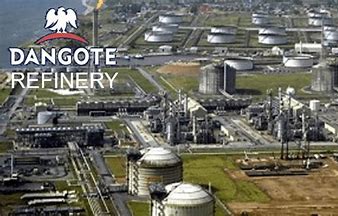

LAGOS, NIGERIA — In a move set to radically reshape the global oil landscape, billionaire industrialist Aliko Dangote has announced an unprecedented expansion of the Dangote Refinery. The massive facility is gearing up to double down on its output, scaling production capacity to a staggering 1.4 million barrels per day (bpd).
Once completed, this mega-project will officially dethrone India’s Jamnagar Refinery, cementing Nigeria’s position as home to the world’s largest oil refinery.
The announcement, which serves as a massive boost for Nigeria’s industrial sector, was made by Dangote during his induction as an Honorary Fellow of the Nigerian Academy of Engineering in Lagos. The business magnate did not just talk barrels; he talked people. The expansion is projected to generate up to 95,000 skilled jobs during its peak construction phase, leaning heavily on homegrown talent.
“This award is particularly meaningful because it recognises what we are doing in the industry,” Dangote stated. Highlighting the impact on the local workforce, he noted that the site would employ “about 95,000 skilled workers,” creating vast opportunities for Nigerian engineers, technicians, and artisans.
“The scale of this expansion reflects our confidence in Nigerian capacity and our belief that Africa can build world-class infrastructure,” he added.
This bold step aligns with the Dangote Group’s overarching “Vision 2030” strategy, a $100 billion investment blueprint aimed at aggressively driving Africa’s industrialization. The expanded refinery is expected to be the ultimate game-changer for Nigeria, drastically curbing the nation’s notorious reliance on imported petroleum products, strengthening domestic fuel security, and easing the crippling pressure on foreign exchange reserves.
With analysts pointing to potential spillover effects across the manufacturing, technology, and logistics sectors, the world is watching closely as Africa’s wealthiest man doubles down on his biggest gamble yet.
CANDID EVALUATION: What This Means for the Nigerian Economy
While the headline numbers of 1.4 million bpd and 95,000 jobs sound like an absolute dream for any developing nation, a deeper look reveals a complex mix of tremendous economic upside and potential structural risks. Here is a candid assessment of what this means for Nigeria:
The Triumphs (The Upside)
- The Ultimate Forex Savior: Nigeria’s Achilles’ heel has long been its reliance on imported refined fuel, which drains billions of dollars in foreign exchange (FX) annually. By refining 1.4 million barrels domestically, Nigeria will not only stop exporting its hard currency to buy petrol but will become a net exporter of refined products. This could massively stabilize the Naira.
- Job Creation & Skill Transfer: 95,000 jobs during the construction phase is a massive injection of income into the local economy. More importantly, the type of jobs matters. The reliance on local engineers and technicians will force a massive technology and skill transfer, upgrading Nigeria’s human capital in the highly technical petrochemical sector.
- Multiplier Effect on Industries: A refinery of this magnitude doesn’t just produce petrol. It produces petrochemicals, plastics, and fertilizers. This will crash the cost of raw materials for local manufacturers, potentially spurring a renaissance in Nigeria’s manufacturing and agricultural sectors.
The Traps (The Reality Check)
- The Monopoly Risk: As Dangote becomes the undisputed king of Nigerian energy, the country faces a serious monopoly risk. Having a single private entity control the vast majority of the nation’s fuel supply gives the Dangote Group unprecedented pricing power and political leverage. If not properly regulated, this could lead to anti-competitive practices that ultimately hurt the consumer.
- The Crude Supply Paradox: Nigeria currently struggles to meet its OPEC crude oil production quotas due to oil theft, pipeline vandalism, and underinvestment in the upstream sector. A 1.4 million bpd refinery requires a massive, uninterrupted supply of crude. If the Nigerian National Petroleum Company (NNPC) cannot guarantee this domestic supply, Dangote will be forced to import crude oil (which is already happening to an extent). Importing raw crude to refine locally heavily dilutes the economic benefits of having a domestic refinery.
- Infrastructure Bottlenecks: Refining the fuel is only half the battle; distributing it is the other. Nigeria’s road networks and pipeline infrastructure are notoriously fragile. Moving that volume of refined product across the country (and to ports for export) will put immense strain on already failing infrastructure, requiring billions in supplementary government and private logistics investments.
The Verdict: The Dangote Refinery expansion is a net-positive, transformative milestone for the Nigerian economy that fixes a decades-old embarrassment (exporting crude only to import expensive fuel). However, for the average Nigerian to truly feel the economic benefits, the government must fix upstream oil theft, build supporting transport infrastructure, and maintain strong, independent regulatory oversight to ensure the market remains fair.


 By
By