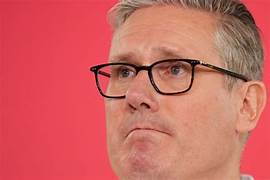

Less than two years after leading the Labour Party to a historic landslide victory, Sir Keir Starmer has formally announced his resignation as Prime Minister and Leader of the Labour Party outside 10 Downing Street this morning.
Here is the complete breakdown of how we got here, what he said, and the ripple effects this will have on British politics.
What Led Him to This?
Starmer’s downfall was a combination of economic stagnation, plummeting public approval, and a massive political scandal. Discontent has been building for months due to:
- The Cost of Living & The Economy: A prolonged crisis and a failure to deliver the economic growth promised during the 2024 election severely damaged public trust.
- The Mandelson Scandal: Starmer faced intense backlash after appointing Peter Mandelson as the UK Ambassador to the United States. Following the release of the Epstein files in late 2025 detailing Mandelson’s ties to the disgraced financier, the ensuing fallout forced the resignation of Starmer’s Chief of Staff and deeply tarnished his judgment.
- Plummeting Approval: By early 2026, Starmer’s net favorability rating had plummeted to -57, matching the historic lows of Liz Truss.
- The Final Catalyst: The breaking point came last week. Former Greater Manchester Mayor Andy Burnham returned to Westminster by winning the Makerfield by-election on June 18, seeing off a surging Reform UK. This provided the Labour rebels with a clear, popular alternative to Starmer. Following a weekend at Chequers where cabinet ministers privately told Starmer his time was up, he conceded.
What Did He Say in His Resignation Speech?
Striking a somber but defiant tone, Starmer addressed the nation and conceded that he had lost the backing of his MPs.
“The question my party is asking now is whether I am best placed to lead us into the next general election. I have heard the answer of my parliamentary party to that question, and I accept that answer with good grace.”
He fiercely defended his legacy, pointing out that when he took over the party six years ago, it was “politically, financially and morally bankrupt.” He highlighted his work in “ripping out the poison of antisemitism” and reminded the public that taking the party from disaster to a landslide victory in 2024 was the “proudest moment” of his life. Ultimately, he stated, “Every decision I’ve taken has been about putting the country I love first.”
What Happens Now?
Starmer is not leaving Downing Street immediately. He will remain as a caretaker Prime Minister to ensure an orderly transition of power.
- The Labour Party’s National Executive Committee is setting a swift timetable.
- Leadership nominations will open on July 9, 2026.
- The goal is to have the new leader in place before Parliament returns from the summer recess in September.
Who Becomes the Next Prime Minister?
Andy Burnham is in pole position to become the UK’s seventh Prime Minister in a decade.
Having just secured his seat in Parliament, Burnham is viewed as the natural successor. Momentum is heavily swinging toward a “coronation” (where Burnham runs unopposed) to avoid a drawn-out, bruising leadership contest. However, if ambitious figures like Health Secretary Wes Streeting manage to gather the required 81 MP nominations, a formal contest will take place over the summer. If unopposed, Burnham could move into No. 10 by mid-July.
Can the Labour Party Recover?
It is possible, but it will be an uphill battle. Andy Burnham is already calling for a “new path for Britain” and carries a populist appeal that Starmer lacked, which could help Labour fend off the growing electoral threat from Nigel Farage’s Reform UK. However, the party’s internal divisions are laid bare, and the structural issues facing the UK—inflation, sluggish growth, and strained public services—will not magically disappear with a new leader. The new PM will inherit a deeply frustrated electorate.
What Are the Chances of a General Election?
Very low in the short term. Because Labour won a massive parliamentary majority in July 2024, they hold the constitutional right to govern for a full five-year term (until 2029). While opposition parties will inevitably scream for a general election—arguing that the new Prime Minister lacks a direct public mandate—Labour MPs will not vote for an early election that could cost them their jobs. The incoming Prime Minister will want time to establish their agenda, meaning the UK is highly likely to ride out the current parliament under a new leader.
It pays to advertise on ABT NEWS www.abtnews.net. Please send all your enquiries to advertise@abtnews.net or +447918790290

 By
By