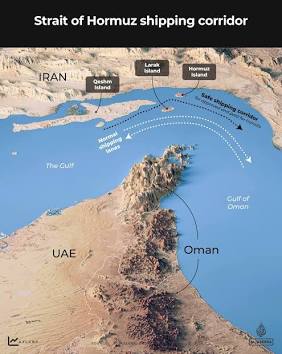

TEHRAN/TEL AVIV — Iran has once again announced the closure of the Strait of Hormuz to vessel traffic, citing intense Israeli airstrikes in southern Lebanon as a direct violation of the fragile ceasefire agreement recently brokered between Tehran and Washington.
The sudden blockade threatens to upend the 14-point Memorandum of Understanding (MoU) signed by the United States and Iran on June 17, plunging global energy markets back into uncertainty just days after shipping had begun to resume.
The Trigger: Hostilities in Lebanon
Iran’s Islamic Revolutionary Guard Corps (IRGC) Navy warned vessels not to approach the strategic waterway, stating that the closure is a “first step” in response to what it views as a breach of promises.
The core of the dispute centers on the terms of the US-Iran MoU, which mandated an “immediate and permanent termination” of military operations on all fronts, explicitly including Lebanon. However, following the announcement of the interim agreement, Israeli warplanes conducted deadly strikes across southern Lebanon and the Bekaa Valley, killing dozens of people.
Iranian officials maintain a strict “no Lebanon, no deal” stance. Citing the ongoing bombardment, Tehran indefinitely postponed follow-up nuclear talks that were scheduled to take place in Switzerland this week.
Israel’s Justification
Israel, which is not a signatory to the US-Iran MoU, maintains that its military operations are strictly defensive. The Israeli Defense Forces (IDF) stated that the recent wave of airstrikes was a direct response to Hezbollah launching more than 50 projectiles at Israeli soldiers operating in southern Lebanon, resulting in multiple casualties.
Prime Minister Benjamin Netanyahu has vowed to keep troops in a “security zone” within southern Lebanon for as long as necessary to protect Israel’s northern communities. Israeli officials insist they are honoring the ceasefire locally but will not tolerate ongoing attacks from the Iran-backed militant group.
Global Economic Impact
The closure of the Strait of Hormuz is a severe blow to the global economy. Before the conflict, approximately one-fifth of the world’s oil and liquefied natural gas (LNG) passed through this narrow 21-mile chokepoint.
Prolonged closure guarantees immediate consequences:
- Energy Price Spikes: Oil and gas futures are expected to surge, reversing the brief relief markets felt after the June 17 MoU was signed.
- Inflationary Pressure: Elevated energy costs directly translate to higher transportation and manufacturing costs, stoking global inflation across domestic and commercial sectors.
- Supply Chain Disruption: Rerouting or delaying fuel shipments affects everything from industrial production to agricultural logistics worldwide.
Reopening the strait was a central priority for the United States to ease the escalating global energy crisis. With the waterway blocked again, the economic fallout will be swift.
What Can President Trump Do Now?
President Donald Trump, who has heavily invested political capital into securing this 60-day interim agreement, faces a volatile diplomatic and military crisis. His administration has several immediate options:
- Diplomatic Salvage: US envoys, including Steve Witkoff and Jared Kushner, are currently stationed in Switzerland. The administration is heavily relying on mediators like Qatar and Pakistan to secure guarantees that hostilities in Lebanon will end so Iranian negotiators will return to the table.
- Pressure Israel: The US could exert heavier leverage on Netanyahu’s government to halt operations in Lebanon to save the broader regional deal.
- Naval Intervention: The US could attempt to forcibly break the blockade. The US Navy, supported by allied forces, could escort commercial vessels through the strait, though this risks direct military confrontation with the IRGC.
- Military Escalation: Trump previously warned that if a deal was not reached or honored, the US would unleash severe military consequences, including striking Iranian power plants and infrastructure.
What Happens Next?
The situation remains deeply precarious. Iran has sent a negotiating delegation—led by top negotiator Mohammad Bagher Ghalibaf and Foreign Minister Abbas Araghchi—to Switzerland, signaling that the diplomatic door is not completely shut.
However, they are refusing to formally sit down until the US guarantees that Israel will halt its operations in Lebanon. If mediators cannot quickly broker a localized truce between Israel and Hezbollah, the 60-day US-Iran ceasefire will likely collapse entirely. Should the MoU disintegrate, the region faces the immediate prospect of returning to full-scale, multi-front warfare.


 By
By