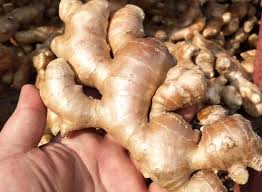

Imagine a cash cow that once brought in a staggering N26.2 billion for Nigeria in a single year, completely drying up to zero. Sounds like fiction? Unfortunately, it is the harsh reality of Nigeria’s once-booming ginger export industry.
For decades, Nigerian ginger was globally revered for its high volatile oil content, pungent aroma, and top-tier spice quality. It positioned Nigeria comfortably as the second-largest ginger producer in the world. But today, the story has dramatically changed. By the end of 2025, Nigeria’s ginger export earnings spectacularly crashed from N26.2 billion in 2023 to absolutely zero naira.
How did a national agricultural treasure collapse so fast? Welcome to the devastating reality of the 2023–2025 Ginger Blight Epidemic.
The Culprit: The Deadly Tuber Rot Disease
The primary villain in this agricultural tragedy is a brutal fungal infection known as Ginger Blight or “tuber rot disease.” The disease viciously attacks the underground tubers, causing the above-ground plants to wither and die.
In Kaduna State—Nigeria’s undisputed ginger headquarters—along with parts of Nasarawa, Benue, and Plateau, the blight struck like a plague. It wiped out a heart-wrenching 90% of the farmers’ harvest. According to the Federal Ministry of Agriculture and Food Security, smallholder farmers incurred staggering losses exceeding N12 billion.
Florence Edwards, National President of the Ginger Growers, Processors and Marketers Association of Nigeria (GGPMAN), perfectly captured the despair: “As of today, we have nothing to export. I have lost everything. I can’t even do anything anymore, nothing to show for all my efforts.”
The Bizarre Economics: Why Exports Dropped to Zero
You might wonder: if we still produced some ginger, why didn’t we export it? The answer lies in simple but brutal economics.
Because the blight wiped out almost the entire crop, the law of supply and demand kicked in locally. Ginger became an incredibly scarce and pricey commodity in Nigeria. In just two years, the price of a 50kg bag of fresh ginger skyrocketed by 500%—jumping from N50,000 in 2023 to an unbelievable N300,000 today.
By the time the remaining ginger was dried and split, the domestic price surged to a record N15.2 million ($10,000) per metric ton.
However, in the international market, Asian and European buyers were only willing to pay the standard global rate of about $2,000 per ton. For Nigerian exporters, buying ginger locally at $10,000 to sell abroad at $2,000 was economic suicide. As a result, exporters simply folded their hands, abandoning international buyers to source from cheaper global competitors. The local market swallowed whatever little ginger was left.
A Vicious Cycle of Recycled Seeds
Why hasn’t the disease been defeated? Experts note that Nigerian farmers have been recycling the same ginger seeds for over 20 years. When an outbreak happens, the surviving seeds are often still carriers of the fungus. Replanting them the next season only invites another wave of the blight.
While the Federal Government, through the National Agricultural Development Fund (NADF), recently tried to intervene with a N1.6 billion support package containing pesticides, fungicides, and fertilizers, agricultural experts say this is just a band-aid on a bullet wound.
What Nigerian farmers desperately need right now are disease-resistant seeds. Treating the soil and distributing modern, resilient seedlings are the only ways to guarantee that the disease doesn’t return to ravage the next planting season.
A Call to Action
For Nigeria’s non-oil export dreams, this total crash is a massive wake-up call. We are watching millions of dollars in foreign exchange slip through our fingers while thousands of local farmers—mostly women and youths in rural communities—are pushed into poverty.
If the government and private sector do not urgently subsidize disease-resistant seedlings and implement rigorous soil-treatment programs, Nigeria risks permanently surrendering its status as a global ginger powerhouse.
The soil in Kaduna and the Middle Belt is still fertile, and the global demand for ginger is higher than ever. It is time for the government to step up, heal the land, and help our farmers reclaim Nigeria’s lost ginger crown.
For more exclusive business, agricultural, and economic insights, keep reading ABT NEWS – Your trusted source for verified news in Nigeria.

 By
By