

By ABT NEWS Editorial Desk | www.abtnews.net
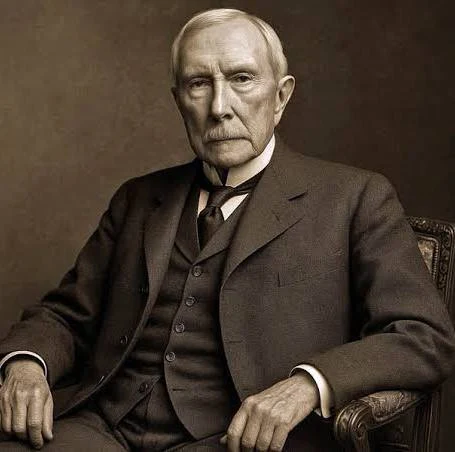
More than a century ago, American industrialist and Standard Oil co-founder John D. Rockefeller delivered a blunt truth that still challenges conventional career advice today: “He who works all day has no time to make money.”
While modern phrasing often adapts his words to warn against the trap of “9-to-5 employment,” the underlying economic principle remains unchanged. Rockefeller was drawing a sharp boundary between labor income: trading finite hours for a fixed paycheck and capital income, where systems, equity, and enterprise generate wealth around the clock.
In an era marked by rapid technological disruption, inflation pressures, and shifting job markets, relying solely on a single employer carries hidden risks. Founding a business is no longer just a bold alternative; for millions worldwide, it has become both an economic necessity and one of the most rewarding paths to personal autonomy.
The Ceiling of the 9-to-5 vs. The Leverage of Ownership
A traditional salary offers predictability, employer-sponsored benefits, and a clear daily structure. However, it comes with a built-in mathematical ceiling: there are only 24 hours in a day, and your earnings are capped by what an employer agrees to pay for your time.
As Rockefeller noted in his 1909 memoir, Random Reminiscences of Men and Events, “If you want to become really wealthy, you must have your money work for you. The amount you get paid for your personal labour never ultimately makes you rich.”
When you build a business, you shift from selling hours to building leverage:
- Scalable Value: A software product, a service agency, or a retail brand can serve ten customers or ten thousand without requiring ten thousand times your personal labor.
- Equity Growth: Instead of walking away with only a final paycheck at retirement, founders build an asset that appreciates in value and can be passed on, sold, or expanded.
What Global Data Says About Entrepreneurship
Choosing entrepreneurship isn’t just chasing a dream, it means joining the primary engine of the global economy. Credible international research underscores how vital small businesses and independent founders are:
- A Massive Global Movement: According to the Global Entrepreneurship Monitor (GEM), roughly 1 in 8 working-age adults worldwide: nearly 665 million people are actively engaged in starting or running a new business.
- The Backbone of Employment: Data from the U.S. Small Business Administration (SBA) shows that small businesses employ 61.7 million Americans, accounting for nearly half of the entire private-sector workforce. Similarly, in the UK, the Federation of Small Businesses (FSB) reports that small and medium-sized enterprises (SMEs) represent 99.9% of the business population and account for 60% of private-sector employment.
- Purpose Beyond Profit: Entrepreneurship is increasingly driven by impact. GEM research indicates that in 78% of surveyed economies, a majority of founders prioritize social and environmental sustainability alongside financial returns. Meanwhile, the United Nations’ Global MSMEs Report 2026 highlights that small enterprises act as vital anchors of community resilience, dignity, and local innovation.
- Lower Barriers Than Ever: With modern digital infrastructure and accessible AI tools, small firms can now automate operations, reach global customers, and compete alongside legacy corporations without massive upfront capital.
The True Beauty of Founding a Business
Beyond balance sheets and profit margins, founding an enterprise transforms how you experience work and life:
- Creative Sovereignty: You decide the vision, the culture, and the standards of excellence. Every problem you solve directly improves something you own.
- Accelerated Personal Growth: Running a business compresses years of learning into months. You quickly master leadership, negotiation, financial literacy, and resilience.
- Community Impact: Every successful business creates a ripple effect—generating jobs for neighbors, solving real customer pain points, and strengthening local economies.
Yesterday You Said Tomorrow—Today, Just Do It!
According to GEM data, fear of failure stops 40% of aspiring entrepreneurs from ever acting on viable ideas. Yet waiting for the “perfect moment” is simply another way of staying trapped in the daily grind.
Founding a business doesn’t require recklessly quitting your job overnight. Many of today’s most successful founders started in the margins—dedicating early mornings, evenings, and weekends to validating an idea, landing their first customer, and building momentum before making the leap.
Stop trading all of your best hours solely to build someone else’s vision!
Start small, test your idea in the real world, and claim ownership of your future. Yesterday you said tomorrow—today, just do it.
For more insights on business, innovation, and economic empowerment, visit www.abtnews.net.



 By