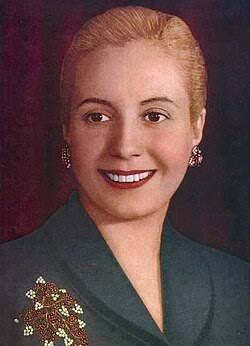

Long before Andrew Lloyd Webber immortalized her with the sweeping theatrical anthem “Don’t Cry for Me Argentina,” María Eva Duarte was simply an illegitimate girl growing up in bleak poverty in the small village of Los Toldos. Born in 1919, she was snubbed by high society from the very start.
Yet, fueled by ambition and a burning desire for stage stardom, 15-year-old Eva escaped to Buenos Aires in 1935. She dyed her hair golden blonde, transformed herself into a recognizable radio and film actress, and unwittingly set the stage for one of the most polarizing political trajectories in 20th-century history.
The Power Couple That Rewrote a Nation’s Destiny
In January 1944, a devastating earthquake struck San Juan, Argentina. At a charity benefit held at Luna Park Stadium to aid victims, the 24-year-old actress met Colonel Juan Perón, an ambitious up-and-coming government official. The connection was instant and explosive.
┌─────────────────────────────────────────────────────────────┐
│                 THE METEORIC RISE OF EVITA                  │
├──────────────┬──────────────────────────────────────────────┤
│ May 1919     │ Born in poverty in Los Toldos, Argentina     │
│ Jan 1944     │ Meets Colonel Juan Perón at Luna Park gala   │
│ Oct 1945     │ Marries Juan Perón; rallies working-class    │
│ June 1946    │ Becomes First Lady of Argentina              │
│ Sept 1947    │ Champions & secures women's right to vote    │
│ July 1952    │ Dies of cervical cancer at age 33            │
└──────────────┴──────────────────────────────────────────────┘
When Juan Perón was elected President in 1946, Eva became First Lady—and redefined the role completely. While the traditional Argentine aristocracy despised her working-class origins and theatrical past, the working-class masses (los camisa-negras and descamisados, or “the shirtless ones”) worshipped her.
Evita did not settle for symbolic ribbon-cuttings:
- Social Welfare: She established the Eva Perón Foundation, distributing shoes, clothes, medicine, financial aid, and building hundreds of schools, hospitals, and homes for the poor.
- Women’s Rights: She relentlessly campaigned for female enfranchisement, culminating in Law 13,010, which granted Argentine women full voting rights in 1947. She subsequently founded the Female Peronist Party, mobilizing hundreds of thousands of female voters.
The Tragic Fall and the Macabre Afterlife
In 1951, the masses clamored for Evita to run as Vice President alongside her husband. However, facing intense opposition from the military elite and quietly battling advanced cervical cancer, she tearfully declined the nomination.
On July 26, 1952, at just 33 years old, Evita passed away. The nation plunged into unprecedented public grief. Millions filed past her coffin, and the government officially named her the “Spiritual Leader of the Nation”.
                THE STRANGE JOURNEY OF EVITA'S BODY

   1952: Body embalmed by Dr. Pedro Ara for public display
                            │
   1955: Military coup ousts Perón; body secretly spirited away
                            │
   1957: Buried secretly in Milan, Italy, under a false name
                            │
   1971: Returned to Juan Perón in exile in Spain
                            │
   1974: Brought back to Argentina; laid to rest in La Recoleta
Following Juan Perón’s overthrow in a 1955 military coup, the new regime feared her corpse would serve as a focal point for revolution. They confiscated her body and secretly smuggled it to Italy under an assumed name, where it remained buried for 14 years before finally being returned to Argentina in the 1970s.
Why Her Myth Endures
Decades after her death, Evita Perón remains an omnipresent force in Argentine identity. To her detractors, she was an autocratic populist who used charity as political propaganda and spent lavishly on haute couture. To her devotees, she was Santa Evita—a saintly savior who gave her life fighting for the marginalized.
Her legacy inspired the legendary Rice-Webber musical Evita and its hit single “Don’t Cry for Me Argentina,” bridging history, pop culture, and political mythology. Ultimately, Evita’s life proves that charisma, passion, and an unyielding connection to the working people can immortalize a leader far beyond the grave.



 By