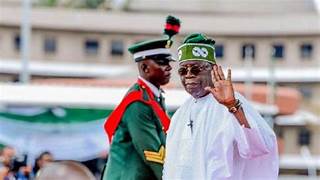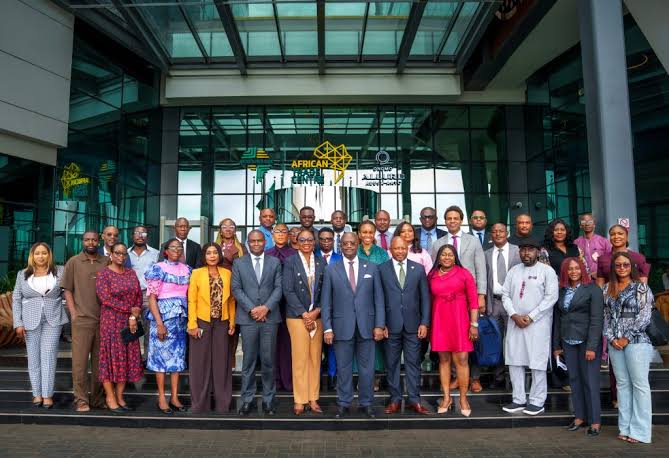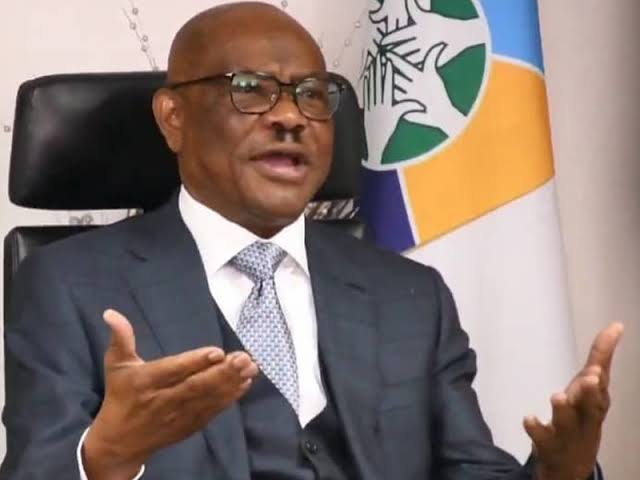

Nyesom Wike, the current Minister of the Federal Capital Territory (FCT) and former Governor of Rivers State, remains one of Nigeria’s most polarizing and influential political figures. Since assuming office under President Bola Ahmed Tinubu’s administration, Wike has found himself at the center of several high-profile political disputes that cut across party lines.
These controversies highlight the complex dynamics of Nigerian politics ahead of the 2027 general elections.
The Rivers State Crisis: Wike vs. Fubara
The most prominent ongoing conflict involves Wike and his successor in Rivers State, Governor Siminalayi Fubara. The dispute, which escalated significantly in late 2023 and throughout 2024, centers on political control of the state.
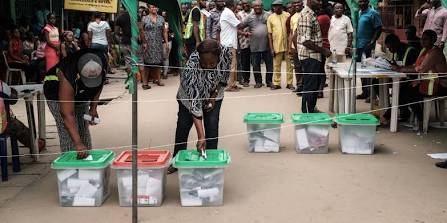
The crisis reached a tipping point during the local government elections. Following a court verdict that mandated the police and the Department of State Services (DSS) not to provide security, and the Independent National Electoral Commission (INEC) not to release the voter register, the Fubara-led government proceeded with the elections anyway.
The aftermath saw violence erupt, with several local government secretariats set ablaze. In response, Wike publicly urged Governor Fubara to obey court judgments, stating, “The moment you don’t obey court judgement, you are inviting anarchy, you are inviting violence.”
The conflict also led to a significant legal battle. In a landmark ruling in early 2025, the Supreme Court ordered the Central Bank of Nigeria (CBN) to halt the release of funds to the Rivers State Government. The decision was based on the state’s failure to secure budget approval from the Rivers State House of Assembly led by Speaker Martin Amaewhule, a faction aligned with Wike.
The “Rainbow Coalition” and APC Governors
More recently, Wike’s political maneuvering has caused friction within the ruling All Progressives Congress (APC).
Reports suggest Wike is building a “Rainbow Coalition”—a political structure fielding candidates in multiple states, often from the Peoples Democratic Party (PDP) or other opposition parties, independent of the official APC machinery. Some analysts argue this coalition is part of President Tinubu’s broader strategy to secure re-election in 2027 by reaching non-APC voters.
However, this move has faced pushback from several APC governors, who view the coalition as a threat to their own political interests and the party’s strength in their respective states. When APC governors met in August 2024 and attempted to intervene in the Rivers State PDP crisis by recognizing Fubara as the party leader, Wike famously threatened to “put fire” in their states.
He later dismissed the APC governors’ complaints about his coalition as “politically lazy,” asserting that he had personally informed President Tinubu about his political strategies.
The PDP Internal Crisis
Wike’s position is unique: he is a founding member of the opposition PDP serving as a minister in an APC-led federal government. This dual identity has fueled ongoing internal crises within the PDP.
Wike has consistently blamed the PDP’s internal struggles on a lack of unity among its top leaders. He has reaffirmed his loyalty to the PDP while simultaneously facing accusations from party factions of anti-party activities, particularly regarding his support for President Tinubu in the 2023 elections.
The situation remains fluid. While Wike insists he is not doing “anti-party” but standing for “equity, fairness, and justice,” his political opponents, like veteran journalist Dele Momodu, continue to criticize his influence and track record.

 By
By