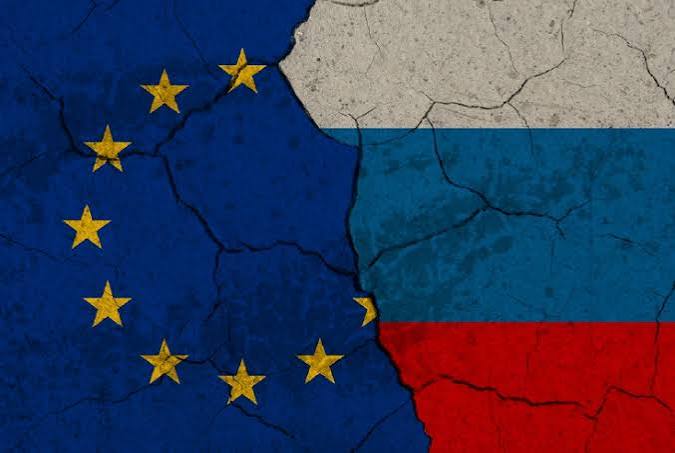

BRUSSELS – European leaders have issued stark warnings about a sharp escalation in Russian hybrid warfare following a thwarted drone attack at a major German airport, declaring that the continent must adapt to a dangerous “new normal” of Moscow-linked sabotage.
European Commission President Ursula von der Leyen and NATO Secretary-General Mark Rutte delivered the joint warning on Wednesday in Brussels, pledging to severely increase pressure on Russia.
“Leipzig marks a new escalation on European soil, directly attributed to Russia,” von der Leyen stated. “Every loophole Russia exploits is one we must close. Europeans are faced with a hard truth that this is the new normal”.
The immediate catalyst for the diplomatic uproar was an incident at Germany’s Leipzig/Halle Airport last month, a critical civilian freight hub and a major logistics base for NATO and Ukraine’s Antonov An-124 cargo planes. Airport workers discovered an armed drone outfitted with explosives and a detonator near a Ukrainian aircraft.
On Tuesday, the German government formally attributed the botched sabotage operation to Russia, characterizing the plot as part of a sprawling campaign of destabilization and intimidation targeting nations that support Ukraine. German media reports indicate that investigators have already identified the logistics coordinator behind the attack, noting that one suspect—a Belarusian man carrying a Russian passport—reportedly entered the Schengen zone using an Italian tourist visa.
“Russia has grown increasingly reckless,” NATO chief Mark Rutte warned during the joint briefing. “If Russia thinks we will be divided by the threat, or if they think we will be deterred from supporting Ukraine, they are mistaken”.
In immediate retaliation, Germany announced it is closing the Russian consulate general in Bonn and terminating the lease on the Russian House cultural center in Berlin. Several European nations, including France, Belgium, Portugal, and the Netherlands, immediately summoned their respective Russian ambassadors, while the EU is moving to summon Moscow’s representative to Brussels.
Moscow has firmly denied involvement, with the Kremlin dismissing the allegations as “horror stories” and the Russian foreign ministry threatening retaliation for what it called “anti-Russian action” by Germany.
Meanwhile, EU foreign ministers gathered in Ireland on Wednesday to deliberate over severe new countermeasures. EU Foreign Policy Chief Kaja Kallas revealed that the bloc is rapidly preparing to add approximately 1,600 new individuals and entities connected to Russia’s military-industrial complex to existing sanctions lists.
The Leipzig plot is the latest in an intensifying string of suspected Russian shadow operations across the continent, which European intelligence officials say range from arson at defense plants to GPS jamming and infrastructure tampering.
Polish Foreign Minister Radosław Sikorski joined the chorus of alarm on Wednesday, warning that Russia is actively waging a hybrid war against Europe and urging allies to heavily restrict the movement of Russian diplomats and tourists. “We do not seek a conflict with Russia, but it seems that Russia is waging a hybrid war against us—and we need to demonstrate to Putin that we cannot be intimidated,” Sikorski said.



 By
By