
By ABT NEWS Editorial Board | www.abtnews.net
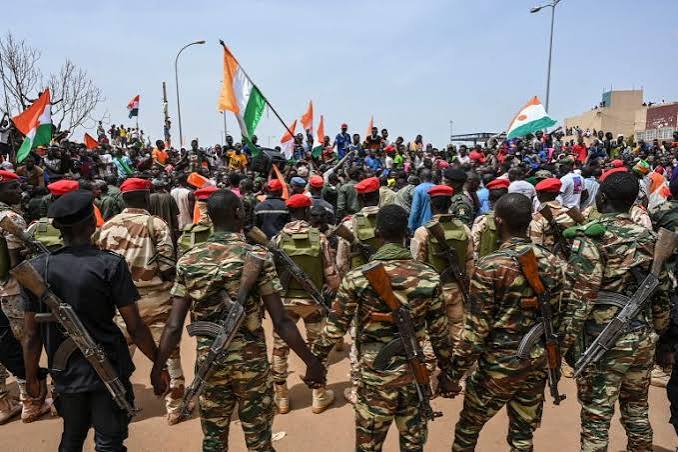
The fragile equilibrium of Niger Republic’s ruling military junta was shattered this past weekend when mutinous soldiers launched a coordinated assault across the capital city of Niamey. While the government has declared that order is restored, the 24-hour kinetic shock marks the most severe internal challenge to the military regime since it seized power in July 2023.
For regional observers, foreign investors, and geopolitical analysts, the weekend’s events offer a sobering reality check: the structural risks in the Sahel are far from stabilized.
The Anatomy of the August 29 Uprising
In the early hours of August 28 into August 29, 2026, residents of Niamey were awakened by sustained firefights, mortar strikes, and explosions.
A faction calling itself the “Armed Forces for the Restoration of the Homeland” (FARP) primarily targeted critical infrastructure, including the presidential palace, state broadcasting facilities, and Air Base 101—a vital node adjacent to Diori Hamani International Airport that houses drone operations and the joint command for the Alliance of Sahel States (AES).
Unlike previous political machinations, this was not a civilian uprising or a Western-backed proxy maneuver. The mutineers were predominantly frontline combat soldiers from southwestern garrisons. Their grievances were distinctly operational. The soldiers were aggrieved by a worsening security crisis, rising frontline casualties from rampant jihadist attacks, inadequate logistics, and deep disillusionment with the junta’s high command.
Loyalist elements of the Presidential Guard eventually suppressed the rebellion, leading to the arrest or deaths of dozens of mutinous troops. However, the whereabouts and direct command authority of junta leader General Abdourahamane Tiani remained ambiguous during the peak hours of the crisis, raising urgent questions about his grip on power.
The Russian Factor: A New Regime Protector?
Perhaps the most geopolitically significant development of the weekend was the direct involvement of Russian forces. According to Moscow’s Ambassador to Niamey, personnel from Russia’s “Africa Corps”—stationed at Diori Hamani International Airport—provided both aerial and ground support to the loyalist Nigerien forces to help repel the mutiny.
Since pushing out French and U.S. troops following the 2023 coup, Niger has pivoted aggressively toward Moscow for security assistance. The rapid intervention of the Africa Corps this weekend cements Russia’s evolving role in the region: transitioning from mere security partners to active regime protectors.
What This Means for Regional Stability
The implications of this thwarted coup ripple far beyond Niamey’s borders, carrying significant weight for regional security and corporate governance in the Sahel:
- Severe Military Fracturing: The junta’s authority is now visibly contested from within its own ranks. Frontline soldiers are increasingly unwilling to absorb heavy losses against insurgent groups (like the Islamic State’s Sahel Province and al-Qaeda affiliates) while the high command remains insulated. This internal fracturing signals that Niger’s political risk profile will quickly revert to extreme volatility.
- Vulnerability of the AES: Niger, Burkina Faso, and Mali recently formed the Alliance of Sahel States (AES), entirely severing ties with ECOWAS. Air Base 101, which was a primary target of the mutiny, is a critical hub for this alliance. Internal instability in Niger threatens the operational viability of this nascent regional bloc.
- The Threat of Proxy Conflicts: Regional intelligence suggests that instability in Niger is being closely monitored by actors involved in the broader Sudan conflict. Disruptions in Niger could complicate or enable the flow of weapons and mercenaries across the porous borders shared with Chad and Libya, potentially triggering wider transnational crises.
While state television currently broadcasts a return to normalcy, the fundamental drivers of the mutiny—an overstretched, under-equipped military fighting a relentless insurgency—remain entirely unresolved. For policymakers and enterprises navigating the Sahel, the baseline remains one of extreme, unpredictable risk.


 By
By