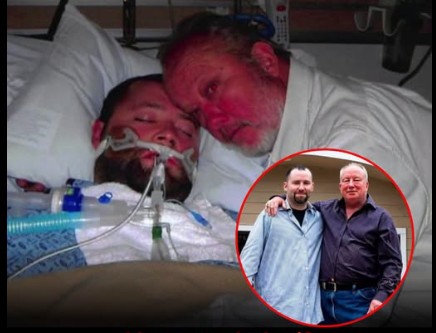

TOMBALL, TEXAS — In debates surrounding medical ethics, end-of-life care, and the sanctity of life, few stories are as deeply gripping—or as medically astounding—as that of George Pickering II and his son. It is a profound narrative of a father’s refusal to surrender to a terminal diagnosis, leading to what many can only describe as a modern medical miracle.
A Devastating Diagnosis
The ordeal began on January 24, 2015, at Tomball Regional Medical Center in Texas. Twenty-seven-year-old George Pickering III had suffered a massive, debilitating stroke. Following extensive examinations, the medical prognosis was as grim as it could be: doctors determined that the young man had no detectable brain activity.
With the medical team concluding that George III was beyond recovery, preparations were made to remove him from life support. Because he was a registered organ donor, organ donation services were also notified to begin the coordination process. The timeline of his life appeared to be rapidly coming to an end.
A Desperate and Dangerous Intervention
One man, however, refused to accept that hope was lost. George Pickering II was consumed by a father’s intuition that his son was still alive inside and capable of recovery.
Admitting later that he had been drinking that night and was overwhelmed by profound desperation, the grieving father took drastic and unlawful measures to halt the withdrawal of life support:
- The Breach: Armed with a handgun, Pickering II entered the hospital’s intensive care unit.
- The Stand: He pointed the weapon at a nurse, ordered all medical staff to vacate the room, and barricaded himself inside with his critical son.
- The Standoff: Police officers and a SWAT team quickly surrounded the hospital, initiating a tense standoff that lasted for approximately four hours.
The Miracle in the ICU
While hostage negotiators and law enforcement surrounded the building, an extraordinary moment unfolded inside the locked ICU room.
Pickering II stood by his son’s bedside, speaking to him continuously, pleading for a sign of life. He asked his son to squeeze his hand if he could hear his voice.
Defying the medical assessment of zero brain activity, George III squeezed his father’s hand—not just once, but several times. The physical movements were undeniable evidence that the young man was aware, responsive, and fighting to live.
Resolution and Recovery
The standoff reached a peaceful conclusion when another of Pickering II’s sons managed to enter the room and safely disarm his father. Pickering II surrendered to law enforcement without further incident, and miraculously, no one inside or outside the hospital was physically harmed.
The legal consequences of the desperate act were swift, but tempered by the extraordinary circumstances:
- Pickering II was arrested and charged with aggravated assault involving a weapon.
- Recognizing the uniqueness of the situation, prosecutors later dismissed one charge and reduced the other.
- After receiving credit for time served, he spent roughly 11 months in jail for the standoff.
“It Was Love”
While his father answered for his actions in the justice system, George Pickering III embarked on a journey that defied every initial medical prediction: he made a complete and full recovery.
Where standard medical protocols saw the end of life, a father’s unwavering conviction bought the crucial hours needed for a young man’s brain to show signs of healing. Today, George III is alive and healthy, a walking testament to the fierce preservation of life.
Looking back on the harrowing event that saved him, George III harbors no resentment toward his father’s extreme measures. Instead, he credits his father’s willingness to sacrifice his own freedom for his son’s right to live.
“It was love, it was love,” George Pickering III simply said, reflecting on the father who risked everything because he believed his life was still worth fighting for.


 By
By