
Kevin Hines shattered his spine in a fatal 75-mph impact. Less than 1% survive the terrifying jump. But as he began to drown, a mysterious marine creature refused to let him go under…
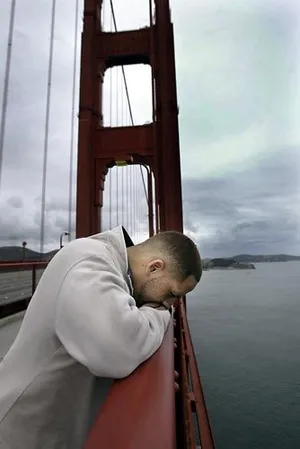
In September, a devastating mental health crisis led 19-year-old Kevin Hines to make a terrible decision to end his life. Gripped by the overwhelming weight of bipolar disorder, which he had been diagnosed with two years earlier, he took a bus to San Francisco’s iconic Golden Gate Bridge.
Standing over the churning waters of the San Francisco Bay, feeling utterly isolated, he walked to the railing, hoisted himself over, and plummeted into the abyss.
The fall from the Golden Gate Bridge is a terrifying 220 feet. It takes roughly four agonizing seconds before the human body hits the water. The statistics are overwhelmingly grim: most people who make this desperate jump do not survive the brutal impact. Of the tragically few who do survive the fall itself, almost all succumb to drowning or rapid hypothermia before Coast Guard rescue boats can possibly reach them. The survival rate is less than one percent.
But the true tragedy of the jump often lies in the descent. The moment Kevin’s fingers slipped from the cold steel railing, a terrifying revelation washed over him. He felt instant, blinding regret.
“What have I done,” he thought as he fell. “I don’t want to die.”
Kevin hit the surface of the water at a staggering 75 miles per hour. The sheer force of the impact was devastating, instantly shattering three of his vertebrae and breaking his back. In unimaginable pain, fighting against paralyzed limbs and the crushing weight of the water, he somehow managed to surface. But he was critically injured, rapidly exhausting his limited energy, and beginning to swallow water. He was drowning.
Then, the impossible happened!
Something large and forceful bumped him from below the murky surface. At first, pure terror seized him. Kevin thought it was a shark, moving in for the kill. He panicked, thrashing as best he could with a broken back.
But the creature had no intention of harming him. It continued to circle beneath him in a deliberate clockwise motion, repeatedly nudging his shattered body upward, physically buoying him to keep his head above the water. It didn’t stop. It didn’t leave his side.
From above on the bridge, a stunned witness stared down at the unbelievable scene unfolding in the bay. They later told Kevin exactly what they had seen: it wasn’t a shark. It was a sea lion. This magnificent animal had become an impromptu guardian angel, bumping him gently over and over, keeping him afloat in the treacherous currents until a Coast Guard rescue boat finally arrived right behind him.
The moment the officers pulled Kevin’s broken body onto the safety of the boat, the sea lion silently disappeared beneath the waves.
The miracles didn’t stop in the water. Rushed to the hospital, Kevin’s life hung in the balance. In a stroke of pure fate, a highly skilled surgeon who wasn’t even supposed to be on duty that day had stayed late. This surgeon performed a pioneering, incredibly complex operation on Kevin’s shattered spine, against all odds restoring his ability to walk.
Today, Kevin Hines is a walking miracle. He has transformed his darkest moment into a beacon of hope, traveling the globe as one of the most prominent mental health and suicide prevention advocates alive. He speaks to hundreds of thousands of people, sharing his harrowing experience, his miraculous rescue, and his long road to recovery.
Looking back at that fateful day, Kevin shares a heartbreaking but vital realization: in the moments after he jumped, he wished he had talked to just one single person before making his way to that bridge. Now, he dedicates his life to being that person for others.
© 2026 ABT NEWS – www.abtnews.net | All Rights Reserved.
If you or someone you know is struggling, please reach out for help. You are not alone.


 By
By