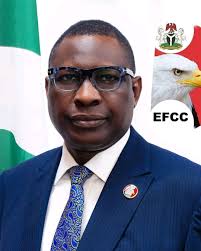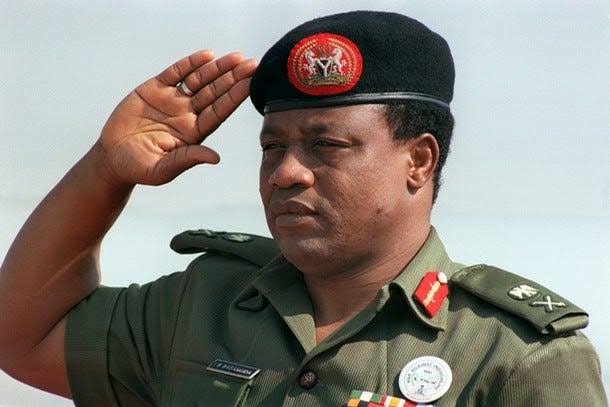

The legacy of General Ibrahim Badamasi Babangida (IBB), who ruled Nigeria from 1985 to 1993, remains one of the most intensely debated subjects in Nigerian political history. Often referred to as “Maradona” for his deft political maneuvering, his administration reshaped Nigeria’s economic and political landscape.
1. Did Babangida Entrench Corruption in Nigeria?
Assessing whether any single leader “entrenched” or was the “most harmful” driver of corruption involves subjective analysis, as corruption existed in Nigeria prior to his coup in August 1985. Scams, import-license scandals, and inflated contracts were well-documented during the First Republic, the Gowon military era, and the Second Republic under Shehu Shagari.
However, political scientists, economists, and historical analysts widely point to several ways the Babangida administration altered the nature and scale of corruption in Nigeria:
- The “Settlement Syndrome”: Analysts argue that under Babangida, patronage was systematically institutionalized as a core instrument of statecraft. Rather than silencing critics solely through brute force, his regime famously co-opted outspoken academics, labor leaders, politicians, and rival military officers through lucrative appointments, cash allocations, and government contracts—a phenomenon popularly dubbed “settlement.”
- Structural Adjustment and Rent-Seeking: In 1986, his administration implemented the IMF-backed Structural Adjustment Program (SAP). While intended to deregulate the economy and boost competitiveness, the sudden deregulation without robust oversight institutions created massive opportunities for rent-seeking. The dual foreign exchange market, for instance, allowed privileged elites to purchase foreign currency at cheap official rates and flip it on the parallel market for massive, effortless arbitrage profits.
- The Gulf War Oil Windfall: Between 1990 and 1991, the First Gulf War caused a spike in oil prices, generating an estimated $12.2 billion to $12.5 billion in extra revenues for Nigeria. In 1994, the Pius Okigbo Panel investigated the Central Bank of Nigeria and reported that these windfall revenues were maintained in dedicated accounts and spent on non-reproductive public projects without transparency or standard accounting procedures.
- Babangida’s Perspective: Babangida has consistently pushed back against these assertions. In a famous 2015 interview with the Economic and Financial Crimes Commission’s (EFCC) journal, he argued that his administration consisted of “saints and angels” compared to the scale of graft witnessed in subsequent civilian governments. He maintained that his regime eliminated major structural bottlenecks that fostered daily corruption—such as abolishing the corrupt import licensing system for “essential commodities”. He also denied that the Gulf War windfall was stolen, pointing out that oil prices did not remain high long enough to generate the exaggerated figures claimed by critics.
2. Why He Ran Out of Options in August 1993
Babangida officially “stepped aside” on August 26, 1993, handing over power to an Interim National Government (ING) headed by Chief Ernest Shonekan. This departure was forced by a convergence of severe domestic and international pressures following his annulment of the June 12, 1993 presidential election, which was won by Chief MKO Abiola and widely recognized as the freest and fairest in Nigerian history:
- Paralyzing Civil Unrest: The annulment triggered explosive nationwide protests, particularly across the South-West. Pro-democracy coalitions (such as NADECO and the Campaign for Democracy), labor unions, and civil society groups launched strikes and civil disobedience campaigns that effectively paralyzed the country’s commercial centers and financial system.
- Deep Factions Within the Military: The Nigerian Armed Forces were severely fractured over the June 12 annulment. A significant bloc of mid-level and senior officers feared that clinging to power against the popular will would permanently destroy the military’s cohesion and national standing. Babangida later disclosed that staying in office risked triggering a bloody, violent coup d’état among competing military factions.
- International Isolation: The United States, the United Kingdom, and the European Union strongly condemned the annulment. Western allies suspended military aid, restricted diplomatic ties, and threatened broader economic sanctions, leaving the regime diplomatically isolated.
- A Crisis of Legitimacy: Having repeatedly amended and extended the transition-to-civil-rule timetable since 1990, Babangida’s credibility had been exhausted. When legal challenges by groups like the Association for a Better Nigeria (ABN) were used as a pretext to cancel the 1993 vote, the public and the political elite refused to accept further delays.
3. Could He Have Stayed in Power Longer?
From a purely tactical standpoint, remaining in power beyond August 1993 would have required drastic shifts in his governance model—most of which carried catastrophic risks:
- Resorting to Brute Authoritarianism: Babangida’s governing style relied heavily on political maneuvering, co-optation, and balancing rival interests rather than overt terror. To survive post-June 12, he would have had to adopt the kind of ruthless, isolationist repression later deployed by General Sani Abacha. Doing so, however, would have risked igniting an open civil war or an immediate military mutiny.
- Purging the Military Hierarchy: To secure his seat, he would have needed to aggressively purge the armed forces of both pro-Abiola officers and ambitious hardline generals (including Sani Abacha, who eventually overthrew Shonekan’s interim government three months later in November 1993). Such widespread purges could have destroyed his own security apparatus.
- Earlier Co-optation of the Political Elite: Had he not organized the June 12 election at all—or had he allowed MKO Abiola to assume office under a power-sharing arrangement where the military retained control over defense and oil resources—he might have preserved his political influence behind the scenes without facing a total collapse of authority.
- Mitigating Economic Hardship: The severe erosion of living standards caused by SAP had alienated the middle class and urban workers. Had his regime effectively buffered the population against hyperinflation and currency devaluation, grassroots anger during the June 12 crisis might have been less volatile.
4. Life at Hilltop Mansion, Minna Today
Since retiring from the military and public office, Babangida has spent the last three decades residing at his sprawling Hilltop Mansion in Minna, Niger State. Today, in his mid-80s, his life is characterized by a mix of quiet retirement and significant behind-the-scenes political influence:
- A “Political Mecca”: In Nigerian political culture, the Hilltop Mansion remains an informal power center. Former President Goodluck Jonathan recently described the residence as a “Mecca of sort,” where politicians, serving governors, business magnates, and presidential aspirants regularly travel to pay homage, seek mentorship, and lobby for political endorsements.
- High-Profile Consultations: Major political figures—including former Presidents Olusegun Obasanjo and Goodluck Jonathan, former Senate Presidents like Bukola Saraki, and presidential candidates such as Peter Obi—frequently hold private, closed-door meetings with him, especially ahead of national election cycles.
- Health and Low-Key Lifestyle: Due to his advanced age and health challenges (including chronic back pain dating back to a Shrapnel injury sustained during the Nigerian Civil War), he rarely makes public appearances outside Minna. Recent milestone birthdays have been celebrated with low-key gatherings, private prayers, and symbolic visits rather than grand public festivities.
- Elder Statesman Commentary: While largely staying out of daily partisan squabbles, he periodically issues statements or grants select interviews on national security, national unity, and electoral reforms. He remains a vocal advocate for preserving Nigeria’s indivisibility and has frequently spoken in favor of a two-party political system to reduce ethnic polarization.


 By
By