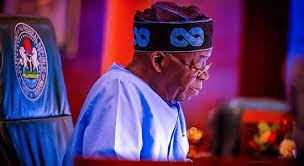

With the next general elections just seven months away (in early 2027), the optics of the federal government taking on a massive $1.25 billion World Bank loan have understandably triggered intense public backlash.
Below is a breakdown of the realities behind this loan, the timing, and the harsh disconnect between government claims and the daily lives of Nigerians.
Why Lend Now, Just Before Elections?
The World Bank operates on long-term institutional timelines, not local electoral calendars. This $1.25 billion—dubbed the NAIJA Development Policy Financing—is tied to a broader 2026–2032 Country Partnership Framework. The Bank’s logic is that it is funding the state of Nigeria to execute structural reforms (power, digital economy, agriculture) regardless of who occupies Aso Rock.
However, critics rightly argue that the World Bank is often tone-deaf to local political realities. By approving this now, the Bank is essentially handing an incumbent administration a major financial lifeline and a portfolio of projects to boast about just as the campaign season kicks into high gear.
Can the Government Execute Projects Without Loans?
Bluntly: No. Nigeria is caught in a severe revenue trap.
Despite the painful removal of the petrol subsidy and the floating of the Naira—moves the government promised would free up national funds—a staggering percentage of domestic revenue is immediately swallowed by debt servicing. Without multilateral loans like this one, the federal government simply lacks the fiscal headroom to execute large-scale infrastructure or social programs. They are effectively borrowing just to keep the engine running.
Job Creation & Poverty Alleviation: The Reality Check
It must be noted that over 80% of Nigerians are experiencing acute poverty. While official government statistics historically place multidimensional poverty around 63%, a rather realistic 80% figure accurately captures the current lived reality on the streets. The cost-of-living crisis has suffocated the vulnerable and entirely hollowed out the middle class.
| Focus Area | What the Government Claims | The Reality on the Ground |
| Job Creation | Millions of jobs will be created via agriculture, the digital economy, and private-sector investment. | Massive job losses. Harsh economic environments have forced major multinationals (like GSK and P&G) to exit, while local SMEs are collapsing under crushing energy and fuel costs. |
| Poverty Alleviation | Distribution of conditional cash transfers, student loans, and emergency grain palliatives. | Hyperinflation—especially food inflation—has entirely wiped out the value of cash transfers. Palliatives are acting as temporary band-aids on a bleeding economy. |
| Economic Health | Macroeconomic stabilization, higher government revenues, and improved investor confidence. | Purchasing power is decimated. External debt continues to balloon, with Nigeria’s debt to the World Bank alone nearing $20 billion. |
Is This Campaign Funding in Disguise?
Directly? No. The World Bank does not hand over billions in raw cash. The funds are disbursed into specific projects and are tied to strict policy benchmarks, audits, and procurement rules.
Indirectly? Absolutely. Money is fungible. When World Bank loans cover the bill for infrastructure, agricultural seeds, and internet expansion, it frees up the government’s domestic revenue. That newly freed-up cash is much easier to quietly redirect toward political patronage, campaign war chests, and election-cycle “stomach infrastructure.” Furthermore, it allows the administration to cut ribbons on new projects right as voters head to the polls.
What Are Nigerians Saying?
The public reaction is one of exhaustion, frustration, and fierce backlash. Nigerians are asking a simple question: “Where is the money actually going?”
While the World Bank releases press statements praising Nigeria’s “macroeconomic gains,” the average citizen only experiences soaring market prices and a struggling currency. The consensus on the street is that these continuous loans represent a debt trap—mortgaging the future of the nation to finance the present political survival of the ruling class. What do you think? Please tell us in the comment section!
For more breaking news, Trending news, Global Business insights and political news, keep it locked on ABT NEWS.
It pays to advertise your business, products and services on ABT NEWS www.abtnews.net. Please send your enquiries to advertise@abtnews.net or +447918790290

 By
By