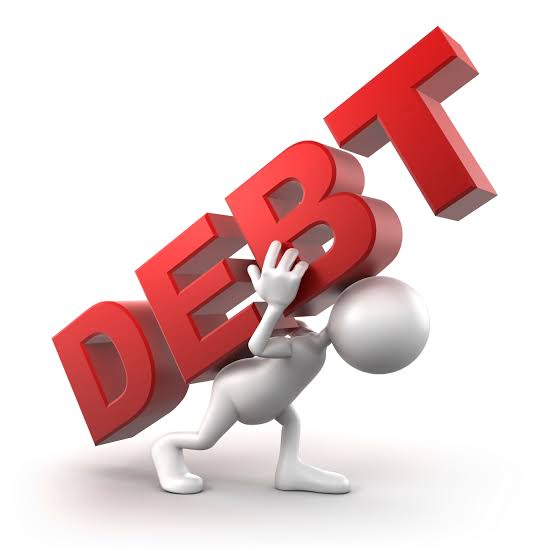

The numbers surrounding Nigeria’s debt are staggering, and they clearly illustrate why the government is caught in a cycle of borrowing just to stay afloat.
Based on the latest data from the Debt Management Office (DMO) as of December 2025, Nigeria’s total public debt has surged to an unprecedented ₦159.28 trillion (approximately $110.97 billion).
Here is the breakdown of how that debt is structured:
Nigeria’s Debt Profile
The debt is split between domestic borrowing (money owed to local banks and investors) and external borrowing (money owed to foreign nations and institutions like the World Bank).
| Debt Category | Amount (Naira) | Amount (USD) | Share of Total |
| Domestic Debt | ₦84.85 Trillion | $59.12 Billion | 53.3% |
| External Debt | ₦74.43 Trillion | $51.86 Billion | 46.7% |
| Total Public Debt | ₦159.28 Trillion | $110.97 Billion | 100% |
Note: The Federal Government is responsible for the vast majority of this burden (over 90%), while the 36 states and the Federal Capital Territory (FCT) account for the remainder.
Who Does Nigeria Owe Externally?
Nigeria’s external debt isn’t just owed to one entity. It is generally broken down into:
- Multilateral Lenders: The biggest chunk (nearly 50% of foreign debt) is owed to institutions like the World Bank and the African Development Bank.
- Commercial Borrowing: This includes Eurobonds issued in the international financial markets, making up roughly 35%.
- Bilateral Loans: Money owed directly to other countries, predominantly China (via the Exim Bank of China), which accounts for most of the remaining balance.
The Debt Servicing Crisis: How Much of the Budget is Swallowed?
The actual size of the debt isn’t the biggest crisis—it is the cost of servicing it.
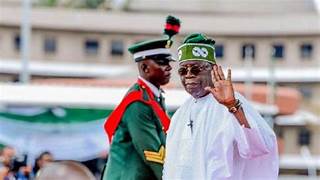
For the 2026 fiscal year, President Tinubu signed an enormous ₦68.32 trillion national budget. However, because the government routinely spends far more than it earns, it relies on aggressively optimistic revenue projections.
Here is what the math looks like for 2026:
- Budgeted Debt Servicing: The government has earmarked roughly ₦15.52 trillion just to service debt this year.
- Projected Revenue: The government expects to earn about ₦34.33 trillion in total revenue (through taxes, oil, and customs).
This means that about 45% of every Naira the government expects to collect in 2026 will go straight to paying off previous lenders, before a single road is paved, hospital is equipped, or school is funded.
Because the government plans to spend ₦68.32 trillion but only expects to earn half of that, it faces a massive deficit. To bridge that gap, it has to borrow again—which is exactly why loans like the recent $1.25 billion from the World Bank continue to be approved. Nigeria is essentially taking out new mortgages to pay the interest on its old ones.
For more breaking news, Trending news, Global Business insights and political news, keep it locked on ABT NEWS.
It pays to advertise your business, products and services on ABT NEWS www.abtnews.net. Please send your enquiries to advertise@abtnews.net or +447918790290


 By
By