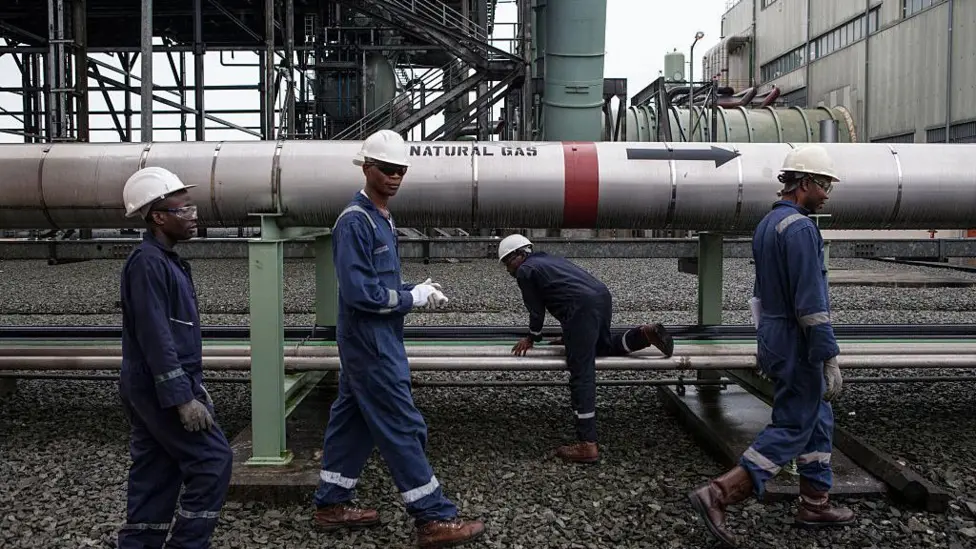

FREETOWN — West African heads of state have officially signed the Intergovernmental Agreement for the $25 billion (£19 billion) Nigeria–Morocco Atlantic Gas Pipeline, clearing the final major political hurdle for one of the most ambitious infrastructure endeavors in Africa’s history.
Signed at the Economic Community of West African States (ECOWAS) summit in Freetown, Sierra Leone, the agreement establishes the legal and governance framework needed to transition the mega-project from planning to financing and construction.
Key Project Details at a Glance
| Parameter | Specification |
| Total Route Length | ~6,000 km (3,700 miles) across 14 nations |
| Annual Gas Capacity | 30 billion cubic meters (bcm) per year |
| Target Population Served | 400 million consumers across West Africa & Europe |
| Project Cost | Estimated $25 Billion USD |
| Construction Start | Expected 2028 |
| Primary Project Leads | NNPC Ltd (Nigeria) & ONHYM (Morocco) |
Transforming Africa’s Energy Dynamic
The project signals a fundamental shift away from Africa’s historical resource model, where raw natural gas is extracted, processed overseas, and re-imported at inflated prices.
“That practice must end, because it is a complete devaluation of the resource that is so fortunately endowed in places like Nigeria and other countries.”
— Charles Majomi, Energy Expert & Former Nigerian Government Advisor
Beyond domestic supply, half of the pipeline’s 30 billion cubic meter capacity—about 15 bcm per year—will connect to Europe via Spain through the existing Maghreb-Europe gas network.
Prof. Ganiyat Adejoke Adesina-Uthman of the National Open University of Nigeria highlighted the geopolitical significance:
- “Beyond energy security, it will open up Africa as a corridor to international markets. It is a symbol of what Africa can achieve when countries collaborate.”
Phased Rollout & Governance
The mega-pipeline will be built in strategic regional segments rather than all at once:
- Initial Phase: Connecting the Morocco–Mauritania–Senegal axis.
- Intermediate Phase: Expanding through the Ghana–Côte d’Ivoire corridor.
- Final Connection: Linking directly to Nigeria’s immense gas fields.
To oversee operations, two dedicated institutions are being established:
- The Pipeline Higher Authority based in Abuja, Nigeria.
- The AAGP Project Company headquartered in Casablanca, Morocco.
Remaining Challenges
While political endorsement is secured, significant hurdles remain before construction begins in 2028:
- Capital Attraction: Securing $25 billion in international investment amidst global economic shifts and inflation.
- Security & Governance: Ensuring multi-national cooperation across 13 sovereign coastal nations and disputed territorial zones to protect maritime and onshore infrastructure.
Commercial operations for the initial phases are targeted for the early 2030s.


 By
By