
Forget everything you’ve been told about making money in agriculture!
Whenever the topic of agricultural wealth comes up, the traditional advice is always the same: “Buy land and start farming.” But what if we told you that the most successful entrepreneurs in Africa’s booming agricultural sector might never step foot in the mud, or plant a single seed?
Read that again!
Farming is just the starting line of a massive, multi-trillion-naira economic engine. Before a single crop moves from the soil to your dining table, it must be harvested, collected, sorted, preserved, transported, processed, packaged, financed, and distributed.
And right there—in the gap between the farm and the fork—is where the biggest, most explosive wealth is hiding.
🚨 The Great Wealth Leak: Where Millions Are Lost Daily
Nigeria boasts millions of hardworking farmers, yet we haemorrhage enormous economic value every single day. Why? Poor storage, weak logistics, zero processing capacity, and fragmented distribution.
A farmer sweats for months to grow tomatoes, fruits, or grains. But without proper storage or access to instant buyers, that massive value vanishes in days as the produce rots. The tragic truth? Nigeria’s problem isn’t always that we produce too little. The bigger problem is that we fail to preserve, process, and distribute what we already have.
But where there is a massive problem, there is a massive business opportunity.
🚜 The Paradigm Shift: You Don’t Need Hectares to Make Millions
You don’t need a hundred hectares to dominate the agriculture sector. The smart money is moving into the systems that keep agriculture alive.
Here is the brutal truth of the agricultural economy:
- The Farmer only earns when the harvest is successful and sold before it spoils.
- The Cold-Storage Operator, however, earns daily from dozens of farmers desperate to preserve their yield.
- The Tractor-Leasing Company rents the same machine to multiple farmers all season long.
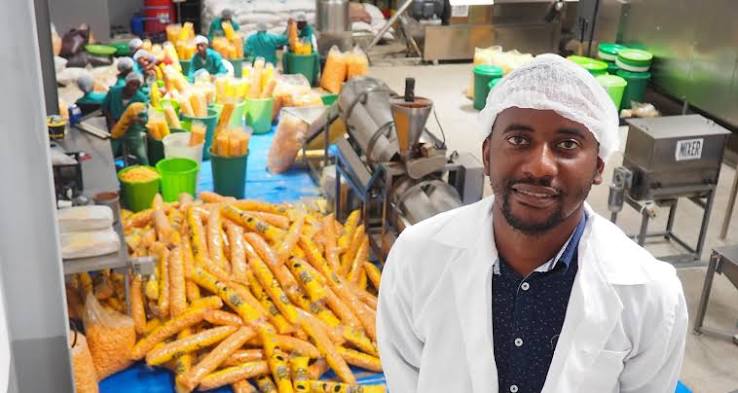
- The Processor buys cheap raw cassava and transforms it into high-value garri, industrial starch, or animal feed for a massive profit.
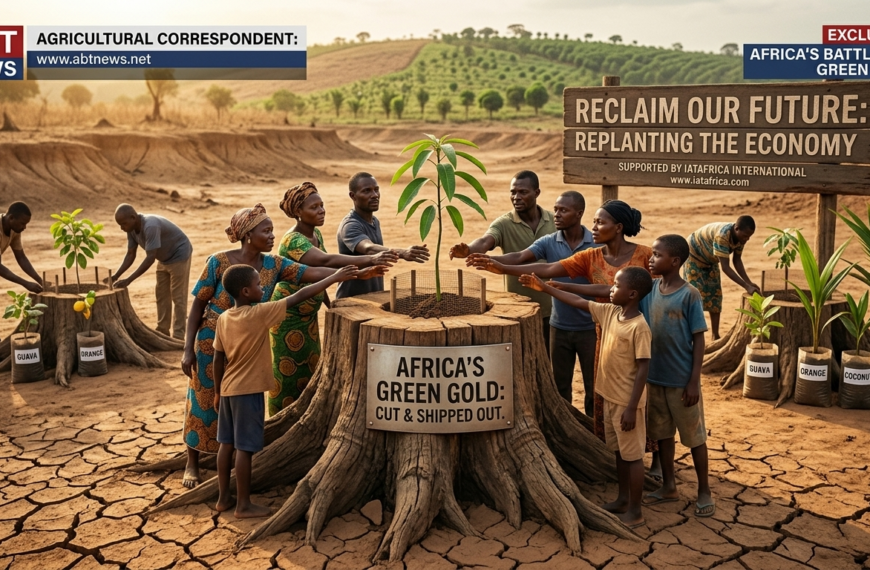
This is called Value Addition—transforming a raw, cheap commodity into a premium product. It is the single biggest gap in Nigeria’s agricultural economy. We sell our raw goods for pennies, only to buy them back as packaged, processed goods for a fortune.
This is exactly why President Bola Ahmed Tinubu is receiving widespread commendation for his administration’s ambitious new plan to radically transform the cocoa value chain—focusing heavily on revitalizing local processing, industrialization, and value-added initiatives to supercharge the economy. The government recognizes that processing is where the real power lies.
💰 Where is the Real Money Hiding?
Stop asking, “What can I grow?” and start asking, “What can I process, preserve, transport, package, or distribute?”
The biggest opportunities wait for you here:
- 🧊 Cold-chain & Solar refrigerated storage
- 🚛 Refrigerated transportation & Farm-to-market logistics
- 🥫 Food processing, preservation & labeling
- 🚜 Farm-equipment leasing & Irrigation services
- 📦 Agricultural warehousing & Commodity aggregation
- 📱 Digital platforms connecting farmers with verified buyers
Imagine a community producing tons of maize but lacking a drying or feed-processing facility. That is a goldmine. Imagine producers with export-quality goods but terrible packaging keeping them out of supermarkets. That is your opportunity.
⚠️ WARNING: “People Must Eat” Is Not a Business Strategy
Before you rush to the bank, take heed: Do not blindly enter agriculture simply because “people must eat.” Demand for food does not guarantee your business will be profitable.
Producing first and searching for buyers later is not a strategy. It is speculation.
Before committing a single naira, you must lock down your market. You need to know exactly who will buy, how much they will pay, your transportation costs, the product’s shelf life, and the strict quality standards required by buyers like supermarkets, hotels, exporters, or food-processing giants.
🚀 How to Start Today
Start with the market, then build the supply system. You don’t need to build a mega-factory on day one. Simply solve one expensive problem in one location:
- Rent out equipment to a cluster of vegetable farmers.
- Operate a small solar-powered cold room in a farming hub.
- Provide reliable, specialized transportation for agricultural goods.
- Package grains attractively for urban consumers.
You do not need to control the entire agricultural chain. You just need to dominate one valuable, repeatable position that farmers or buyers desperately need.
The future of agricultural wealth in Nigeria belongs not just to those who own the land, but to the innovators building the systems that make farming profitable.
Over to you, ABT News Readers: If you were handed the capital to invest in Nigeria’s agricultural sector today, where are you putting your money? Farming, food processing, cold storage, equipment leasing, or agricultural logistics?
Drop your thoughts in the comments below!
For more explosive business insights, breaking news, and market trends, keep it locked on www.abtnews.net.


 By
By