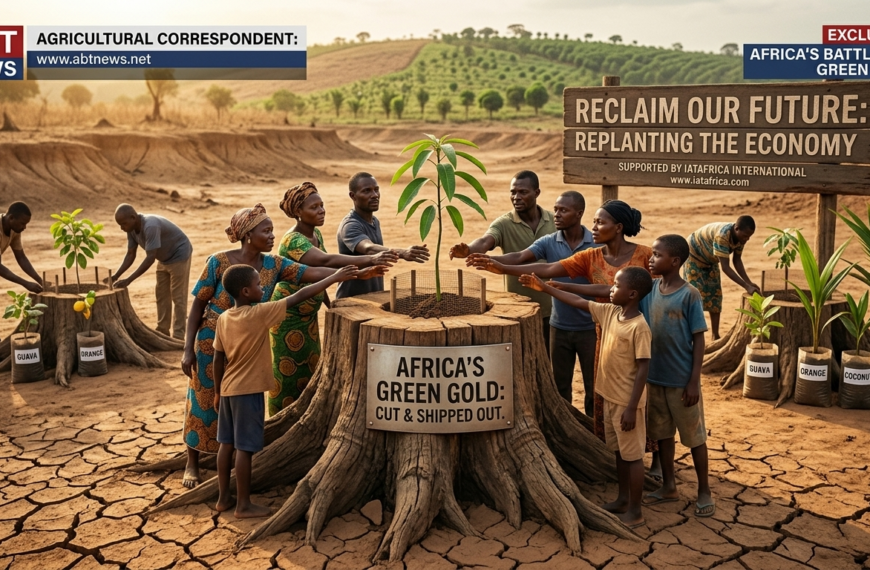
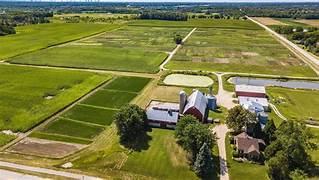

As experts reveal up to $900 billion is locked in idle Nigerian real estate, a new wave of investors is shifting from mere ownership to aggressive agricultural productivity.
LAGOS, NIGERIA — It is a statement that sounds controversial, especially in a society obsessed with property titles: Owning land does NOT automatically make you wealthy.
Across Nigeria, thousands of people proudly hold onto land that has produced absolutely zero income for years. There is no cash flow, no agricultural productivity, and no real economic activity. There is just ownership. This feeds into one of the biggest financial myths many Nigerians still believe: “If I own land, I’m building wealth.”
But economic data and market realities tell a vastly different story. Empty land alone does not create money; only productive land does.
The Burden of “Dead Capital”
When land sits abandoned for years, waiting for eventual appreciation, it quietly transforms into what economists call “dead capital.”
According to verified data from PricewaterhouseCoopers (PwC), Nigeria holds a staggering $900 billion in dead capital locked up in residential real estate and agricultural land. Recently, the Nigerian Institution of Estate Surveyors and Valuers (NIESV) echoed this alarm, noting that at least $300 billion of this wealth is completely trapped—unbankable, undocumented, and economically invisible.
Because an estimated 95% of lands in Nigeria exist outside formal, digitised, and verifiable systems, idle land cannot easily be used as collateral. It generates no daily value. This is where many traditional investors miss the real game: they buy land and simply hope that prices will rise someday, ignoring the immense potential of the soil itself.
The Anatomy of a True Asset
Globally, the most valuable land is rarely idle. The difference between dead capital and a true wealth-building asset lies in utilization. High-value land is intrinsically connected to:
- Agriculture and Farming
- Production and Industrial Output
- Real Estate Development
- Supply Chains and Logistics
- Active Income Generation
A piece of land that produces food, cash crops, rent, or logistics value instantly becomes an active asset.
The Shift to Strategic Investment
While speculators wait for urban sprawl to increase their land’s value, strategic investors are looking at global macroeconomic trends and focusing their capital on:
- Productivity: What can the land yield today?
- Cashflow: How much regular income does the asset generate?
- Long-term Demand: What does the market desperately need?
- Asset Expansion: How can the profits be reinvested?
This strategic mindset is the primary reason productive agricultural land is gaining massive attention globally. With populations rapidly growing and food demand rising exponentially, the individuals and corporations controlling productive land are quietly gaining massive economic leverage over time.
The WaleAgro Philosophy: Making Land Work
Pioneering this shift in mindset is WaleAgro, an agricultural enterprise championing the transformation of idle properties into cash-flowing assets.
At WaleAgro, the core philosophy is clear: Land should not just be owned; it should work. The traditional boast of “I have land” is becoming obsolete. In today’s volatile economic climate, the real flex is being able to confidently say: “My land produces value.”
The era of buying plots to let them sit in the bush overrun by weeds is ending. The future belongs to those who view land not as a static possession, but as a canvas for production, food security, and consistent cash flow.
So, let’s discuss honestly as you evaluate your portfolio: Would you rather own empty land waiting for appreciation, OR productive land generating long-term income?
For more exclusive insights on real estate, agriculture, and wealth generation, keep reading ABT NEWS at www.abtnews.net


 By
By