
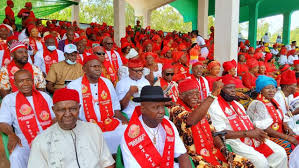

A massive political firestorm is sweeping through Nigeria’s South-East and South-South regions following the explosive declarations made by the Minister of Works, Senator David Umahi. His live television mandate—warning that every Igbo man must vote for President Bola Ahmed Tinubu in 2027 or face an immediate freeze on all federal road and bridge projects—has triggered fierce backlash across state lines, political parties, and socio-cultural groups.
From the heartlands of Igboland to the coastal hubs of the Niger Delta, citizens and political stakeholders are hitting back, calling the Minister’s comments an act of “democratic blackmail.”
The State-by-State Breakdown: A Region in Revolt
Public opinion across key states reveals a mixture of deep anger, defiance, and intense debate.
Anambra & Abia: “Infrastructure is Our Right, Not a Favor”
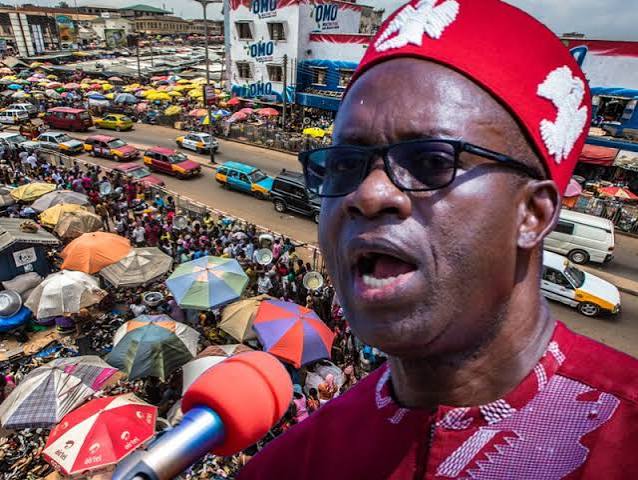
In Anambra and Abia states—both massive strongholds of the opposition Labour Party (LP) and Nigerian Democratic Congress (NDC)—the reaction has been blistering. Traders at the Onitsha Main Market and tech hubs in Aba have openly denounced the threat. Local civil society groups point out that federal infrastructure is funded by national revenue and taxpayers’ money, not the personal bank account of the ruling class.
“To suggest that we must surrender our right to vote freely just to get roads built is an insult to our collective intelligence,” remarked an Aba-based human rights attorney.
Enugu: “An Unconstitutional Threat”
In Enugu State, political analysts and legal professionals have challenged the legality of Umahi’s stance. Critics argue that using federal development projects to threaten a specific ethnic group violates the 1999 Constitution and amounts to voter coercion under the Electoral Act.
Imo & Ebonyi: The APC Catch-22
In Imo and Ebonyi—states currently governed by the ruling All Progressives Congress (APC)—public reaction is heavily divided. While ordinary citizens express deep frustration with the “ultimatum,” local APC loyalists are frantically performing damage control. In Abakaliki, state officials have tried to rebrand Umahi’s comments, claiming the Minister was simply using “strong political rhetoric” to urge the region to align with the center rather than remaining in the political opposition.
Rivers & Delta: The South-South Igbo Communities React
The backlash has leaked cleanly into the South-South. Igbo-speaking communities in Rivers (such as Ikwerre and Etche axis) and Delta State (Anioma region) have voiced strong resentment. Commentators on local radio stations in Port Harcourt and Asaba reminded the federal government that the oil and gas wealth driving the nation’s economy is drawn directly from their soils.
“You cannot extract oil from our lands and then threaten to starve us of roads if we don’t vote for your preferred candidate,” a caller on a popular Delta FM station stated.
The Political Battleground: Opposition Demands Sacking, APC Retreats
The political class has weaponized the controversy, drawing clear battle lines ahead of the 2027 campaigns.
The Opposition (Labour Party & PDP)
The Labour Party (LP) and the People’s Democratic Party (PDP) have issued joint and separate statements demanding that President Tinubu immediately call his Works Minister to order or sack him outright. Opposition leaders argue that Umahi has effectively admitted that the current administration uses national development as a political weapon rather than a constitutional duty. They have urged the people of the South-East to reject intimidation and stand firm on their right to political self-determination.
The Ruling APC
Behind closed doors at the APC National Secretariat, there is palpable anxiety that Umahi’s heavy-handed tactics could completely backfire, permanently alienating voters in a region the party has been desperately trying to win over. Officially, party spokespersons are downplaying the threat, framing the controversy as a “misinterpretation of the Minister’s passion for the rapid development of the South-East.”
At a Glance: Who is Saying What?
| Stakeholder / Region | Core Stance | Primary Argument |
| Anambra & Abia Public | Defiant Reject | Infrastructure is funded by public taxpayers, not political patronage. |
| Imo & Ebonyi APC Leaders | Damage Control | Claims Umahi was just encouraging the region to remain in mainstream politics. |
| Rivers & Delta Communities | Fierce Resistance | Point to the South’s oil wealth; reject electoral coercion. |
| LP & PDP Opposition | Outraged Demand | Demanding Umahi’s resignation or immediate sack for abuse of office. |
| National APC Executive | Defensive Reframe | Insists the administration remains committed to developing all zones equally. |
The ABT Verdict
By tying the completion of critical infrastructure directly to the ballot box, Dave Umahi has opened a Pandora’s box of regional tension. Instead of pulling the South-East closer to the ruling party, this high-stakes threat appears to have galvanized a deep sense of defiance across the target states. In a democracy, development is a right, not a bargaining chip—and the people are making sure the Minister hears them loud and clear.
Where do you stand on this brewing political crisis? Let us know your thoughts in the comment section below, and keep refreshing www.abtnews.net for breaking updates on this story.

 By
By







Umeahi is not working for Igbo president, instead he prefers boy boy duties and Federer peanuts. He is among the Igbo problems of the current time.