
By ABT NEWS Desk (With Commentary by Diamond Bonny)
ABUJA, NIGERIA — How can Africa’s largest economy dream of global industrial supremacy, a digital revolution, and millions of new tech jobs while its business owners are forced to budget for blackouts?
That is the million-dollar question or rather, the $300 million question now gripping the nation.
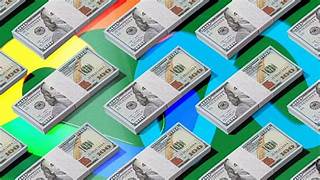
In a landmark move that could redefine the nation’s economic landscape, Nigeria has commercially unleashed a staggering $300 Million Distributed Renewable Energy Fund.
Co-managed by the heavyweight Nigeria Sovereign Investment Authority (NSIA) and Africa50, with an initial $25 million backing from the World Bank Group, the fund is shifting from structural planning into active capital deployment. This massive injection of public and development finance aims to mobilize private capital and flood underserved communities with mini-grids, standalone solar systems, and decentralized power.
It is a monumental announcement. But the real war against darkness has only just begun.
THE “GENERATOR TAX” STRANGLING NIGERIAN BUSINESSES
For decades, reliable electricity has felt like a luxury rather than a basic right. Instead of expanding, Nigerian enterprises are suffocating under what analysts call an “unofficial tax on national life.”
Day after day, hard-working entrepreneurs burn through fortunes purchasing roaring generators, sky-rocketing diesel, expensive batteries, and makeshift solar setups just to keep their doors open.
These crippling operational costs don’t disappear into thin air—they are passed straight down to the consumer, inflating the price of everyday goods and choking small businesses before they even get a chance to breathe.
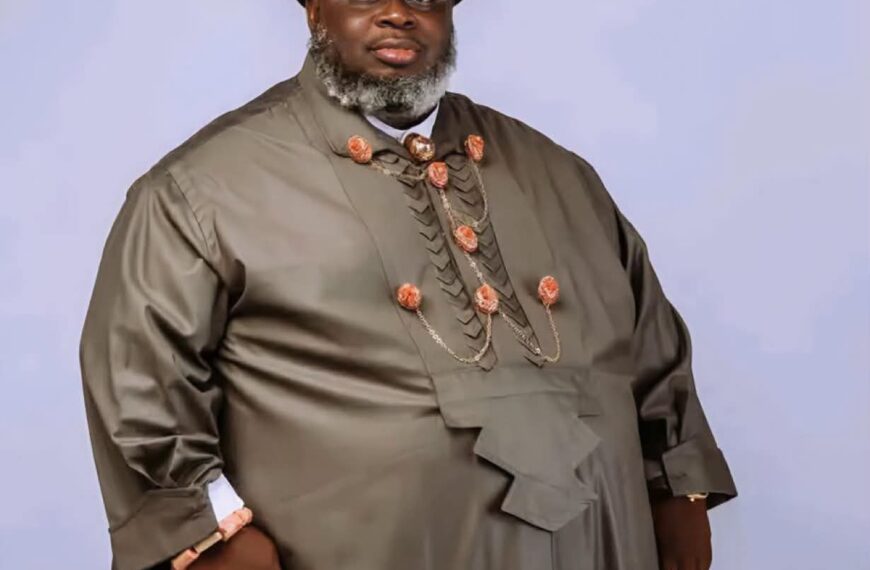
As energy analyst Diamond Bonny forcefully points out:
“A country cannot seriously talk about industrialisation, digital transformation, and millions of new jobs while too many businesses are still budgeting for darkness.”
BEYOND THE HEADLINES: WILL THE MONEY REACH THE STREETS?
Nigeria has seen shiny power promises before. That is why experts insist the true test of this $300 million fund won’t be measured in photo-ops or glossy press releases—it will be measured on the ground, in the shops, and on the streets.
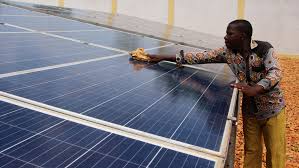
A single mini-grid powering a neglected rural community isn’t just about lighting up a bulb. It is an economic engine:
- It means farmers can finally refrigerate their produce instead of watching crops rot.
- It means medical clinics can operate life-saving equipment through the night.
- It means digital startups can stay online without sudden dropouts.
- It means small manufacturers get the reliable electricity they desperately need to scale up and hire thousands.
Electricity is not a luxury. Electricity is a primary economic input.
HOW WE MUST MEASURE VICTORY
To ensure this initiative doesn’t become “just another paper tiger,” Diamond Bonny insists that Nigerians must hold leaders and investors accountable to concrete, real-world metrics:
- How many off-grid communities actually get 24/7 power?
- How drastically do small business energy costs fall?
- How much does our national generator dependence drop?
- How much new economic activity is unlocked in forgotten towns?
Nigeria no longer has time for energy initiatives that look grand on paper but leave citizens sitting in the dark.
SWITCHING THE NIGERIAN ECONOMY ON!
The vision for Nigeria’s future cannot remain a painful ultimatum between an unreliable national grid and a bank-breaking generator.
The goal must be a fierce, diversified energy web—where the central grid, solar mini-grids, gas, and renewable technologies collide to create an unbreakable supply of dependable power.
When power becomes reliable, everything changes. Factories produce at full throttle. Students study without oil lamps. Startups compete on a global stage. Communities thrive.
Power is not just about keeping the lights on. It is about switching the entire Nigerian economy ON!
For more breaking news, energy reports, and economic updates, stay tuned to ABT NEWS at www.abtnews.net.


 By
By