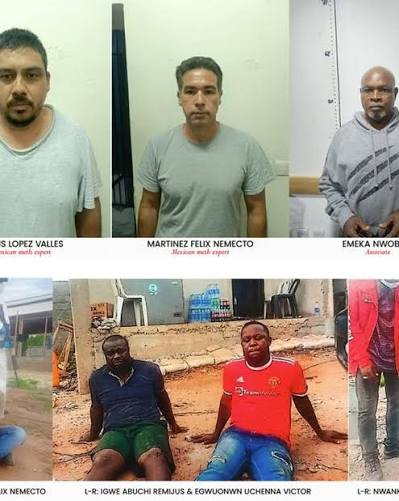

LAGOS, NIGERIA — Nigeria’s anti-drug agency announced on Friday that it has officially charged 10 suspects, including three Mexican nationals, following their arrest during a massive raid on a clandestine methamphetamine laboratory this past May.
The initial raid, which took place on a remote farm in the Abidagba forest of Ogun State, uncovered what the National Drug Law Enforcement Agency (NDLEA) described as the country’s largest-ever industrial-scale meth production facility. During the operation—which also included raids on two residential properties in an upscale Lagos neighborhood—authorities seized crystal meth and production chemicals estimated to be worth a staggering $363 million.
NDLEA Chairman, retired Brig. Gen. Mohammed Buba Marwa, stated that the operation exposed a “sophisticated, transnational methamphetamine production syndicate run jointly by a Nigerian drug cartel and their Mexican counterparts.”
A One-Off Discovery or a Usual Happening?
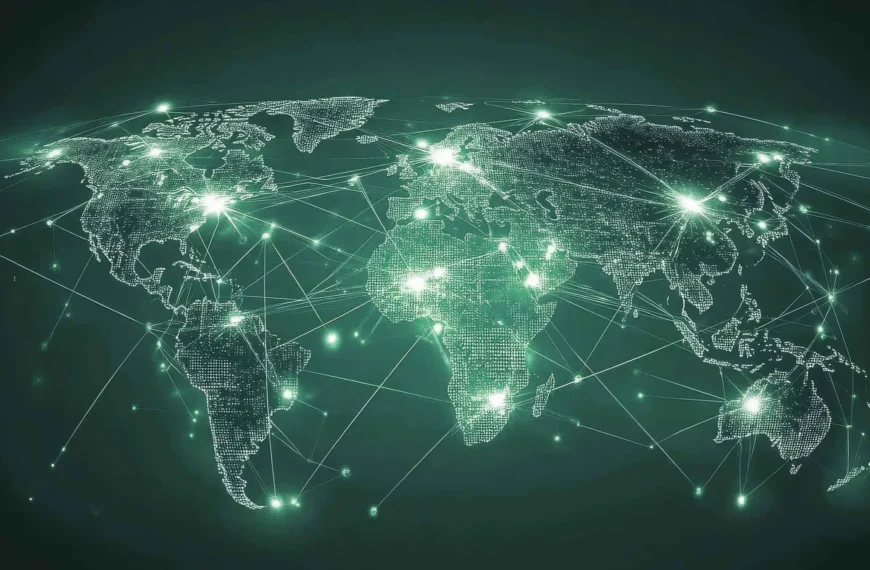
While a bust of this financial magnitude is extraordinary, the presence of Mexican drug cartel operatives in West Africa is not a one-off discovery; it represents a rapidly growing and disturbing trend. Security analysts and organized crime experts point to a clear shift in tactics by major Latin American syndicates, such as the Sinaloa Cartel and the Jalisco New Generation Cartel (CJNG). Instead of merely using Africa as a transit hub to move cocaine into Europe, these cartels are now “franchising” their operations directly on the African continent.
Evidence of this growing trend includes:
- Repeated Discoveries: Just last month, on June 17, 2026, the NDLEA dismantled another multi-billion Naira meth factory hidden deep in a forest in Oyo State, arresting a 56-year-old Mexican drug expert alongside four Nigerians.
- Regional Expansion: A week before the massive Ogun State raid in May, South African authorities arrested four Mexican nationals at a large crystal meth production facility in the North West Province, seizing over $60 million worth of drugs. It was the fourth drug laboratory with alleged Mexican links discovered in South Africa recently.
Why is this happening? Cartels are shifting production to West and Southern Africa to bypass North American law enforcement crackdowns, eliminate trans-Atlantic logistical costs for meth precursors, and avoid heavy maritime interdiction. The syndicates often set up in remote, heavily forested rural areas to avoid aerial surveillance and hide the strong odors associated with meth cooking. They exploit structural vulnerabilities in the region, such as porous borders and underfunded security services, by paying off local armed groups to ensure the free flow of drugs into Northern Africa, Europe, and the Middle East.
Far from being an isolated incident, Friday’s charges underscore a harsh new reality for African law enforcement: transnational cartels are now actively manufacturing highly lethal illicit substances directly on African soil, posing severe threats to both regional security and public health.



 By
By