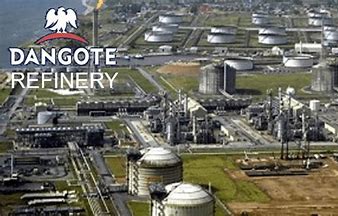

The economic impact of the Dangote Petroleum Refinery across Nigeria and the wider West African region is proving to be a massive structural shift. Since reaching its full nameplate capacity of 650,000 barrels per day (bpd) in February 2026, the refinery has completely rewritten the energy architecture of the continent.
The current real-world breakdown spans fuel prices, macroeconomic indicators, and regional trade patterns.
1. The Paradox of Fuel Prices
If you are looking at retail gas stations, fuel prices are lower than they would be without the refinery, but they haven’t entirely crashed. This stems from a core economic reality: even domestic refiners have to buy crude oil at global market prices.
- The Geopolitical Shock: Earlier this year, a major geopolitical conflict in the Middle East led to the closure of the Strait of Hormuz, spiking global crude to $120 a barrel. Because Dangote’s feedstock costs went up, Nigerian pump prices surged between ₦1,300 and ₦1,600 per liter.
- The Recent Price Cut: Global oil prices have since cooled down to around $72 per barrel. Consequently, Dangote announced a price cut, dropping its gantry (wholesale) loading price from ₦1,175 per liter to ₦1,125 per liter. Diesel prices were also cut to ₦1,600 per liter.
- The Takeaway: While Dangote acts as a powerful price stabilizer and market mover, domestic consumers are still tied to global crude price fluctuations. However, it completely eliminates the heavy logistics premiums of shipping crude to Europe and dragging refined petrol all the way back.
2. A Sovereign Upgrade for GDP & Macroeconomics
The refinery’s biggest victory isn’t at the individual retail pump; it is on the country’s balance sheet. For decades, importing fuel swallowed roughly 20% of Nigeria’s entire foreign exchange (FX) liquid reserves. Today, domestic refineries (led heavily by Dangote) satisfy roughly 92% of Nigeria’s daily petrol demand.
- S&P Credit Upgrade: Citing this massive surge in domestic refining capacity and the subsequent relief on foreign exchange liquidity, S&P Global Ratings officially upgraded Nigeria’s sovereign credit rating from “B-” to “B.”
- Current Account Surplus: S&P projects that Nigeria’s current account surplus will rise to 5.8% of GDP, up from 4.8% last year.
- FX Buffer: Lower import demand has allowed Nigeria’s foreign exchange reserves to breathe, climbing significantly toward nearly $50 billion. This gives the Central Bank far more ammunition to defend the Naira and combat import-driven inflation.
3. West Africa’s New “Continental Shock Absorber”
The trade dynamics of the region have effectively inverted. West Africa is rapidly transitioning from a passive importer of European refined products to a self-sufficient energy block.
- Flipping the Trade Balance: Instead of bleeding dollars to import fuel from the Netherlands or Belgium, Nigeria has officially become a net exporter of refined petroleum products.
- Regional Supply Chain: Dangote has begun actively exporting premium motor spirit (PMS), diesel, and aviation fuel to neighboring import-dependent countries like Cameroon, Ghana, and Côte d’Ivoire.
- Global Footprint: During the height of the aviation fuel crunch earlier this year, Dangote briefly became the world’s largest exporter of Jet A1 fuel, supplying markets as far away as the United States and India.
By functioning as a regional safety buffer, the refinery successfully insulated West African logistics networks from major global supply chain delays.


 By
By