
By ABT NEWS Investigations Desk
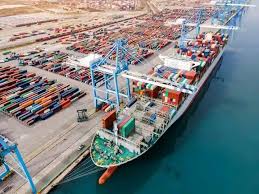
ABUJA — In what is increasingly being condemned as a deliberate economic strangulation of an entire geopolitical zone, the Federal Government has approved the certification and regulatory compliance processes for five proposed deep seaport projects across Nigeria—with the South-East region completely omitted from the master plan.
The Federal Government’s bold push to decentralize maritime operations and halt the bleeding of over $3.5 billion annually to neighboring African countries is a welcome development for the nation’s economy. However, the geographic distribution of these multi-billion dollar projects paints a damning picture of structural exclusion.
According to the Managing Director of the Nigerian Ports Authority (NPA), Dr. Abubakar Dantsoho, the government has completed the major regulatory, administrative, and compliance groundwork for the following deep seaport projects:
- Lagos State (South-West): Badagry Deep Seaport — Estimated at $2.59 billion, projected to create 250,000 jobs.
- Ondo State (South-West): Olokola Deep Seaport.
- Akwa Ibom State (South-South): Ibom Deep Seaport — Valued at $4.6 billion, designed as a massive transshipment hub.
- Cross River State (South-South): Bakassi Deep Seaport.
- Rivers State (South-South): Bonny Deep Seaport — A $2 billion greenfield development project.
While the South-West and South-South geopolitical zones share the spoils of this massive infrastructure overhaul, the South-East—Nigeria’s undisputed commercial and manufacturing nerve center—has been left stranded once again.
The Economic Irony: Shutting Out the Heaviest Importers
The exclusion of the South-East borders on economic sabotage. Cities like Onitsha, Aba, and Nnewi boast some of the highest concentrations of indigenous importers, manufacturers, and logistics operators in West Africa. Yet, businesses in the region are forced to clear their goods through the notoriously congested Lagos ports or the volatile South-South corridors, incurring exorbitant haulage costs, extortion at multiple checkpoints, and crippling transit delays.
While the South-East is technically largely landlocked, maritime experts and civil society groups have repeatedly argued that the Federal Government has deliberately stalled on viable alternatives. The dredging of the River Niger to fully operationalize the Onitsha River Port, the development of the proposed Obuaku City Port in Abia State (which shares waterways with Rivers State), and the establishment of functional inland dry ports connected by standard-gauge rail lines have all suffered agonizing delays and bureaucratic lip service.
“A Pattern of Deliberate Exclusion”
The Minister of Marine and Blue Economy, Dr. Adegboyega Oyetola, recently celebrated the seaport approvals as a move to “position Nigeria as a leading maritime and logistics hub in Africa” and recover the 70% of Nigerian-bound cargo diverted to countries like Benin Republic and Togo.
However, critics are asking: How does Nigeria intend to fix its maritime supply chain while isolating the very demographic that drives the bulk of its import trade?
Civil rights organizations have sounded the alarm over this growing trend. The Human Rights Writers Association of Nigeria (HURIWA) recently condemned the persistent exclusion of the South-East from major national projects, calling it unconstitutional. From the recent omission of the region from the ₦3.2 trillion national irrigation scheme, to the historical exclusion from the $2.8 billion Ajaokuta–Kaduna–Kano (AKK) gas pipeline, the new seaport allocations represent another heavy blow to the region’s economic integration.
“A region that is an integral part of the Nigerian federation cannot continue to be treated as a footnote,” HURIWA noted in a recent outcry regarding infrastructural marginalization, warning that repeatedly bypassing the South-East can no longer be dismissed as mere “administrative oversight.”
What Next for the South-East?
As the Federal Government moves to the commercial close and investor negotiation phases for Badagry, Olokola, Ibom, Bakassi, and Bonny, the South-East is forced to watch from the sidelines.
For the traders in Ariaria International Market and the industrialists in Nnewi, the message from Abuja is loud and clear: your cargo is vital to the Nigerian economy, but your region is not worthy of the infrastructure required to process it. Until the Federal Government balances its developmental compass, the highly touted “Blue Economy” revolution will remain yet another vehicle for regional favoritism.
For more investigative reports, global insights, trending news, breaking news and political updates, stay tuned to ABT NEWS at www.abtnews.net.
It pays to advertise your business, products and services on ABT NEWS www.abtnews.net. Please send your enquiries to advertise@abtnews.net or +447918790290


 By
By