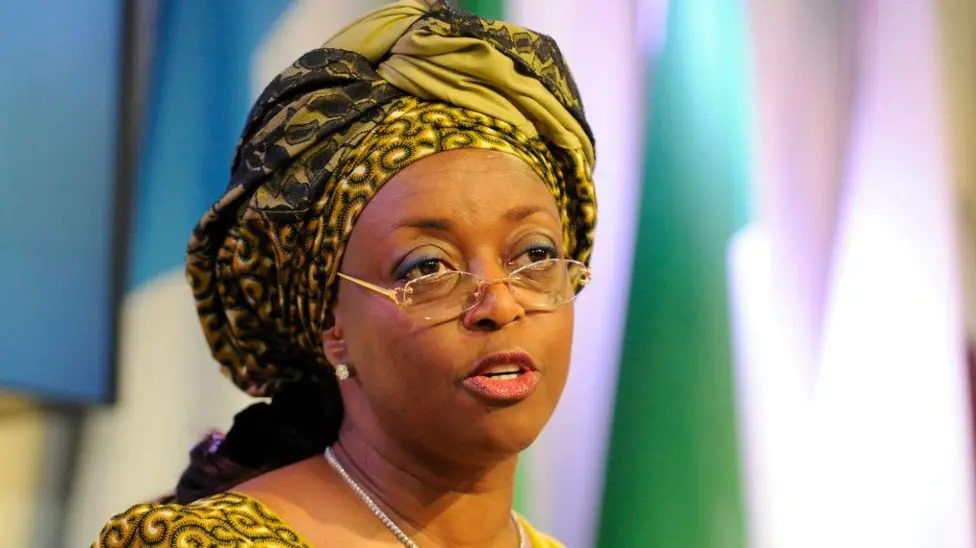

LONDON — Diezani Alison-Madueke, Nigeria’s former oil minister and the first female president of OPEC, has been found not guilty of bribery following a high-profile trial at London’s Southwark Crown Court.
The 65-year-old was acquitted of five counts of accepting bribes and one charge of conspiracy to commit bribery. The verdict delivers a significant blow to the UK’s National Crime Agency (NCA), effectively ending a 13-year investigation into one of Africa’s most prominent political figures.
“Madam Due Process” Takes the Stand
Throughout the trial, which began in January, Alison-Madueke portrayed herself as a strict adherent to the rules—earning the nickname “Madam due process”—and a tireless fighter against corruption. Appointed as Nigeria’s oil minister in 2010 and OPEC president in 2014, she suggested her historic rise made her a target.
“In a very patriarchal society, to have a woman sitting at the helm was a major no-no,” Alison-Madueke told the court, pointing to unnamed male opponents who sought to undermine her.
The prosecution, led by Alexandra Healy KC, alleged that Alison-Madueke allowed powerful men with lucrative government oil contracts to bankroll an extravagant UK lifestyle. However, the prosecution failed to provide evidence that any contracts were awarded to the six named oil tycoons in exchange for these alleged bribes. None of the six men were formally charged.
Alison-Madueke firmly denied the allegations, stating under oath: “At no time did I ask, take, or seek a bribe or bribes of any sort.” She clarified that she often accompanied the oil executives to offer interior design advice for their properties, and that many of the luxury items in question were not purchased for her.
Systemic Issues and Missing Evidence
The defense successfully dismantled the prosecution’s narrative by highlighting logistical and systemic realities of Nigerian governance, as well as critical flaws in the UK investigation:
- Financial Restrictions: Alison-Madueke explained that Nigerian ministers were prohibited from holding foreign bank accounts while serving overseas. Due to her London office being in disarray, she relied on wealthy businessmen to front her living expenses.
- Reimbursements: She maintained that all expenses were fully reimbursed in Nigeria. The defense argued that crucial documents proving these reimbursements were seized from her Abuja home but mysteriously went missing and were never produced by Nigerian authorities.
- Presidential Backing: Former Nigerian President Goodluck Jonathan provided a statement corroborating that third parties routinely paid for transport, accommodation, and other logistics for ministers conducting official overseas business.
Defense barrister Jonathan Laidlaw KC criticized the lengthy legal process, calling the delay a hallmark of Britain’s “broken criminal justice system” and noting that Alison-Madueke had “effectively been kept prisoner in this country for almost 11 years… unable to work, unable to travel.”
Co-Defendants Acquitted Amidst EFCC Contradictions
The jury also cleared Alison-Madueke’s two co-defendants:
- Doye Agama (69): Alison-Madueke’s older brother and an archbishop at a Manchester Pentecostal church, who was acquitted of conspiracy to commit bribery.
- Olatimbo Ayinde (54): A Nigerian-British oil industry executive, found not guilty of bribery and bribery of a foreign public official.
Ayinde’s inclusion in the trial became a major sticking point. Her defense revealed she had actively been working as an informant for Nigeria’s Economic and Financial Crimes Commission (EFCC), instructed by security services to “play along” with corrupt officials. An EFCC investigator even traveled to London to testify that Ayinde provided “vital information that assisted the investigation.”
This created a fatal contradiction for the prosecution: they asked the jury to trust the EFCC’s evidence gathering against Alison-Madueke, while simultaneously advising them to disregard the EFCC’s evidence proving Ayinde was a state informant.
“The Nightmare is Over”
The defense ultimately questioned why the UK’s NCA had failed to extradite the six businessmen accused of paying the bribes, and why the Nigerian government never sought to prosecute Alison-Madueke domestically.
Following her complete acquittal, Alison-Madueke released a statement expressing profound relief:
“For 11 long, grueling years this case has hung over my head and has tormented me and my family. But today, the past decade of relentless and unjust vilification, condemnation and scrutiny has finally come to an end. My nightmare is over.”
It pays to advertise on ABT NEWS. Send all your enquiries to advertise@abtnews.net or +447918790290


 By
By