
By ABT News Desk Business & Economy Insight
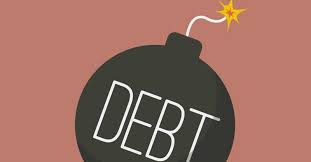
As the political drums beat louder and campaign trails heat up ahead of the general elections, a silent but potent crisis threatens to overshadow the promises of the next administration. Nigeria is rapidly sliding into what economic analysts—echoing recent insights from financial intelligence hubs like Nairametrics—describe as a classic “debt trap.”
With successive administrations leaning heavily on both domestic and external borrowing to plug widening budget deficits, the question on the minds of financial experts and everyday citizens alike is no longer why we are borrowing, but how the nation will survive the crushing weight of its financial obligations.
The Anatomy of the Debt Trap
A debt trap occurs when a borrower is forced to take on new loans simply to service existing ones. For Nigeria, the alarm bells are ringing precisely because of the country’s notoriously low revenue generation.
While government officials frequently defend the borrowing spree by pointing to a relatively healthy Debt-to-GDP ratio compared to Western nations, this metric masks the true crisis: the Debt-Service-to-Revenue ratio. When a country spends a vast majority of its retained revenue simply paying interest on past loans, little to nothing is left for critical capital expenditure, healthcare, education, or infrastructure.
Recent analyses have highlighted that Nigeria’s total public debt—comprising both federal and state obligations, as well as external loans spanning tens of billions of dollars—has ballooned at a pace that far outstrips economic growth. Borrowing to fund recurrent expenditure and consumption, rather than self-liquidating capital projects, has accelerated the slide into this precarious fiscal state.
The Election Dilemma: An Inherited Fiscal Nightmare
For the candidates vying for the highest office in the land, the financial reality waiting at the Presidential Villa is grim. The upcoming elections are not just a battle for political supremacy; they are a contest to see who will inherit a nearly empty treasury burdened by immense debt servicing obligations.
The over-exposure to foreign and domestic creditors means that the next administration will have incredibly limited fiscal space to execute its campaign promises. Whether the pledges involve massive infrastructural development, social welfare programs, or job creation initiatives, the stark reality is that the funds simply are not there.
Going into the elections, voters and civil society organizations must demand more than rhetoric. Candidates must be forced to present clear, mathematically sound blueprints on how they intend to navigate this fiscal minefield.
What Does the Future Hold for Nigeria’s Financial Standing?
The trajectory of Nigeria’s financial future depends entirely on the bold, likely unpopular, economic decisions the next government makes within its first 100 days in office. Here is what the future holds, and what must be done:
- A Shift from Borrowing to Earning: The era of easy oil money masking deep economic inefficiencies is over. The future of Nigeria’s financial standing will require aggressive revenue mobilization. This means widening the tax net, blocking revenue leakages in government agencies, and creating an enabling environment for foreign direct investment (FDI).
- Restructuring and Rescheduling: The next administration may need to engage in tough diplomatic and financial negotiations to restructure existing debts, seeking longer moratoriums or more favorable interest rates to provide breathing room for domestic growth.
- Drastic Cuts to the Cost of Governance: The political class can no longer maintain its exorbitant lifestyle at the expense of the economy. A radical reduction in the cost of governance will be necessary to free up capital and restore the confidence of international rating agencies and creditors.
- Exchange Rate and Subsidy Reforms: Historic drains on the economy—such as opaque exchange rate windows and costly subsidies—will have to be fully addressed to stop the bleeding of the nation’s foreign reserves.
Conclusion
As reported and analyzed across financial platforms, the “Nairametrics” of the situation boils down to a stark mathematical reality: Nigeria cannot borrow its way to prosperity.
As the country heads to the polls, the electorate must understand that the winner will not inherit a booming enterprise, but a nation in urgent need of a financial rescue. The future of Nigeria’s economy teeters on a knife’s edge, and only transparent, disciplined, and innovative economic management can pull the giant of Africa back from the brink of the debt trap.
For more in-depth political and economic analysis, stay tuned to ABT NEWS at www.abtnews.net.


 By
By